
The challenge of a mango harvest is often not finding something delicious to eat today. It is deciding what to do with the fruit that will be ready tomorrow, when the kitchen is already full. Freezing can extend its usefulness, but good results begin before a container reaches the freezer. Think about the portions you will actually use and the condition of the fruit, rather than simply trying to make the pile disappear.
Choose sound fruit and prepare it while it is still worth eating. Freezing does not repair mold, fermentation, or poor flavor. The National Center for Home Food Preservation's mango guidance recommends firm, ripe mangoes that yield to gentle pressure. Its instructions include washing, peeling, and slicing before packing. Follow a recognized preservation source rather than assuming a technique appropriate for a different fruit will produce the same result with mango.
Wash the intact fruit before cutting so that the knife does not simply carry surface contamination into the flesh. Use clean hands, utensils, and a clean work area. FDA produce guidance recommends running water rather than soap or detergent for washing produce. Keep preparation separate from raw meat handling. Attractive fruit and a tidy photograph are not substitutes for ordinary food hygiene, especially when processing several batches in a warm kitchen.
Decide on a form before you begin filling containers. Pieces suit uses where individual portions are useful; puree can be more convenient when the final dish needs a smooth ingredient. These are choices about future handling, not evidence that one form preserves every quality better. Do not add seasonings automatically to the entire harvest. A plain batch leaves more options later, while an intentional seasoned preparation needs a label that tells the next person exactly what it contains.
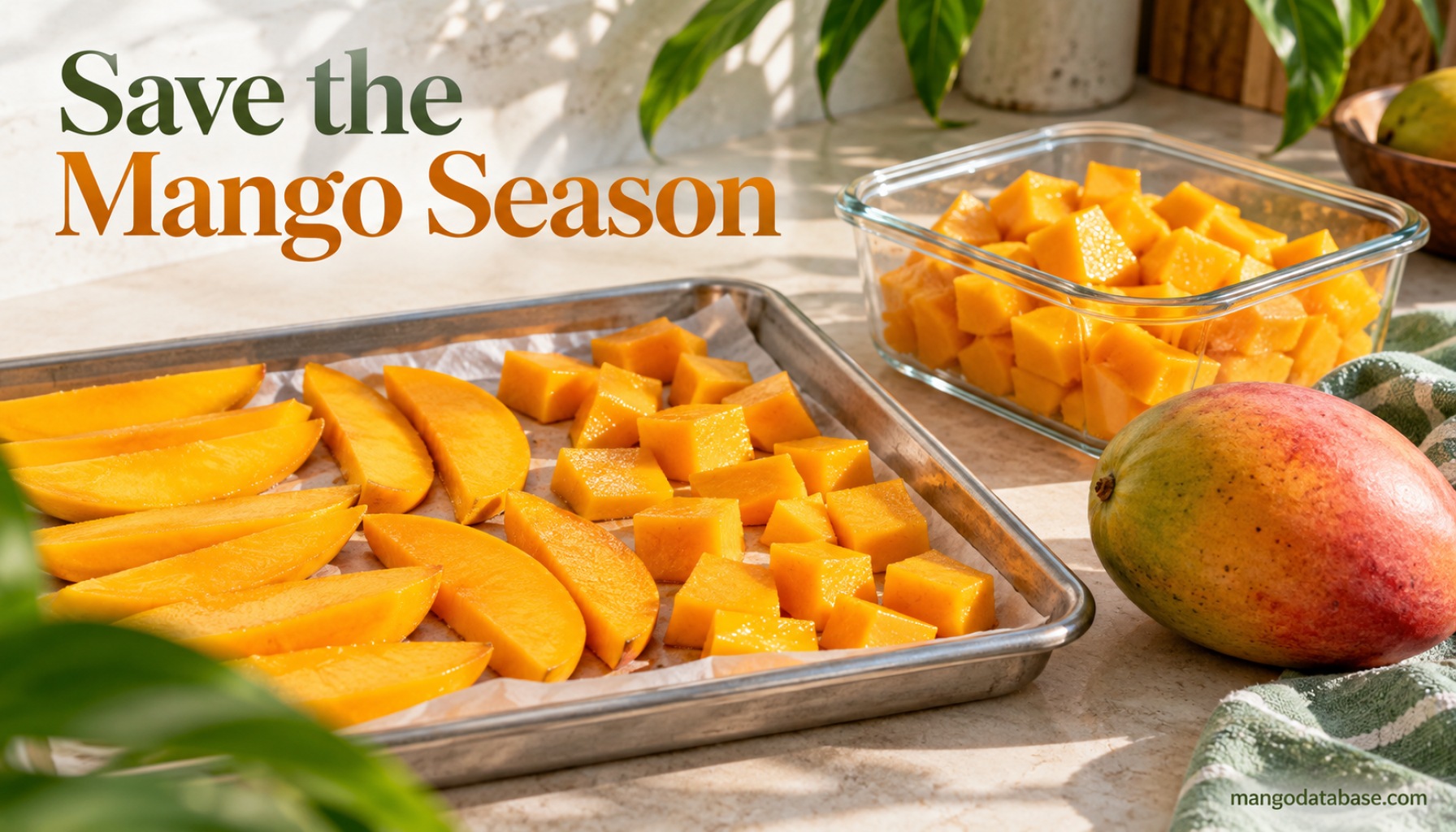
For unsweetened pieces, the preservation guidance describes freezing slices on a tray before transferring them to containers. Separation at this stage makes it easier to take a useful amount later instead of thawing a single solid mass. Work in manageable batches and return prepared fruit to cold storage promptly. Choose packaging intended for freezer use and close it securely. Follow the source's instructions on packing and headspace when using a container, particularly for puree or other preparations that expand.
Write labels before the containers become cold and damp. Include mango, the preparation date, whether the contents are pieces or puree, and any added ingredients. If you know the cultivar and source, that information can help you compare batches, but an uncertain market name should stay uncertain. Portion size is worth recording too. A container that says one cup of puree is more useful in a busy kitchen than one that says only fruit and a month.
Expect some texture change after thawing. Freezing and thawing can soften fruit, so the most satisfying use may differ from the way you enjoyed it fresh. The National Center's general freezing resources explain the importance of suitable preparation and packaging. Test a small portion in your intended use before committing a whole meal. This article is guidance drawn from preservation sources, not a claim that a particular mango recipe has been kitchen-tested here.
Keep the freezer organized enough that older batches remain visible, and review your household's actual use before processing the next harvest. If much of last season's puree remains untouched, smaller packages or a different form may be more helpful than greater volume. For thawing and handling, follow reliable food-safety guidance rather than leaving cut fruit warm for convenience. A successful freezer batch is not merely fruit that survived storage; it is fruit you can identify, handle safely, and enjoy using.
Leave a comment