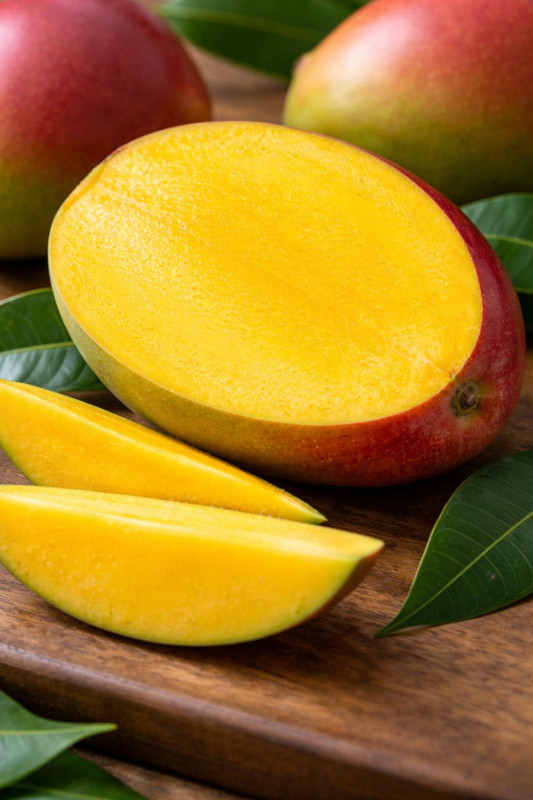
Fiberless is a practical eating-quality description for mango flesh with little noticeable stringiness, not a claim that the fruit contains absolutely no structural or dietary fiber. The amount perceived depends on cultivar, ripeness, and which part of the flesh is sampled. Low-fiber flesh can be pleasant for fresh eating, but texture is only one aspect of quality. Compare sound fruit at similar stages and avoid assuming that a smooth sample alone identifies a variety or guarantees a particular flavor.

Fibrous describes mango flesh with noticeable string-like strands, especially near the seed. These strands include vascular tissue and influence eating texture, but the term does not by itself indicate poor nutrition, spoilage, or an inferior cultivar. Some people prefer smooth dessert fruit while others enjoy more fibrous mangoes or use them in drinks and cooking. Compare fruit at a similar eating-ripe stage, and separate the amount of fiber from other qualities such as sweetness, acidity, aroma, and flesh firmness.
FS means For Sale in plant-collector and marketplace posts. In a mango listing it may refer to a tree, scion wood, seeds, or fruit, so the abbreviation alone says nothing about what is included or whether the item is true to type. Check the cultivar name, propagation method, plant health, size, and shipping restrictions before purchasing. A seller's photograph of attractive fruit is not proof that an offered seedling will produce that same fruit.
FT means For Trade: an item is being offered in exchange for something else rather than simply listed for a cash sale. Mango growers may trade scions, grafted plants, or seeds, but the parties need to agree on cultivar identity, quantity, condition, and timing. Plant-health and movement restrictions still apply to a trade. Keep labels attached and document the source, because a mistaken scion label can propagate an identification error through many later trees.