
This site contains affiliate links for which we may be compensated.

Mango Database
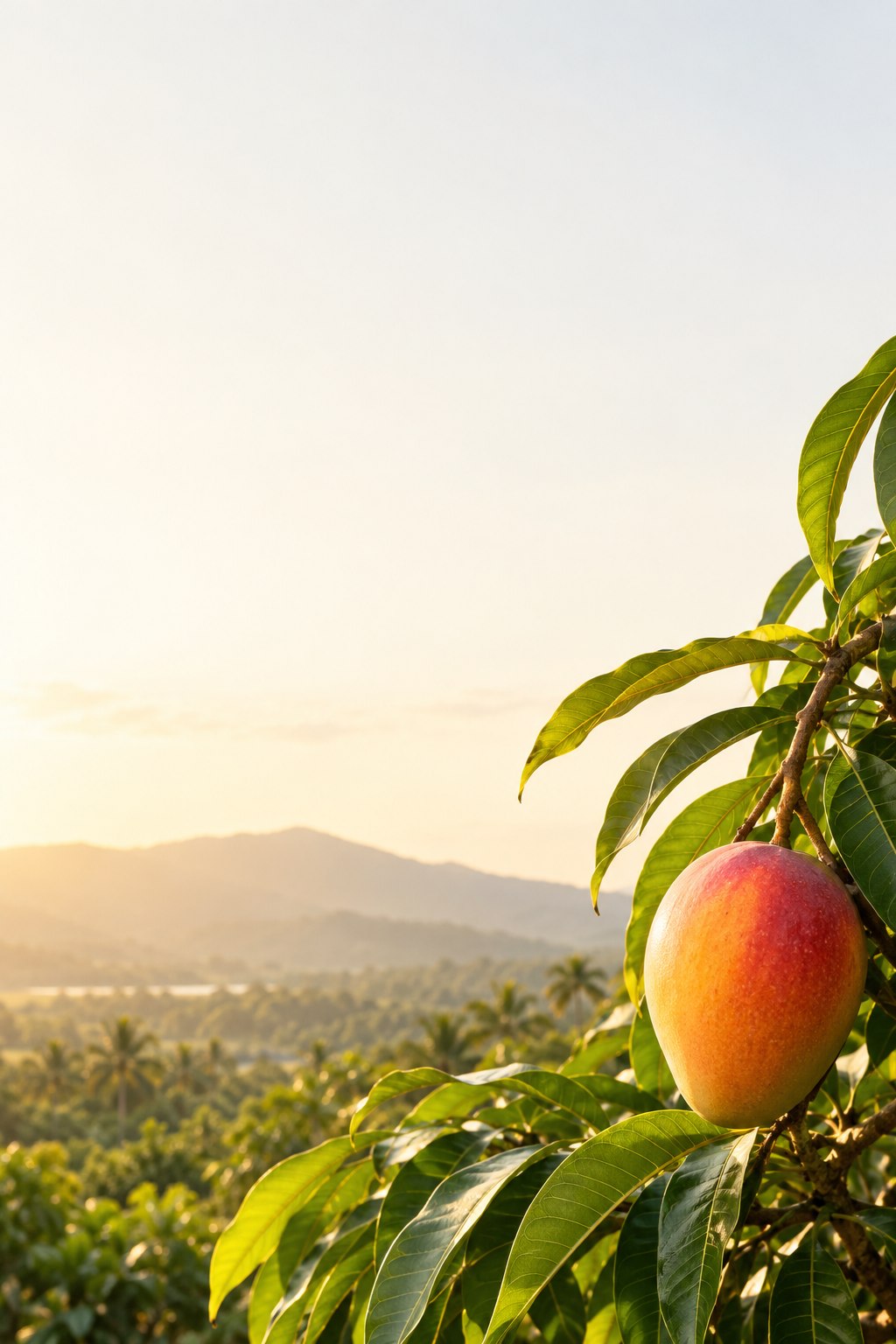
Mangoes in a sunlit tropical orchard

Mango Glossary

Understand the language of mango growing, one term at a time.

Explore Mango Terminology

Browse definitions and growing concepts to expand your mango knowledge.

Showing 15–21 of 26 terms

ISO

ISO means In Search Of in grower groups and collector listings. A mango grower using it is requesting a plant, scion, seed, or information rather than offering an item for sale. A useful request specifies the cultivar or trait sought, location, acceptable propagation method, and whether shipping or local pickup is possible. Verify the source of any offered material and applicable plant-health restrictions; responding to an ISO post does not establish that a cultivar label is accurate.
Read more about ISO

Juvenility

Juvenility is the early developmental phase during which a plant has not yet acquired the normal ability to flower. Mango seedlings can spend years in this phase, and their timing is not reliably predicted from height alone. A graft using mature cultivar material generally avoids starting the scion's development from a new seedling embryo, but the resulting tree still needs establishment. Adequate growth and suitable climate matter; applying extra fertilizer cannot guarantee that a juvenile seedling will bear immediately.

Read more about Juvenility
Lignification (generated editorial illustration)

Lignification

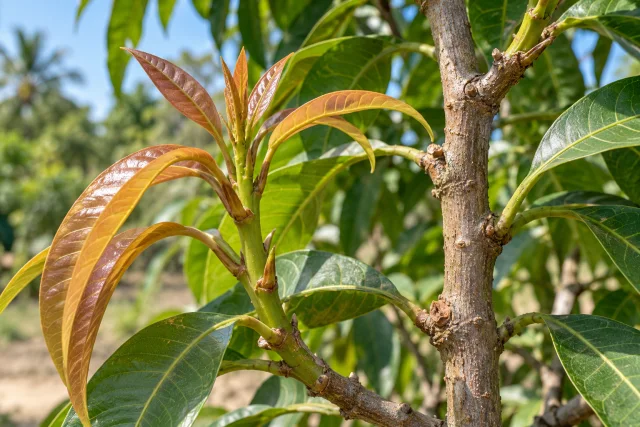
Lignification is the deposition of lignin as plant tissues become more woody and structurally firm. A new mango flush changes from soft, flexible growth to a harder shoot as it matures, although color alone does not measure every internal change. This matters when judging whether a shoot can tolerate handling or serve as suitable propagation material. A hardened stem is not necessarily ready to flower, and excessive toughness does not automatically make old wood a better scion.

Read more about Lignification

Phenotype

Phenotype is the set of observable characteristics of an organism resulting from its genotype interacting with its environment. Mango fruit size, skin appearance, growth habit, and seasonal performance are examples that can vary with growing conditions. Two trees with the same scion genotype may therefore look somewhat different in different locations. When identifying a cultivar or comparing selections, use multiple observations and reliable provenance rather than assuming one photograph or one unusual crop establishes genetic difference.

Read more about Phenotype

Quarantine

Plant quarantine comprises measures intended to prevent introduction or spread of regulated pests. Mango fruit, seed, scions, or trees may face different movement conditions depending on origin, destination, and pest status. A small personal parcel or a trade between friends is not automatically exempt. Consult the relevant plant-health authority before moving material and keep required records. This glossary definition explains the concept rather than providing current legal permission to transport mangoes across a particular border.

Read more about Quarantine
Rootstock (generated editorial illustration)

Rootstock

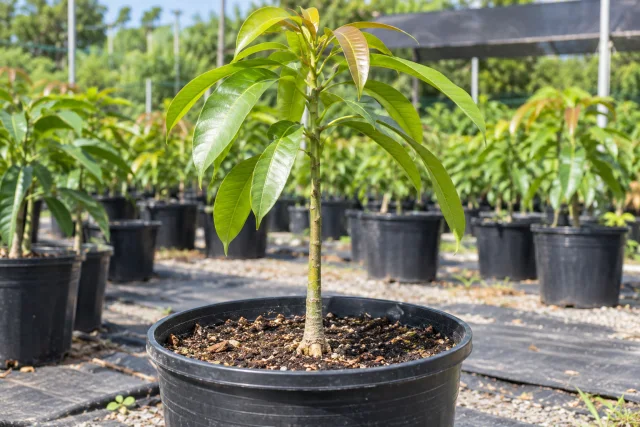
A rootstock is the rooted plant onto which a scion is grafted. In mango production it is commonly a seedling selected for suitability as a nursery and orchard foundation. It can influence vigor and responses to growing conditions, but it does not turn the scion into a different cultivar or make a mango frost-proof. Record the rootstock where known, keep the union above the soil, and remove unwanted rootstock shoots that could outgrow the intended canopy.

Read more about Rootstock

Topworking

Topworking changes the cultivar carried by an established tree by grafting selected scions onto suitable branches or regrowth. On mangoes it can replace an unsatisfactory selection or create a multi-cultivar tree without starting with a new root system. The operation needs planning for branch structure, exposed bark, vigorous competing shoots, and the balance of new grafts. Large cuts and heavy canopy removal create risks, so an established tree should not be stripped indiscriminately in pursuit of a quicker crop.

Read more about Topworking