This site contains affiliate links for which we may be compensated.

Mango Database
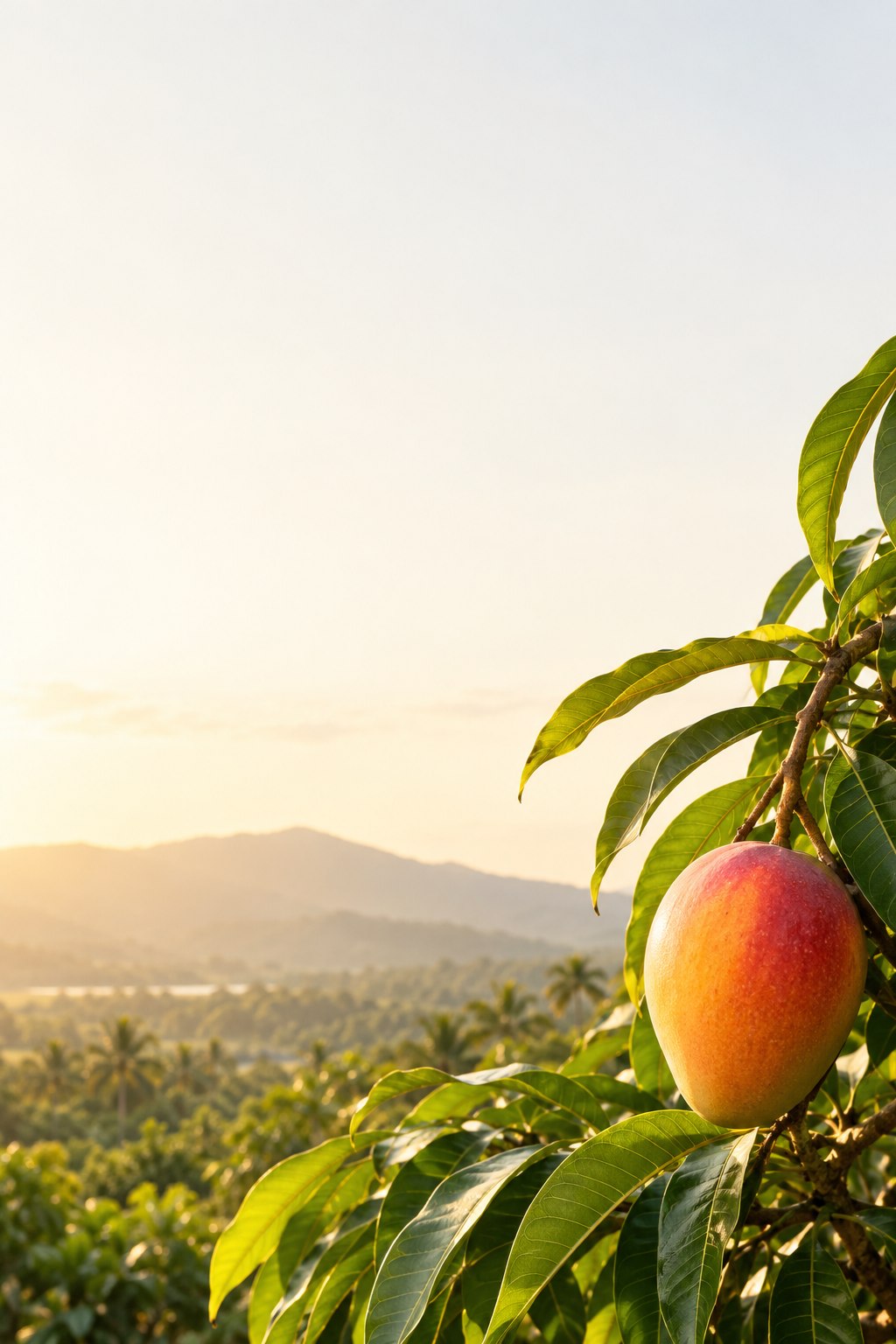
Mangoes in a sunlit tropical orchard

Mango Glossary

Understand the language of mango growing, one term at a time.

Explore Mango Terminology

Browse definitions and growing concepts to expand your mango knowledge.

Showing 1–7 of 26 terms
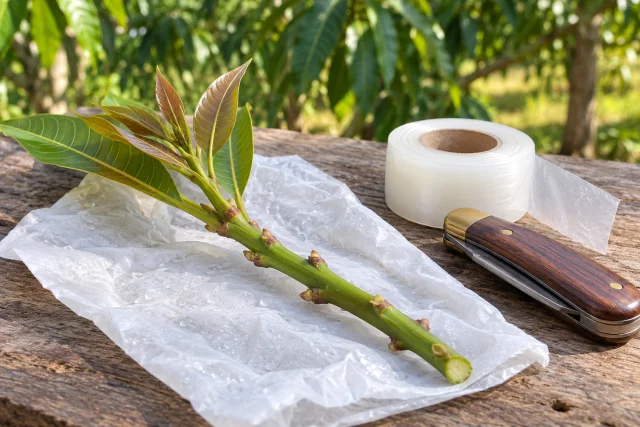
Scion (generated editorial illustration)

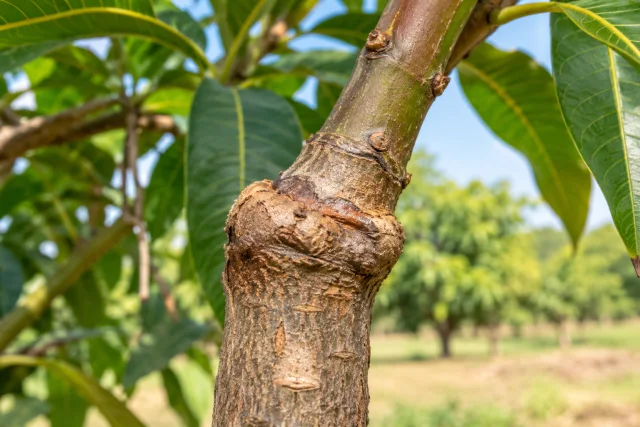
Scion

A scion is the shoot or other selected plant material joined to a rootstock during grafting. For mangoes, it carries the identity of the cultivar intended to form the upper tree and produce fruit. Scion health, maturity, freshness, and correct labeling matter as much as the cutting technique. Collect only from suitable, identified trees, protect material from drying, and do not assume that a vigorous-looking shoot is free of every transmissible problem.
Read more about Scion

Approach Grafting

Approach grafting joins two plants while each still has its own root system during the early healing period. After a secure connection forms, the unwanted parts are removed in stages to leave the intended scion on the chosen rootstock. This can reduce immediate scion dehydration in mango propagation, but it requires positioning and supporting both plants carefully. The joined stems still need close tissue contact and enough time to heal before either plant is separated.

Read more about Approach Grafting
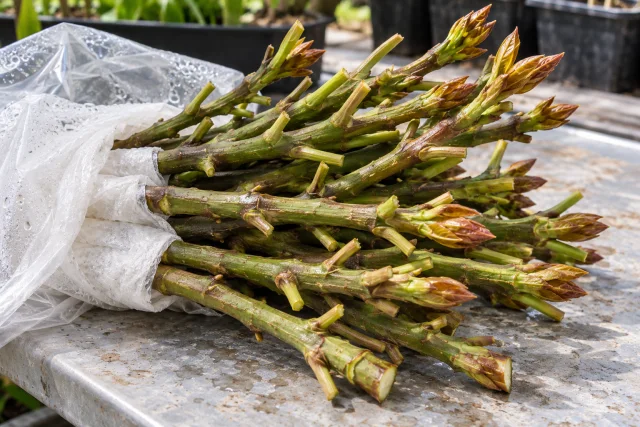
Budwood (generated editorial illustration)

Budwood

Budwood is plant material carrying buds intended for propagation, commonly selected shoots from an identified mother tree. In mango collecting the term is sometimes used loosely for scion wood even when an entire scion, rather than a single bud, will be grafted. The source tree, shoot maturity, health, and label all matter. Keep batches separate and protected from drying; recognizable leaves or a seller's name do not replace reliable provenance and clean propagation practices.

Read more about Budwood
Callus (generated editorial illustration)

Callus

Callus is tissue formed as plant cells divide in response to injury or certain propagation conditions. At a mango graft it contributes to healing around the joined surfaces, but a visible swelling is not proof of a complete vascular connection. A scion can open buds briefly using stored reserves before failing. Judge graft success by sustained healthy growth and a sound union over time, while preventing wrapping material from becoming a constricting band.

Read more about Callus

Cambium

Cambium is a thin region of actively dividing cells between the inner bark and the wood of a woody stem. During mango grafting, close alignment of living cambial regions helps the scion and rootstock form a functioning connection. Matching outer bark alone may not provide that contact when stems differ in thickness. Clean cuts, secure wrapping, and protection from movement support healing; pushing two cut surfaces together does not guarantee that their living tissues are correctly aligned.

Read more about Cambium

Cleft Grafting

Cleft grafting inserts a wedge-shaped scion into a split at the cut end of a stock or branch. In mango work, matching the living cambial regions along at least one suitable edge is more important than placing a thin scion exactly in the middle of a thick stock. Secure the join and protect exposed surfaces from drying and water entry. A successful technique on one stem size or season should not be treated as a guarantee for every tree.

Read more about Cleft Grafting

Clone

A clone is a plant or group of plants produced from one source through asexual reproduction and generally sharing its genotype, apart from possible mutations. Mango grafting preserves the scion as a clone of the selected source rather than creating a new seedling genotype. Clonal identity does not make all trees perform identically: rootstock, soil, climate, health, and management still matter. A clone is also not automatically disease-free, so propagation hygiene and trustworthy source material remain important.

Read more about Clone