Genotype is the genetic constitution of an organism. A mango seedling formed through fertilization has its own genetic combination, whereas a grafted scion normally preserves the genotype of its source tree. Genotype is distinct from phenotype, the characteristics actually observed under particular conditions. Poor flavor from immature fruit or weak growth in a saturated pot does not by itself demonstrate that a correctly labeled graft has changed genetically. Identity questions need provenance and, where appropriate, more specialized evidence.
A clone is a plant or group of plants produced from one source through asexual reproduction and generally sharing its genotype, apart from possible mutations. Mango grafting preserves the scion as a clone of the selected source rather than creating a new seedling genotype. Clonal identity does not make all trees perform identically: rootstock, soil, climate, health, and management still matter. A clone is also not automatically disease-free, so propagation hygiene and trustworthy source material remain important.
Cross-pollination is transfer of pollen between genetically different plants. For grafted mangoes, two separate trees of the same cultivar may still be the same genotype, while two different cultivars can provide genetically different pollen. Cross-pollination affects the embryo's parentage rather than changing the cultivar identity of the flesh on the current crop. It may be useful in breeding, but adding another tree does not automatically solve every flowering or fruit-retention problem.
Germplasm is genetic material maintained or used for conservation, research, or breeding. In mangoes it can be represented by living trees, seeds, or other suitable plant material, accompanied by records that describe its identity and origin. A collection of many unlabeled trees is much less useful than a documented collection. Because seed propagation can change genotype and mango seed is not suited to conventional long-term dry storage, living collections and reliable vegetative propagation have particular importance.
Phenotype is the set of observable characteristics of an organism resulting from its genotype interacting with its environment. Mango fruit size, skin appearance, growth habit, and seasonal performance are examples that can vary with growing conditions. Two trees with the same scion genotype may therefore look somewhat different in different locations. When identifying a cultivar or comparing selections, use multiple observations and reliable provenance rather than assuming one photograph or one unusual crop establishes genetic difference.
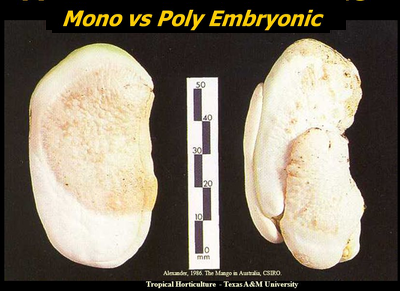
Polyembryonic describes a seed with multiple embryos. Mango seeds of this type can contain nucellar embryos derived from the mother tree's tissue as well as a sexually produced embryo; not every embryo necessarily survives or emerges. Nucellar seedlings can preserve the maternal genotype, but a sprout cannot be identified reliably as clonal merely because it is first, tallest, or strongest. This distinction matters when selecting rootstocks or attempting true-to-type seed propagation. A verified graft remains the clearest way to obtain a named cultivar.
Read the mango seed FAQ
Self-compatibility is the ability of a plant's own pollen, or pollen from the same genotype, to contribute to successful fertilization. Many mango cultivars can set fruit without a different cultivar nearby, but actual cropping also depends on flower health, weather, pollinators, and tree condition. It is not a guarantee that every solitary tree will crop heavily. A second tree cannot correct poor drainage, damaged flowers, or an unsuitable climate merely by being present in the same yard.