
This site contains affiliate links for which we may be compensated.

Mango Database
Mangoes in a sunlit tropical orchard

Mango Glossary

Understand the language of mango growing, one term at a time.

Explore Mango Terminology

Browse definitions and growing concepts to expand your mango knowledge.

Showing 1–7 of 7 terms

Cleft Grafting

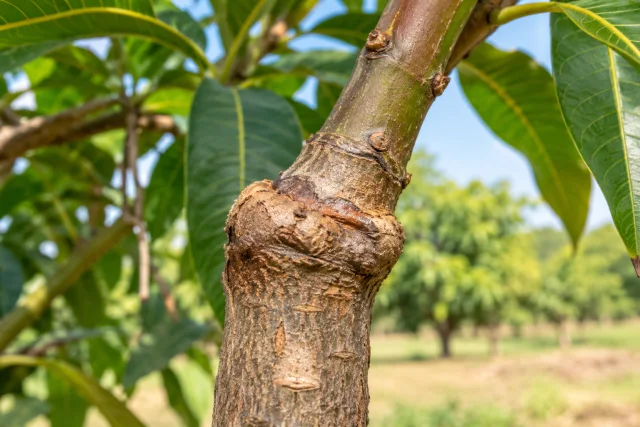
Cleft grafting inserts a wedge-shaped scion into a split at the cut end of a stock or branch. In mango work, matching the living cambial regions along at least one suitable edge is more important than placing a thin scion exactly in the middle of a thick stock. Secure the join and protect exposed surfaces from drying and water entry. A successful technique on one stem size or season should not be treated as a guarantee for every tree.
Read more about Cleft Grafting
Callus (generated editorial illustration)

Callus

Callus is tissue formed as plant cells divide in response to injury or certain propagation conditions. At a mango graft it contributes to healing around the joined surfaces, but a visible swelling is not proof of a complete vascular connection. A scion can open buds briefly using stored reserves before failing. Judge graft success by sustained healthy growth and a sound union over time, while preventing wrapping material from becoming a constricting band.

Read more about Callus

Cambium

Cambium is a thin region of actively dividing cells between the inner bark and the wood of a woody stem. During mango grafting, close alignment of living cambial regions helps the scion and rootstock form a functioning connection. Matching outer bark alone may not provide that contact when stems differ in thickness. Clean cuts, secure wrapping, and protection from movement support healing; pushing two cut surfaces together does not guarantee that their living tissues are correctly aligned.

Read more about Cambium

Clone

A clone is a plant or group of plants produced from one source through asexual reproduction and generally sharing its genotype, apart from possible mutations. Mango grafting preserves the scion as a clone of the selected source rather than creating a new seedling genotype. Clonal identity does not make all trees perform identically: rootstock, soil, climate, health, and management still matter. A clone is also not automatically disease-free, so propagation hygiene and trustworthy source material remain important.

Read more about Clone
Cocktail Tree

Cocktail Tree

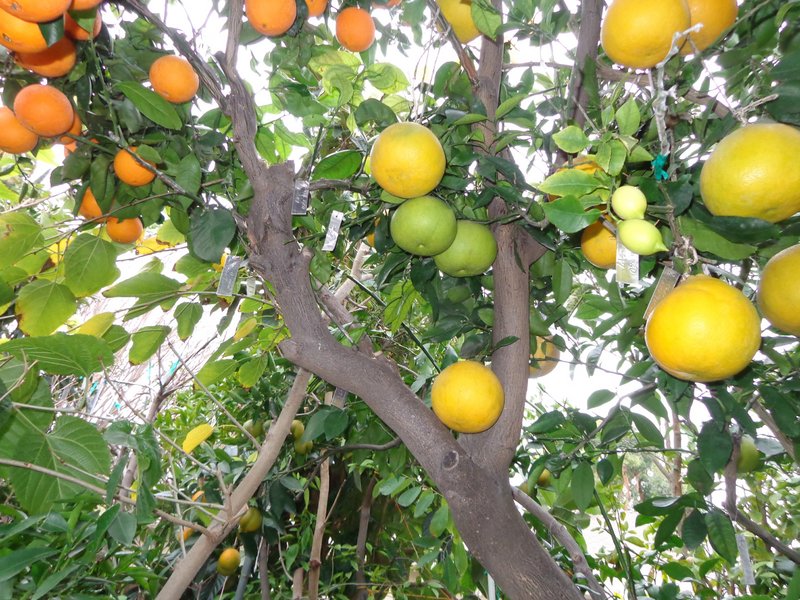
A cocktail tree is a fruit tree carrying more than one grafted cultivar. On a mango cocktail tree, each successfully grafted branch retains its own cultivar identity, offering variety within limited planting space. The arrangement does not guarantee balanced growth: a vigorous branch can shade or overtake weaker grafts, so labeling and selective pruning matter. Different harvest seasons may broaden the picking window where the cultivars perform appropriately, but combining branches does not make an unsuitable climate suitable for mango production.

Read more about Cocktail Tree

Cross-Pollination

Cross-pollination is transfer of pollen between genetically different plants. For grafted mangoes, two separate trees of the same cultivar may still be the same genotype, while two different cultivars can provide genetically different pollen. Cross-pollination affects the embryo's parentage rather than changing the cultivar identity of the flesh on the current crop. It may be useful in breeding, but adding another tree does not automatically solve every flowering or fruit-retention problem.

Read more about Cross-Pollination

Cultivar

A cultivar is a cultivated plant selection maintained for recognizable characteristics. Named mango cultivars are commonly preserved by grafting, because seedlings from their fruit can differ genetically and horticulturally. A cultivar name is therefore more than a description such as sweet or yellow. Keep accurate labels and source records, and do not apply the mother's cultivar name to an unverified seedling. Environmental conditions can change appearance and performance without necessarily making a genuine graft a different cultivar.

Read more about Cultivar