
This site contains affiliate links for which we may be compensated.

Mango Database
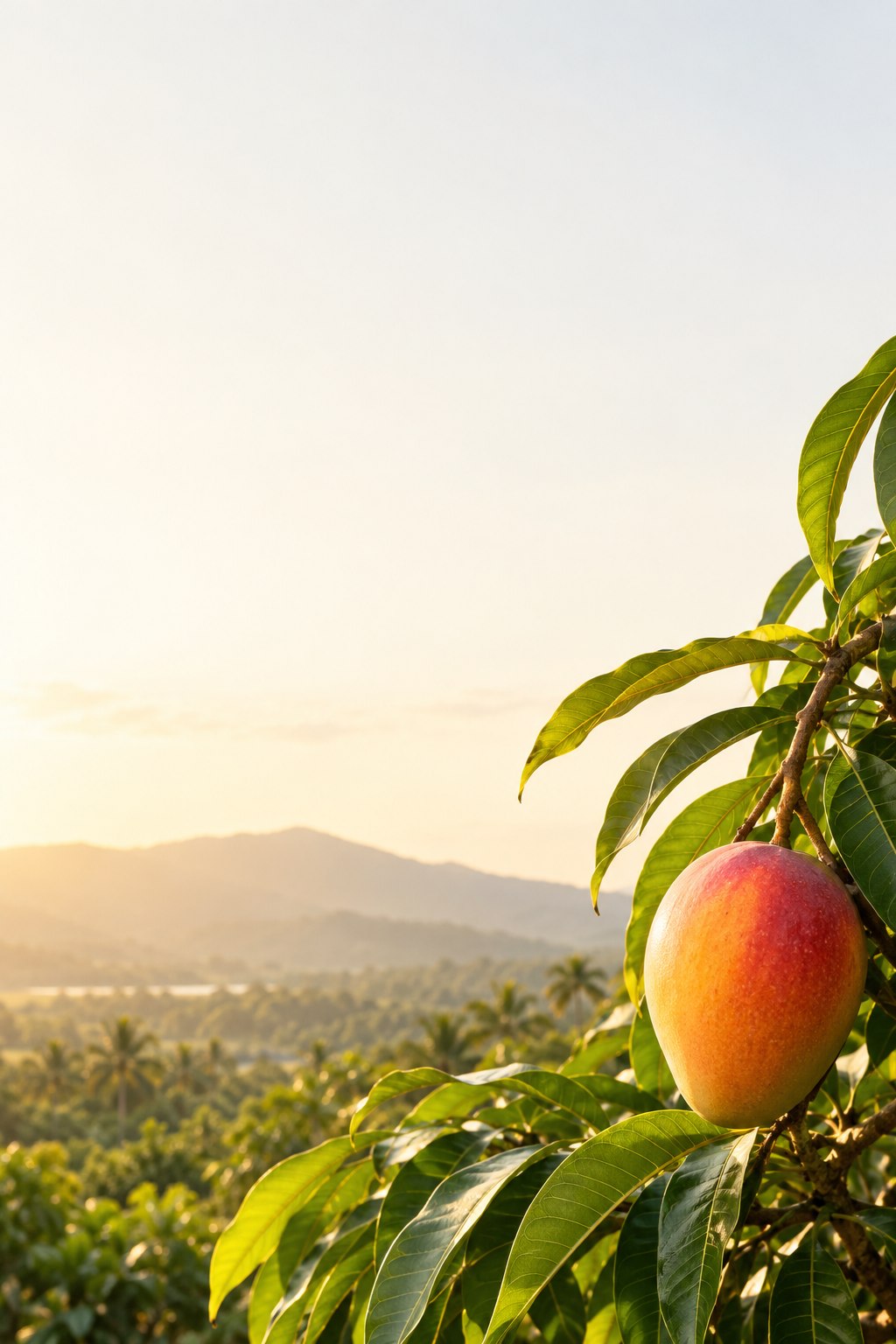
Mangoes in a sunlit tropical orchard

Mango Glossary

Understand the language of mango growing, one term at a time.

Explore Mango Terminology

Browse definitions and growing concepts to expand your mango knowledge.

Showing 1–3 of 3 terms
Node (generated editorial illustration)

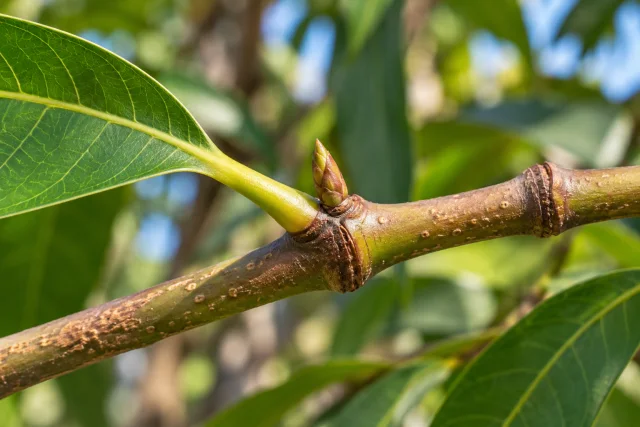
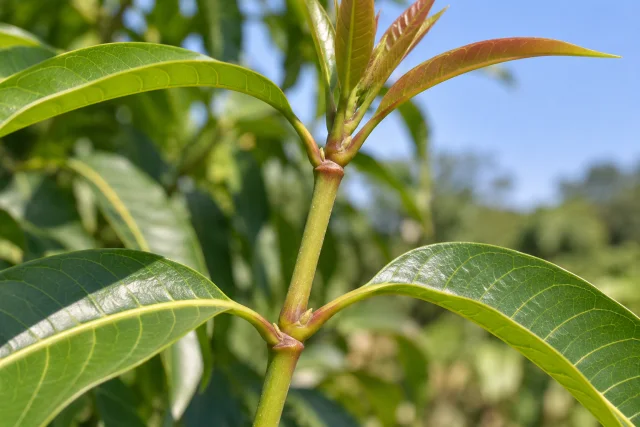
Node

A node is a point on a stem where a leaf or leaves attach and where associated buds may occur. Nodes help a grower describe mango shoot structure and locate potential new growth. They are different from the internodes between them. When making training or propagation cuts, recognize the actual bud and tissue condition instead of assuming every mark on the bark will produce a shoot. Damaged or inactive buds may not respond as expected after pruning.
Read more about Node
Internode (generated editorial illustration)

Internode

An internode is the length of stem between two neighboring nodes. Mango shoots may have different internode lengths depending on growth conditions, developmental stage, and cultivar. Very stretched growth can signal inadequate light, but internode length alone is not a diagnosis or a reliable variety identifier. When selecting propagation material or describing a tree, examine bud position, shoot maturity, overall vigor, and the conditions in which the shoot developed rather than measuring one segment in isolation.

Read more about Internode
Axillary Bud (generated editorial illustration)

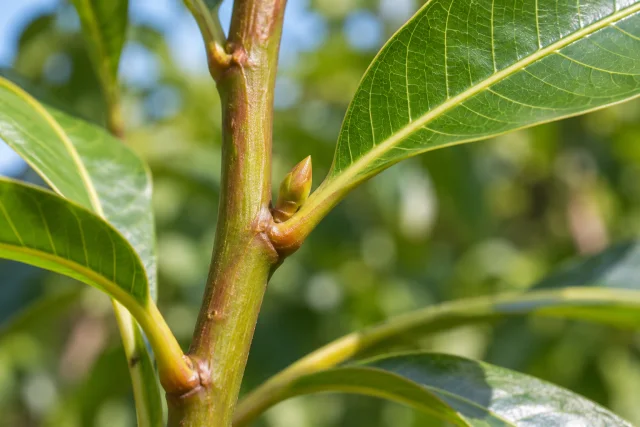
Axillary Bud

An axillary bud occurs in the angle between a leaf and its stem. On a mango shoot, these buds can provide new side growth when conditions favor it or when the terminal shoot is removed. Their presence helps explain why a carefully placed pruning cut can produce branching below the cut. The response is not identical at every node, so inspect the tree's vigor and subsequent growth instead of expecting a fixed number of branches from every pruning action.

Read more about Axillary Bud