Pre-rooting means encouraging roots to begin developing before a cutting is moved to its intended growing container or site. The term occurs in hobby propagation discussions, but mango cuttings are generally less dependable than seedling rootstocks followed by grafting. A swollen bud or fresh leaves do not prove that a cutting has rooted; stored reserves can support temporary growth. Maintain suitable moisture and aeration, avoid claiming guaranteed success, and distinguish this method from germinating a mango seed.
Peat moss is partly decomposed plant material accumulated in wetland peat deposits, commonly used as a moisture-retaining component of potting media. Sphagnum peat differs from the recognizable long strands sold as sphagnum moss. In a mango container it needs to be balanced with components that maintain air space; keeping a fine-textured peat mix constantly wet can stress roots. Very dry peat can be difficult to rewet, and it supplies little complete nutrition by itself.
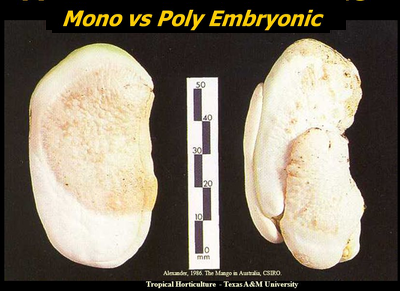
Polyembryonic describes a seed with multiple embryos. Mango seeds of this type can contain nucellar embryos derived from the mother tree's tissue as well as a sexually produced embryo; not every embryo necessarily survives or emerges. Nucellar seedlings can preserve the maternal genotype, but a sprout cannot be identified reliably as clonal merely because it is first, tallest, or strongest. This distinction matters when selecting rootstocks or attempting true-to-type seed propagation. A verified graft remains the clearest way to obtain a named cultivar.
Read the mango seed FAQ