


About Tommy Atkins
The original tree reportedly grew from a Haden seed planted around 1922 on the property of Thomas H. Atkins of Broward County, Florida. Later pedigree analysis supported the Haden parentage. Thomas Atkins submitted the fruit to the variety committee of the Florida Mango Forum multiple times during the 1950s, which rejected it due to its unremarkable eating qualities and considerable fiber in the flesh. Atkins, however, felt strongly that the fruit had good commercial potential due to its color, strong and steady production, relatively good fungus resistance, and good handling characteristics. He was able to market the fruit successfully to commercial growers, who began planting the cultivar during the 1950s. Thereafter, 'Tommy Atkins' became extremely popular as a commercial variety, eventually becoming the most commonly planted commercial mango in Florida, and later the most extensively planted in the Americas, a position it still holds today.
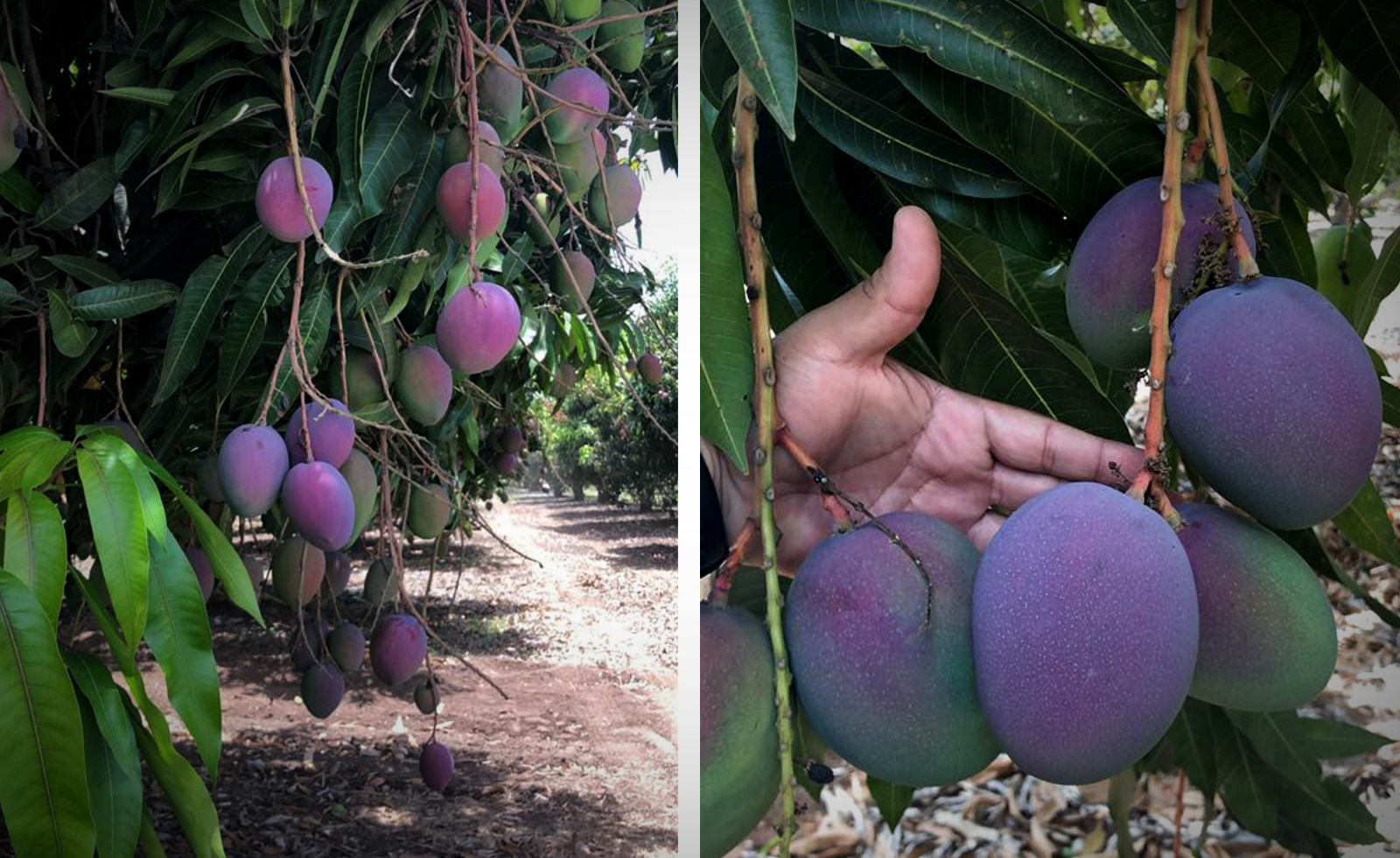
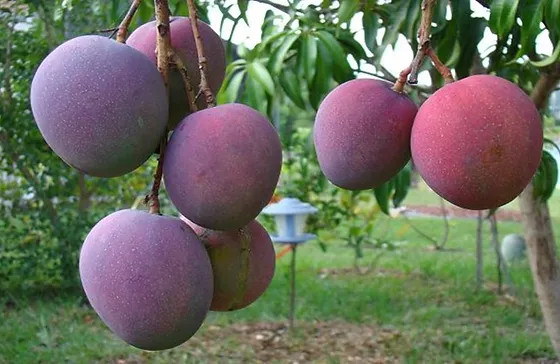
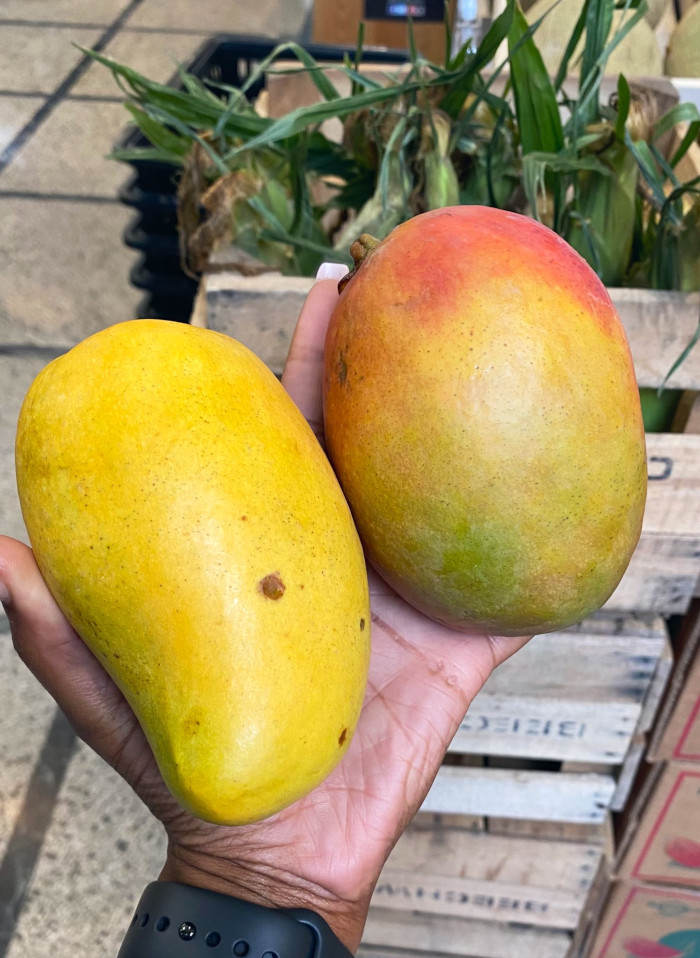
Tommy Atkins mangoes are a medium to large sized mango variety weighing up to two pounds each. They are broadly oval shaped with a green skin almost always covered with a dark red blush with occasional orange or yellow accents. The smooth skin is covered with small, yellow-green lenticels (pores) that appear like freckles. The skin is thick, protecting the firm, deep yellow flesh during shipping. Tommy Atkins mangoes are juicy, with a somewhat fibrous flesh, and a mildly sweet taste. The fruit must be lightly squeezed to determine ripeness.
Tommy Atkins mangoes are a Florida variety of Mangifera indica. While not necessarily the tastiest variety, they became popular among mango growers in Florida in the 1950s as a replacement for the disease-prone haden mangoes. The larger Tommy Atkins mangoes are considered to be visually attractive, and have highly productive and long shelf-life – strong factors in commercial appeal. Today, the Tommy Atkins mango is the most extensively planted commercial cultivar in the Americas.


Photo Gallery
Add Your Image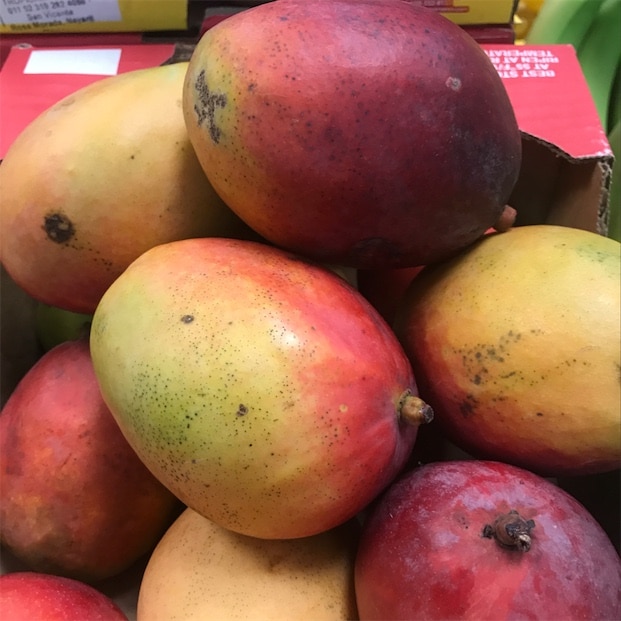
Video Gallery
Member Descriptions Add Your Description
No member descriptions yet.
Similar Varieties
No similar varieties have been recorded yet.