The loudest question at a mango tasting is usually which one won. A more interesting question arrives afterward: what exactly did everyone compare? One fruit may have been soft and fragrant, another still firm, and a third identified only by a handwritten market sign. A tasting becomes more useful when it records those differences instead of compressing them into a single ranking. It can still be sociable, generous, and full of strong preferences.
Real mango events can combine pleasure with education. Fairchild Tropical Botanic Garden's Mango Festival information provides an example of programming that includes tasting and learning opportunities. Event schedules and offerings change, so consult an organizer's current information before making plans. A small home or garden-club tasting does not need to imitate a large festival. It needs a clear purpose that suits the fruit, facilities, and people actually available.
Choose that purpose before buying samples. You might compare the aroma of several reliably named fruits, observe changes as a batch ripens, or explore how people describe texture. These are different exercises. Mixing them without explanation makes the results hard to interpret. If you include unnamed fruit, treat it as unnamed rather than assigning the cultivar it most resembles. A tasting table is a place to gather observations, not a shortcut around the work of establishing plant identity.
Make a simple sample record with source, supplied name, acquisition date, storage history if known, and condition at serving. Note uncertainty where it belongs. Mango skin color is not a universal maturity guide; the UC Davis mango fact sheet specifically cautions against using red color as a maturity index. Fruit of the same named cultivar can also differ in condition. That matters when explaining why today's preference is not an eternal verdict on a tree.
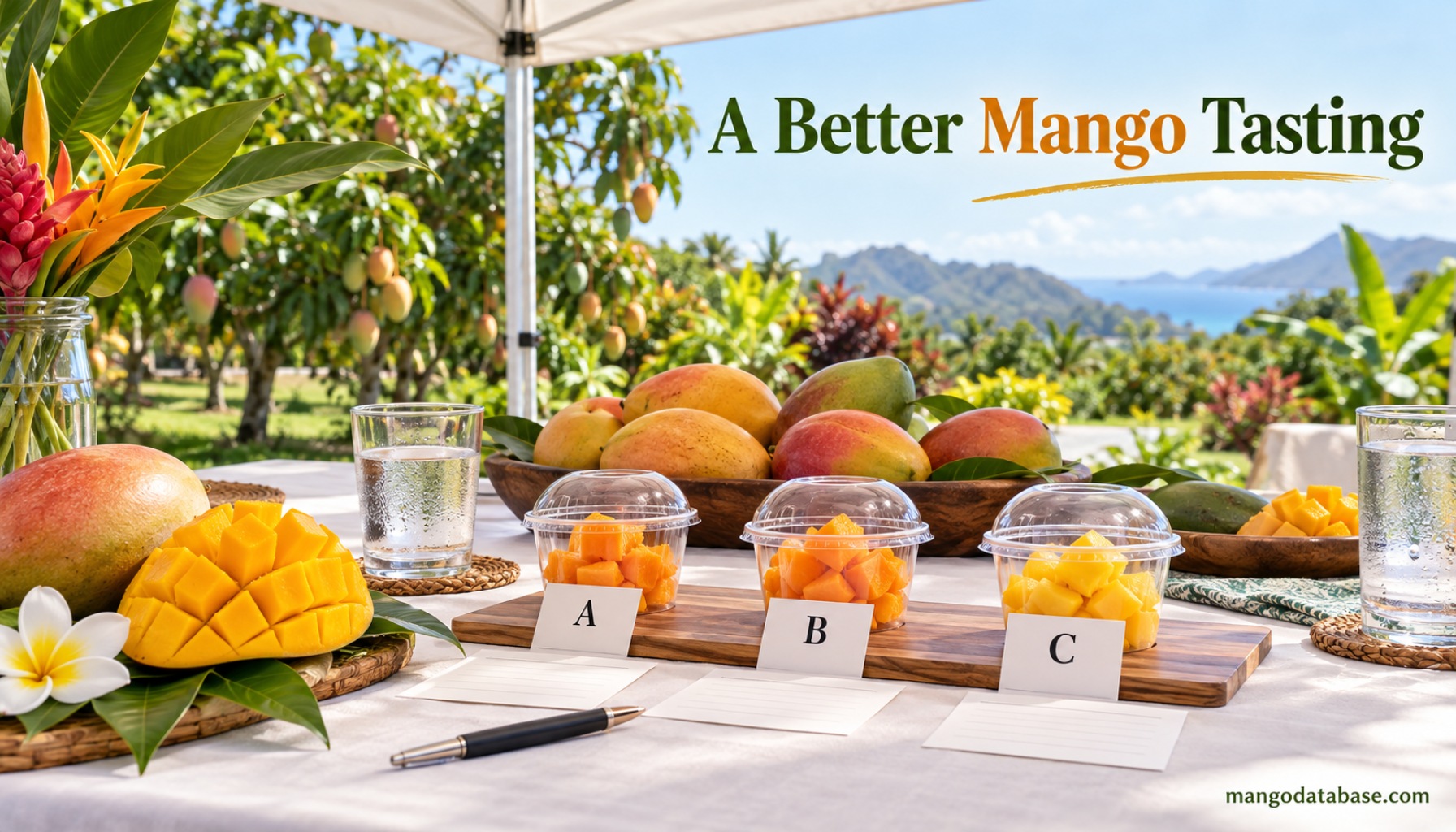
For an informal comparison, simple letter codes on serving cups can reduce the immediate influence of a famous name. Keep a separate key and reveal it after people have written their first impressions. This is an organizing suggestion, not a claim to reproduce a controlled scientific sensory panel. Offer water and room for quiet notes. Ask guests for concrete descriptions such as firm, melting, tart, aromatic, or fibrous before inviting a numerical score that can conceal those distinctions.
Safe handling deserves a plan of its own. Wash fruit before preparation, use clean utensils, and protect cut samples from contamination. The FDA's guidance for outdoor food handling explains the need to keep perishable food cold and limit unrefrigerated serving to two hours, or one hour when outdoor temperatures exceed 90 degrees Fahrenheit. Arrange small serving batches and suitable cold storage rather than one large table left out all afternoon. Tell guests what is in every preparation, including added ingredients, and follow applicable local rules for public events.
During the conversation, separate liking from description. A guest who prefers a sharply tangy sample has not disproved someone who favors a softer, sweeter one. Capture both observations. Avoid suggesting that a crowd vote establishes nutritional superiority, disease resistance, or growing suitability; those questions were not tested. Even flavor conclusions should be limited to the fruit served under the conditions recorded. Missing a favored cultivar need not become an argument about which sample was incorrectly named.
Finish by sharing the sample key and a short account of what people noticed. Keep photographs and records together if participants agree, without posting personal information by default. The strongest result may be a better vocabulary, a question about ripeness, or an intention to taste the same fruit again. A winner supplies a headline. A well-documented tasting gives growers and enthusiasts something more durable: a comparison they can understand, question, and use as a starting point rather than a final judgment.
Leave a comment