
This site contains affiliate links for which we may be compensated.

Mango Database
Mangoes in a sunlit tropical orchard

Mango Glossary

Understand the language of mango growing, one term at a time.

Explore Mango Terminology

Browse definitions and growing concepts to expand your mango knowledge.

Showing 1–3 of 3 terms

Mealybugs

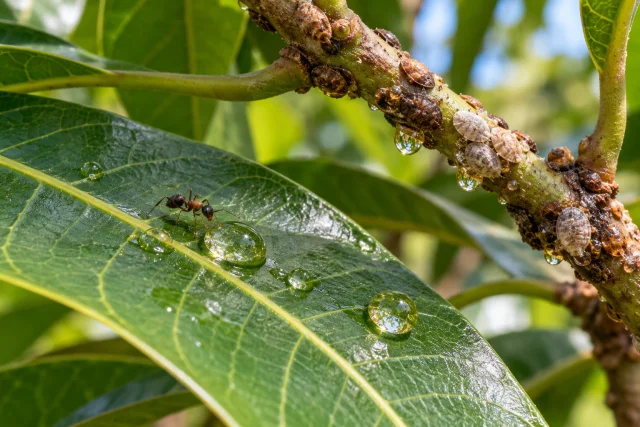
Mealybugs are sap-feeding insects often recognized by white waxy coverings or cotton-like masses. On mango they may gather on tender shoots, flower clusters, or fruit and produce honeydew that supports sooty mold. Ants can protect honeydew-producing insects from natural enemies, so inspect for both. Identification matters because shed skins, harmless wax, and other insects can look similar at a distance. Start with close monitoring and appropriate cultural or biological measures instead of applying broad treatments to every white patch.
Read more about Mealybugs
Honeydew (generated editorial illustration)

Honeydew

Honeydew is a sugary excretion produced by certain sap-feeding insects, including many mealybugs and soft scales. On mango leaves and fruit it can feel sticky, attract ants, and provide a surface food source for sooty mold. The mold is a consequence of the honeydew rather than proof that a fungus is attacking the leaf tissue internally. Trace the deposit to the insects producing it, and consider ant activity and natural enemies instead of repeatedly washing the surface without addressing the cause.

Read more about Honeydew

Sooty Mold

Sooty mold is a dark fungal coating that grows on sticky honeydew deposited by certain sap-feeding insects. On mangoes it can cover leaves, twigs, or peel without being the same disease as anthracnose. Heavy coverage can reduce light reaching leaves and make fruit unattractive. Inspect for scale insects, mealybugs, or other honeydew producers and consider ant activity. Managing the source of honeydew is generally more useful than repeatedly trying to remove the black coating without addressing the insects.

Read more about Sooty Mold