This site contains affiliate links for which we may be compensated.

Mango Database
Mangoes in a sunlit tropical orchard

Mango Glossary

Understand the language of mango growing, one term at a time.

Explore Mango Terminology

Browse definitions and growing concepts to expand your mango knowledge.

Showing 8–14 of 91 terms

Matching Mango Varieties

Chlorophyll

Chlorophyll is a group of pigments involved in capturing light for photosynthesis. It gives healthy mature mango leaves much of their green appearance. A leaf's color also reflects its age, other pigments, nutrition, and condition, so pale or yellow leaves do not diagnose a single deficiency. Compare older and younger foliage and the pattern of discoloration before choosing a response. Newly emerging mango leaves can be bronze or reddish without indicating that the tree is diseased.

Chlorophyll participates in capturing energy, while a leaf also needs the rest of its cellular machinery to use that energy. Simply making a leaf darker does not establish improved productivity. Evaluate growth, exposure, and root conditions along with color, and distinguish normal pigment changes in aging leaves from a widespread canopy problem.

Further reading: Mango fruit composition: research review.
Read more about Chlorophyll
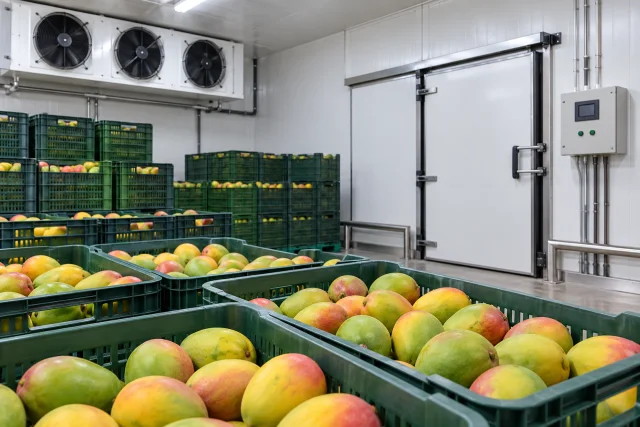
Controlled Atmosphere Storage (generated editorial illustration)

Controlled Atmosphere Storage

Controlled atmosphere storage uses managed oxygen and carbon dioxide levels, together with temperature and humidity control, to slow changes in harvested fruit. For mangoes, an appropriate system can delay ripening and help maintain market quality, but unsuitable gas levels can cause off-flavors, discoloration, or tissue injury. It is a specialized commercial practice, not the same as sealing fruit in an airtight home container. Effective use depends on cultivar, maturity, monitoring, and equipment rather than a single gas recipe for every batch.

The storage atmosphere must be interpreted together with temperature, exposure duration, and fruit maturity. Reducing oxygen beyond a fruit's tolerance can produce fermentation and objectionable flavors rather than extending useful life. Commercial records should describe the actual measured gas conditions, not merely state that a room or container was sealed.

Read more about Controlled Atmosphere Storage
Geographical Indication

Geographical Indication

A geographical indication identifies a product whose origin is linked to a defined place and whose qualities, reputation, or characteristics are associated with that origin under an applicable legal system. In mango commerce it can distinguish a protected regional product from a cultivar name used elsewhere. Protection, labeling rules, and production specifications depend on the registration and jurisdiction. A geographical indication does not mean every fruit is identical, and a tree grown outside the defined area does not acquire the designation merely by sharing a cultivar name.

Read more about Geographical Indication

Modified Atmosphere Packaging

Modified atmosphere packaging changes the gases surrounding produce inside a package through its initial gas mixture, produce respiration, package permeability, or a combination of these. It differs from actively regulated controlled-atmosphere storage. For mango, a suitable system must account for fruit condition, temperature, and gas exchange; an unsuitable sealed package can create damaging oxygen or carbon dioxide levels. This is not a recommendation to seal ripe mangoes in an untested airtight container.

A package and its contents form a changing system as living fruit consumes oxygen and releases carbon dioxide. Temperature changes can alter that balance. The gas mixture measured at packing is therefore not necessarily the atmosphere maintained later, making validated film properties, loading, and temperature management important in a commercial procedure.

Further reading: UC Davis: Mango Produce Facts.

Read more about Modified Atmosphere Packaging
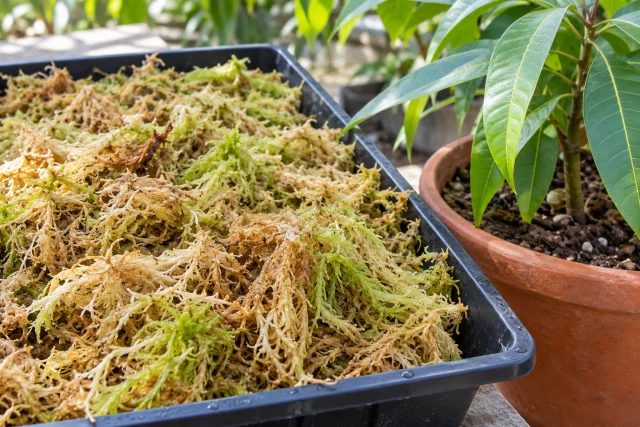
Sphagnum Moss (generated editorial illustration)

Sphagnum Moss

Sphagnum moss is the recognizable, long-fibered material harvested from sphagnum growth and often sold dried. It is different from the more decomposed, fine-textured material sold as peat moss, so check the actual material rather than relying only on a product name. Growers use sphagnum for moisture retention in some propagation setups, but wet moss packed too tightly can limit oxygen. It does not make mango cuttings easy to root or replace a complete, well-aerated potting medium for long-term tree growth.

Long fibers can hold water while maintaining a different structure from finely milled peat. Packing pressure changes that structure, so two propagation bundles made from the same material may have very different air spaces. Assess actual moisture and root development before separating a layered branch or moving a rooted plant into a different medium.

Read more about Sphagnum Moss
Aamras

Aamras

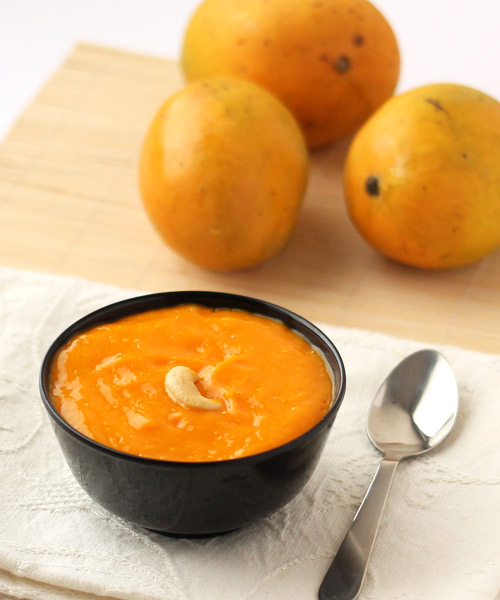
Aamras is a preparation of ripe mango pulp associated with western Indian food traditions, particularly in Maharashtra and Gujarat. It is commonly eaten with breads such as puri or served as a sweet accompaniment, with seasoning and added ingredients varying by household and region. It illustrates that mango eating quality includes how fruit performs in food, not only a fresh-fruit tasting score. Use ripe, sound fruit and clean preparation methods; pulp still requires appropriate food handling and storage after preparation.

The dish's texture can depend on the mango flesh and whether fibers are strained out. Culinary descriptions should distinguish the traditional preparation being discussed from a particular household adaptation. A photograph of a smooth puree does not identify the cultivar used, and a recipe should not imply that its proportions were personally tested unless they were.

Read more about Aamras

Abaxial

Abaxial describes the surface of an organ facing away from its axis; for a typical leaf, it is the underside. The term is useful in pest identification, disease descriptions, and instructions for taking diagnostic photographs. Mango leaves should be inspected on both surfaces, since symptoms or insects may be easier to see underneath. Label an underside photograph clearly and include an overall leaf view rather than assuming that a close-up establishes the cause of a problem.

The term gives a consistent orientation even when a leaf twists or hangs at an angle. Mark upper and lower surfaces when taking a sequence of diagnostic photographs. A symptom seen from below may correspond to a different-looking area above, so paired views help locate damage within the blade rather than merely on its surface.

Further reading: Oregon State University: Vegetative Plant Parts.

Read more about Abaxial