

This site contains affiliate links for which we may be compensated.

Mango Database
Mangoes in a sunlit tropical orchard

Mango Glossary

Understand the language of mango growing, one term at a time.

Explore Mango Terminology

Browse definitions and growing concepts to expand your mango knowledge.

Showing 22–28 of 91 terms

Matching Mango Varieties

Branch Crotch

A branch crotch is the junction or angle where a branch meets another branch or the trunk. Its structure matters when assessing a tree's framework, especially where competing stems or included bark are present. On mango, a crowded junction may also be difficult to inspect or prune cleanly. Angle alone does not establish safety; branch size, attachment, defects, and loading all contribute. Have questionable large limbs assessed professionally rather than relying on a photograph of the angle.

The junction contains tissues connecting a branch with its supporting structure. Where bark becomes enclosed between competing stems, the attachment can differ from a well-developed branch union. Document the whole junction and branch sizes when seeking an assessment; a close photograph of one angle omits important structural context.

Further reading: University of Minnesota: Pruning Trees and Shrubs.
Read more about Branch Crotch

Bud Differentiation

Bud differentiation is the development of a bud's internal structures toward a particular growth form, such as vegetative or floral growth. It is distinct from the earlier physiological signals involved in induction and from the later visible opening of the bud. In mango management, this distinction explains why actions taken just before visible bloom may already affect developing flower structures. Observe shoot maturity and local seasonal patterns rather than assuming a closed bud is inactive or unaffected by pruning.

Differentiation involves the development of recognizable organ identity from earlier meristematic tissue. A bud can enlarge before its eventual outcome is easy to recognize externally. Following the same marked shoot through development is more reliable than comparing unrelated buds and assigning all visible size differences to flower formation.

Read more about Bud Differentiation

Buffer Capacity

Buffer capacity is a soil's resistance to a change in pH when acid or base is added. Two soils with the same measured pH may require different amounts of an amendment because their buffering differs. Mango growers should therefore avoid calculating amendment rates from pH alone or copying a rate from another garden. Use a laboratory's relevant tests and recommendations, and consider the depth and area being treated instead of assuming that a small surface application changes the whole root zone.

Buffering reflects the components that react as acidity changes, including properties of mineral and organic materials. A pH test reports the current condition; it does not by itself measure the full reserve involved in changing it. This is one reason amendment requirements should be interpreted from appropriate laboratory information rather than a target number alone.

Further reading: Colorado State University: Soil pH.

Read more about Buffer Capacity

Canker

A canker is a localized area of dead tissue on a stem, branch, or trunk, often involving bark and underlying tissues. It is a symptom description rather than the name of one pathogen. On mango, document its position, progression, associated cracking or exudate, and the condition of nearby growth. Physical injury and several disease processes can produce superficially similar damage, so identifying a canker does not by itself establish which treatment or pruning response is appropriate.

A canker may have a distinct margin between affected and apparently healthy tissue, but appearances change as the injury develops. Note whether a branch above it declines and whether similar areas occur elsewhere. Those observations help establish the extent of the problem without assuming that every bark depression shares one cause.

Further reading: Purdue: Symptoms and Signs for Plant Problem Diagnosis.

Read more about Canker
Carbon Sequestration

Carbon Sequestration

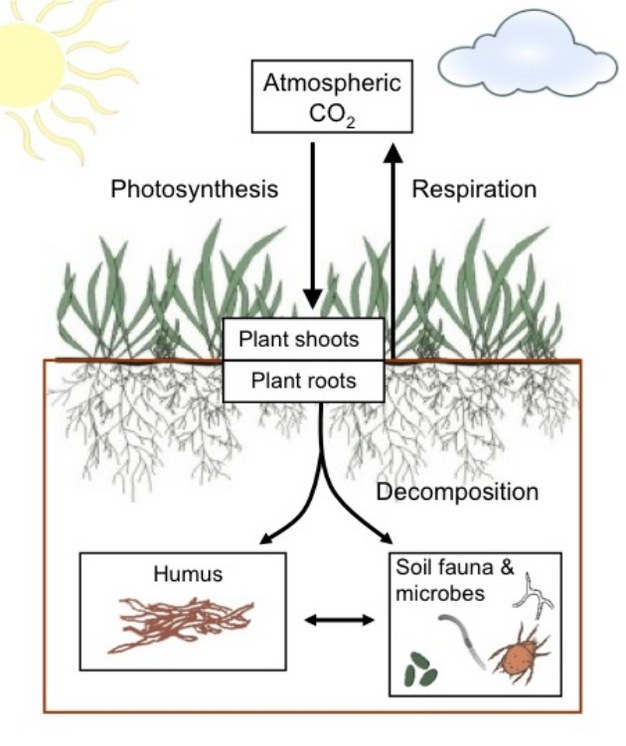
Carbon sequestration is capture and storage of carbon in a longer-lived pool such as woody biomass or soil organic matter. Mango trees incorporate atmospheric carbon into their tissues as they grow, and management influences whether stored carbon persists or returns to the atmosphere. Net climate effects also depend on land-use history, inputs, transport, and eventual tree removal. Planting a mango is therefore not a measured carbon offset by itself; credible comparisons require a defined baseline and accounting period.

Stored carbon and the rate of additional storage are different measurements. A mango tree contains carbon in its living tissues, while orchard soils and management practices also influence the wider balance. Quantifying a climate benefit requires defined boundaries and measurements over time rather than multiplying a tree count by an unsupported universal value.

Read more about Carbon Sequestration

Carotenoids

Carotenoids are pigments associated with yellow, orange, and related colors in plant tissues. They contribute to mango flesh coloration, although the mixture and concentration vary with cultivar and developmental stage. Color alone cannot establish a fruit's exact nutritional composition or prove its identity. For a useful tasting record, describe flesh color alongside ripeness, texture, aroma, and growing conditions, and avoid turning a vivid orange appearance into an unsupported claim about a particular cultivar or health benefit.

Different carotenoids contribute different colors and can coexist with other pigments. As green chlorophyll diminishes, underlying colors may become more visible without a simple one-to-one relationship between hue and pigment quantity. A flesh-color description is useful, but a nutritional comparison requires actual compositional evidence rather than judging photographs.

Further reading: Mango fruit composition: research review.

Read more about Carotenoids

Cation Exchange Capacity

Cation exchange capacity, or CEC, describes the capacity of soil materials to hold exchangeable positively charged ions. These include nutrient ions such as calcium, magnesium, potassium, and ammonium. For mango nutrition it helps explain why different soils retain and release nutrients differently, but it is not a complete fertility score or a fertilizer prescription. Interpret CEC with soil pH, test results, and the tree's condition rather than assuming a high number means every nutrient is available in the right amount.

CEC reflects exchange sites rather than the total inventory of every nutrient. It does not quantify anions in the same way or establish that held cations occur in an appropriate balance. A complete interpretation considers the laboratory's extraction method, pH, and nutrient results instead of treating the number as a stand-alone quality grade.

Read more about Cation Exchange Capacity