This site contains affiliate links for which we may be compensated.

Mango Database
Mangoes in a sunlit tropical orchard

Mango Glossary

Understand the language of mango growing, one term at a time.

Explore Mango Terminology

Browse definitions and growing concepts to expand your mango knowledge.

Showing 57–63 of 91 terms

Matching Mango Varieties

Mango Auction

A mango auction is a sale in which buyers bid for fruit, plants, or other mango-related items under stated terms. Some auctions emphasize exceptional presentation or rarity, while local events may serve ordinary fundraising or grower exchanges. A headline price is not a reliable estimate of typical market value, flavor, or production cost. When comparing auction reports, check what was sold, the quantity, grading, and purpose of the event rather than treating a promotional sale as a universal price for that cultivar.
Read more about Mango Auction

Micronutrient

A micronutrient is an essential element needed by plants in small amounts, such as iron, zinc, manganese, copper, or boron. Mangoes still need these nutrients, but the margin between adequate and excessive supply can be narrow for some elements. Symptoms can reflect poor availability at an unsuitable pH rather than absence from the soil. Identify the likely problem and use appropriate testing or advice instead of assuming that repeated mixed trace-element applications are harmless.

A small required quantity can still have a substantial physiological role. Supplying more does not necessarily improve growth, and excessive concentrations may injure plants or disrupt other nutrients. Distinguish a laboratory-confirmed shortage from reduced availability caused by root conditions before selecting a micronutrient source or repeating an application.

Read more about Micronutrient

Necrosis

Necrosis is the death of cells or tissues. On mango it may appear as dead leaf margins, brown patches, or damaged areas in shoots and fruit, depending on the cause. It differs from chlorosis, which describes a loss of green coloration without necessarily implying tissue death. Cold, heat, salts, physical injury, and infection can all contribute to necrotic symptoms. Record the pattern and its development before assuming that every brown area represents the same disease.

Dead tissue cannot regain normal function simply because its original cause is corrected. Later observations should distinguish recovery through healthy new growth from changes in the appearance of an old necrotic area. Document whether new damage is developing, since a persistent brown patch alone does not prove that the damaging process remains active.

Further reading: Purdue: Symptoms and Signs for Plant Problem Diagnosis.

Read more about Necrosis
Node (generated editorial illustration)

Node

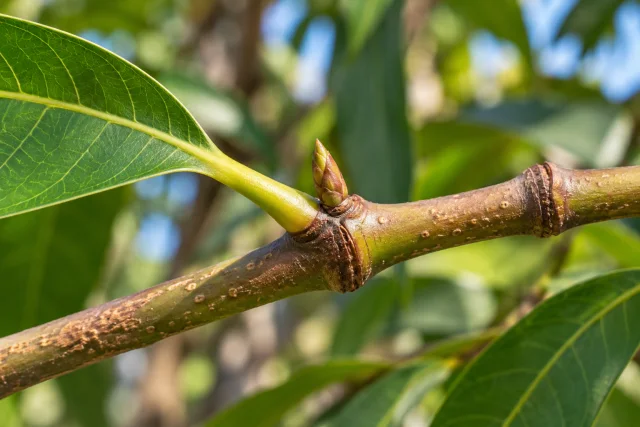
A node is a point on a stem where a leaf or leaves attach and where associated buds may occur. Nodes help a grower describe mango shoot structure and locate potential new growth. They are different from the internodes between them. When making training or propagation cuts, recognize the actual bud and tissue condition instead of assuming every mark on the bark will produce a shoot. Damaged or inactive buds may not respond as expected after pruning.

Nodes provide a useful reference for describing where leaves, buds, and new growth are attached. Counting them can help explain a training cut or document a shoot's development. Include the attachment points in photographs, because a close-up of an isolated stem segment may omit the structures needed to interpret its orientation.

Read more about Node

Noob

Noob is informal internet slang for a newcomer. In mango discussions it describes a person's experience level, not a type of tree or a technical growing method. A beginner can get more useful help by describing the tree's location, age, propagation method, pot or soil conditions, and symptoms, preferably with clear photographs. The label should not discourage questions: basic checks such as drainage, light, and root-ball moisture often matter more than complicated treatments when learning to grow mangoes.

Read more about Noob
Ovate

Ovate

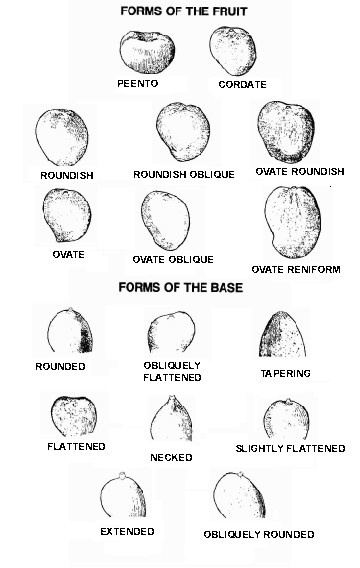
Ovate means egg-shaped in botanical descriptions: broader below the middle and narrowing toward the opposite end. In mango records it can describe an outline, especially a leaf or a fruit viewed in a stated orientation. Note which end is the stem end before comparing photographs, because camera angle can make shapes misleading. The term documents appearance rather than proving cultivar identity, sweetness, or flesh yield. Use it alongside seed, skin, flavor, growth habit, and provenance observations.

Shape descriptions work best with a consistent view. Photograph a mango's broad side and narrow side with the stem attachment visible, and record length and maximum width. Two fruits can share an ovate outline while differing substantially in their beak, shoulders, seed proportions, and internal flesh characteristics.

Read more about Ovate
Panicle (generated editorial illustration)

Panicle

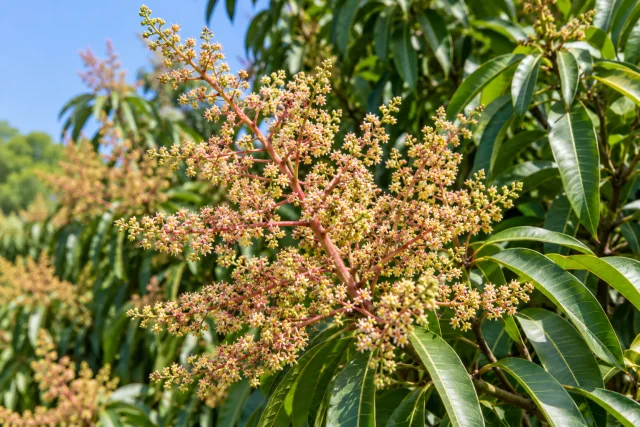
A panicle is a branched flower cluster. Mango panicles usually develop at shoot tips and carry many small flowers, including male flowers and flowers with both male and female structures. Only a small fraction normally become mature fruit, so numerous fallen flowers are not by themselves evidence of crop failure. Inspect the condition of the whole cluster, pollinator activity, weather, and developing fruitlets when judging flowering success rather than expecting every flower to produce a mango.

The branched structure places flowers at different positions and stages of opening within the same cluster. Count developing fruit separately from open flowers when keeping records. Following marked panicles through time provides a clearer picture of retention than comparing two photographs taken at different flowering stages or on different parts of the tree.

Read more about Panicle