

This site contains affiliate links for which we may be compensated.

Mango Database
Mangoes in a sunlit tropical orchard

Mango Glossary

Understand the language of mango growing, one term at a time.

Explore Mango Terminology

Browse definitions and growing concepts to expand your mango knowledge.

Showing 1–7 of 7 terms

Matching Mango Varieties

Aamras

Aamras

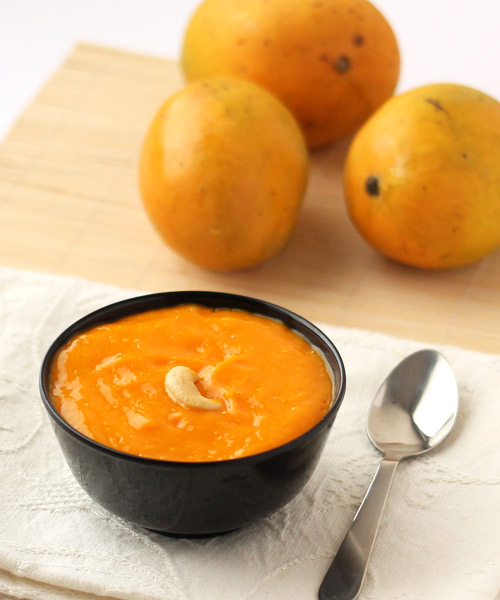
Aamras is a preparation of ripe mango pulp associated with western Indian food traditions, particularly in Maharashtra and Gujarat. It is commonly eaten with breads such as puri or served as a sweet accompaniment, with seasoning and added ingredients varying by household and region. It illustrates that mango eating quality includes how fruit performs in food, not only a fresh-fruit tasting score. Use ripe, sound fruit and clean preparation methods; pulp still requires appropriate food handling and storage after preparation.

The dish's texture can depend on the mango flesh and whether fibers are strained out. Culinary descriptions should distinguish the traditional preparation being discussed from a particular household adaptation. A photograph of a smooth puree does not identify the cultivar used, and a recipe should not imply that its proportions were personally tested unless they were.
Read more about Aamras

Abaxial

Abaxial describes the surface of an organ facing away from its axis; for a typical leaf, it is the underside. The term is useful in pest identification, disease descriptions, and instructions for taking diagnostic photographs. Mango leaves should be inspected on both surfaces, since symptoms or insects may be easier to see underneath. Label an underside photograph clearly and include an overall leaf view rather than assuming that a close-up establishes the cause of a problem.

The term gives a consistent orientation even when a leaf twists or hangs at an angle. Mark upper and lower surfaces when taking a sequence of diagnostic photographs. A symptom seen from below may correspond to a different-looking area above, so paired views help locate damage within the blade rather than merely on its surface.

Further reading: Oregon State University: Vegetative Plant Parts.

Read more about Abaxial

Adaxial

Adaxial describes the surface facing toward an organ's axis; for a typical leaf, it is the upper surface. It is paired with abaxial, the underside, in botanical descriptions. Upper and lower mango leaf surfaces can differ in appearance and in the visibility of damage. Photograph both when asking for help, and keep lighting consistent so that reflections from a glossy upper surface are not mistaken for pale lesions or a coating on the leaf.

Adaxial and abaxial are anatomical orientations, not descriptions of which surface happens to face the sun at the moment. Leaves can change angle as they develop or move in wind. A labeled pair of photographs is therefore more useful than calling one image the sunny side without identifying the actual surface.

Further reading: Oregon State University: Vegetative Plant Parts.

Read more about Adaxial
Agroforestry

Agroforestry

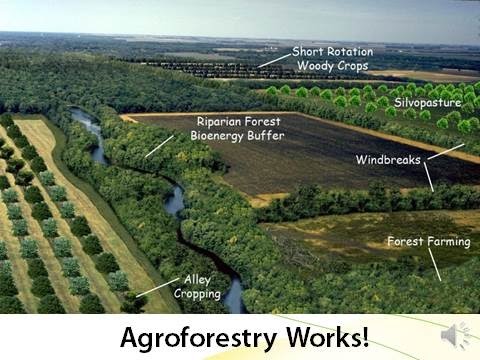
Agroforestry is intentional management of trees together with crops, livestock, or other agricultural components on the same land. Mango can be part of such a system, but successful combinations require planning for shade, root competition, water use, access, and changing tree size. A young orchard's inter-row crop may become unsuitable as the canopy closes. The approach can diversify production and provide ecological benefits, but does not automatically increase fruit quality or eliminate pests without attention to the particular planting design.

The compatibility of trees, crops, and other farm activities depends on their spatial and seasonal arrangement. Shade, access, water demand, and root competition all affect an integrated mango planting. A diverse-looking photograph is not enough to demonstrate a successful system; describe the participating components and the management objectives behind their arrangement.

Read more about Agroforestry

Algal Leaf Spot

Algal leaf spot is a plant disease associated with parasitic algae such as Cephaleuros species. On mango foliage, affected areas may appear as raised or textured spots with rusty or orange coloration, though appearance changes with age and conditions. It is not the same as an insect infestation or every brown leaf patch. Tree vigor, moisture conditions, and accurate identification matter when deciding whether management is needed. A few old spots do not automatically justify broad chemical treatment.

Surface texture, the age of a spot, and the condition of nearby tissue contribute to identification. A photograph taken in strong reflected light can obscure these details. Include both leaf surfaces and an overall shoot view, and compare newer and older lesions before attributing a rusty patch to one organism.

Read more about Algal Leaf Spot

Anthocyanins

Anthocyanins are water-soluble pigments that can produce red, purple, or bluish coloration in plant tissues. They contribute to the red appearance of some mango peel and young foliage, alongside other pigments and environmental influences. A red mango is not necessarily sweeter or more mature than a green-skinned one. When comparing fruit photographs, record the cultivar and stage of maturity if known, because lighting and sun exposure can also change how strongly a blush appears.

Pigment appearance changes with tissue, concentration, and surrounding chemistry, and photographs introduce additional variation through lighting and exposure. Describe the actual color and organ rather than inferring a measured pigment amount. In cultivar comparisons, distinguish a young leaf's temporary red coloration from the appearance of its mature foliage.

Further reading: Mango fruit composition: research review.

Read more about Anthocyanins

Appressorium

An appressorium is a specialized fungal structure that helps certain fungi attach to and penetrate a host surface. It is relevant to understanding infection processes in anthracnose-causing fungi, but it cannot normally be identified from an ordinary photograph of a mango spot. Its formation and activity depend on the organism and conditions. Use the term when explaining a disease process, while keeping a suspected anthracnose diagnosis separate from laboratory confirmation of the pathogen.

A fungal spore and an appressorium are different structures within an infection process. The spore can germinate and produce a structure adapted to host contact and penetration. Understanding that sequence helps explain why the presence of spores on a surface and an established infection within living tissue are not the same observation.

Further reading: Pacific Northwest Plant Disease Handbook: Glossary.

Read more about Appressorium