

This site contains affiliate links for which we may be compensated.

Mango Database
Mangoes in a sunlit tropical orchard

Mango Glossary

Understand the language of mango growing, one term at a time.

Explore Mango Terminology

Browse definitions and growing concepts to expand your mango knowledge.

Showing 1–5 of 5 terms
Bacterial Black Spot

Bacterial Black Spot

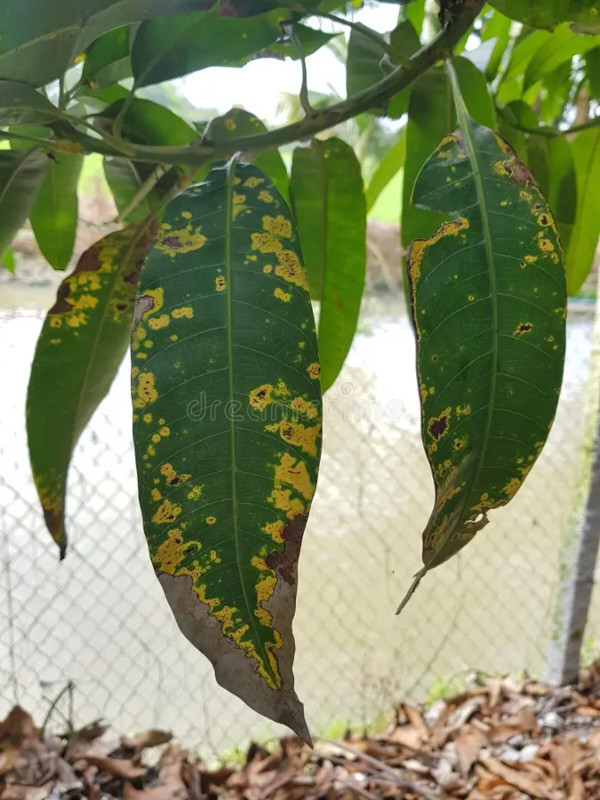
Bacterial black spot is a mango disease associated with Xanthomonas citri pv. mangiferaeindicae, which has also appeared under older scientific names. It can produce dark lesions on leaves, fruit, and young stems, sometimes with cracking or raised margins. Symptoms may overlap with fungal spots and physical damage, so diagnosis matters. Clean propagation material, reduced injury, sanitation, and locally appropriate management help limit spread. Do not infer that every black spot is bacterial or apply a treatment based only on color.

Disease descriptions should distinguish water-soaked lesions, cracking, and tissue death from insect scars or mechanical wounds. Wind-driven injury and moisture can influence the opportunity for infection, but neither identifies the bacterium. Preserve information about when symptoms began and which organs were affected when submitting material for diagnosis.

Read more about Bacterial Black Spot

Bicarbonate Alkalinity

Bicarbonate alkalinity is the acid-neutralizing capacity associated with bicarbonate in water. It is different from pH, which describes the water's current acid-base condition rather than its reserve capacity to resist change. Repeated irrigation with alkaline water can influence root-zone chemistry and equipment deposits. Mango growers evaluating persistent nutritional problems should consider water analysis alongside soil testing; water that looks clear and has an acceptable-looking pH can still have management-relevant alkalinity.

Two irrigation waters can have similar pH but different amounts of bicarbonate available to neutralize added acid. That distinction influences interpretation of treatment needs. Request the relevant laboratory measurement rather than estimating alkalinity from taste, clarity, or one pH reading, and consider repeated applications over time when evaluating the root environment.

Further reading: Colorado State University: Irrigation Water Quality.

Read more about Bicarbonate Alkalinity

Branch Crotch

A branch crotch is the junction or angle where a branch meets another branch or the trunk. Its structure matters when assessing a tree's framework, especially where competing stems or included bark are present. On mango, a crowded junction may also be difficult to inspect or prune cleanly. Angle alone does not establish safety; branch size, attachment, defects, and loading all contribute. Have questionable large limbs assessed professionally rather than relying on a photograph of the angle.

The junction contains tissues connecting a branch with its supporting structure. Where bark becomes enclosed between competing stems, the attachment can differ from a well-developed branch union. Document the whole junction and branch sizes when seeking an assessment; a close photograph of one angle omits important structural context.

Further reading: University of Minnesota: Pruning Trees and Shrubs.

Read more about Branch Crotch

Bud Differentiation

Bud differentiation is the development of a bud's internal structures toward a particular growth form, such as vegetative or floral growth. It is distinct from the earlier physiological signals involved in induction and from the later visible opening of the bud. In mango management, this distinction explains why actions taken just before visible bloom may already affect developing flower structures. Observe shoot maturity and local seasonal patterns rather than assuming a closed bud is inactive or unaffected by pruning.

Differentiation involves the development of recognizable organ identity from earlier meristematic tissue. A bud can enlarge before its eventual outcome is easy to recognize externally. Following the same marked shoot through development is more reliable than comparing unrelated buds and assigning all visible size differences to flower formation.

Read more about Bud Differentiation

Buffer Capacity

Buffer capacity is a soil's resistance to a change in pH when acid or base is added. Two soils with the same measured pH may require different amounts of an amendment because their buffering differs. Mango growers should therefore avoid calculating amendment rates from pH alone or copying a rate from another garden. Use a laboratory's relevant tests and recommendations, and consider the depth and area being treated instead of assuming that a small surface application changes the whole root zone.

Buffering reflects the components that react as acidity changes, including properties of mineral and organic materials. A pH test reports the current condition; it does not by itself measure the full reserve involved in changing it. This is one reason amendment requirements should be interpreted from appropriate laboratory information rather than a target number alone.

Further reading: Colorado State University: Soil pH.

Read more about Buffer Capacity