

This site contains affiliate links for which we may be compensated.

Mango Database
Mangoes in a sunlit tropical orchard

Mango Glossary

Understand the language of mango growing, one term at a time.

Explore Mango Terminology

Browse definitions and growing concepts to expand your mango knowledge.

Showing 1–7 of 11 terms

Matching Mango Varieties

Chlorophyll

Chlorophyll is a group of pigments involved in capturing light for photosynthesis. It gives healthy mature mango leaves much of their green appearance. A leaf's color also reflects its age, other pigments, nutrition, and condition, so pale or yellow leaves do not diagnose a single deficiency. Compare older and younger foliage and the pattern of discoloration before choosing a response. Newly emerging mango leaves can be bronze or reddish without indicating that the tree is diseased.

Chlorophyll participates in capturing energy, while a leaf also needs the rest of its cellular machinery to use that energy. Simply making a leaf darker does not establish improved productivity. Evaluate growth, exposure, and root conditions along with color, and distinguish normal pigment changes in aging leaves from a widespread canopy problem.

Further reading: Mango fruit composition: research review.
Read more about Chlorophyll
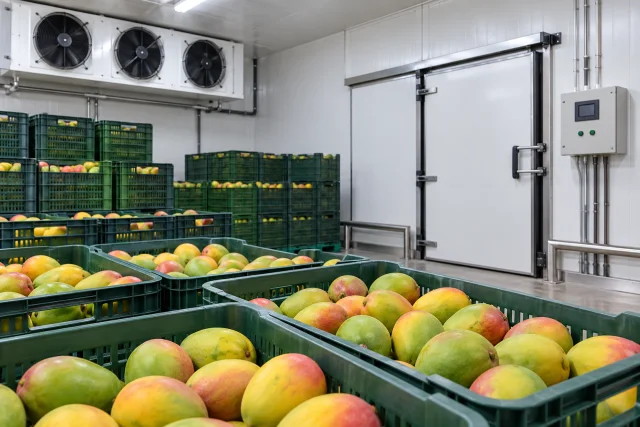
Controlled Atmosphere Storage (generated editorial illustration)

Controlled Atmosphere Storage

Controlled atmosphere storage uses managed oxygen and carbon dioxide levels, together with temperature and humidity control, to slow changes in harvested fruit. For mangoes, an appropriate system can delay ripening and help maintain market quality, but unsuitable gas levels can cause off-flavors, discoloration, or tissue injury. It is a specialized commercial practice, not the same as sealing fruit in an airtight home container. Effective use depends on cultivar, maturity, monitoring, and equipment rather than a single gas recipe for every batch.

The storage atmosphere must be interpreted together with temperature, exposure duration, and fruit maturity. Reducing oxygen beyond a fruit's tolerance can produce fermentation and objectionable flavors rather than extending useful life. Commercial records should describe the actual measured gas conditions, not merely state that a room or container was sealed.

Read more about Controlled Atmosphere Storage

Canker

A canker is a localized area of dead tissue on a stem, branch, or trunk, often involving bark and underlying tissues. It is a symptom description rather than the name of one pathogen. On mango, document its position, progression, associated cracking or exudate, and the condition of nearby growth. Physical injury and several disease processes can produce superficially similar damage, so identifying a canker does not by itself establish which treatment or pruning response is appropriate.

A canker may have a distinct margin between affected and apparently healthy tissue, but appearances change as the injury develops. Note whether a branch above it declines and whether similar areas occur elsewhere. Those observations help establish the extent of the problem without assuming that every bark depression shares one cause.

Further reading: Purdue: Symptoms and Signs for Plant Problem Diagnosis.

Read more about Canker
Carbon Sequestration

Carbon Sequestration

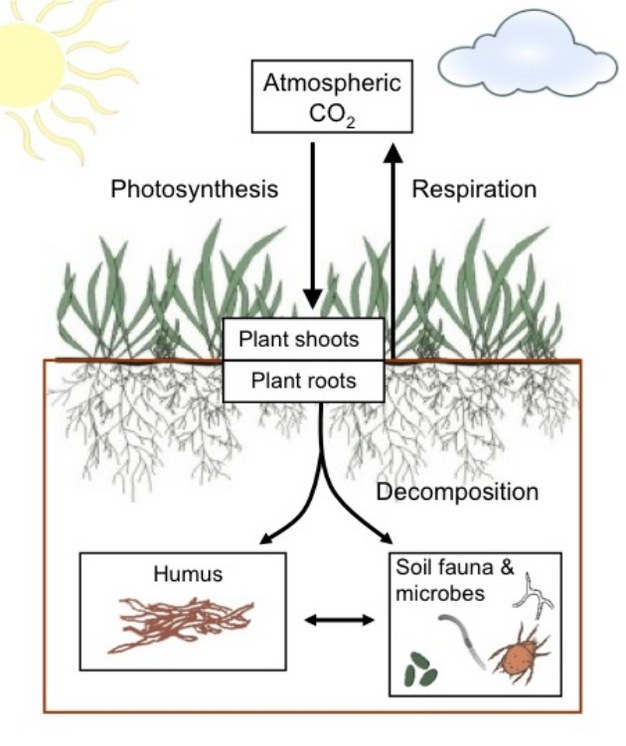
Carbon sequestration is capture and storage of carbon in a longer-lived pool such as woody biomass or soil organic matter. Mango trees incorporate atmospheric carbon into their tissues as they grow, and management influences whether stored carbon persists or returns to the atmosphere. Net climate effects also depend on land-use history, inputs, transport, and eventual tree removal. Planting a mango is therefore not a measured carbon offset by itself; credible comparisons require a defined baseline and accounting period.

Stored carbon and the rate of additional storage are different measurements. A mango tree contains carbon in its living tissues, while orchard soils and management practices also influence the wider balance. Quantifying a climate benefit requires defined boundaries and measurements over time rather than multiplying a tree count by an unsupported universal value.

Read more about Carbon Sequestration

Carotenoids

Carotenoids are pigments associated with yellow, orange, and related colors in plant tissues. They contribute to mango flesh coloration, although the mixture and concentration vary with cultivar and developmental stage. Color alone cannot establish a fruit's exact nutritional composition or prove its identity. For a useful tasting record, describe flesh color alongside ripeness, texture, aroma, and growing conditions, and avoid turning a vivid orange appearance into an unsupported claim about a particular cultivar or health benefit.

Different carotenoids contribute different colors and can coexist with other pigments. As green chlorophyll diminishes, underlying colors may become more visible without a simple one-to-one relationship between hue and pigment quantity. A flesh-color description is useful, but a nutritional comparison requires actual compositional evidence rather than judging photographs.

Further reading: Mango fruit composition: research review.
Read more about Carotenoids

Cation Exchange Capacity

Cation exchange capacity, or CEC, describes the capacity of soil materials to hold exchangeable positively charged ions. These include nutrient ions such as calcium, magnesium, potassium, and ammonium. For mango nutrition it helps explain why different soils retain and release nutrients differently, but it is not a complete fertility score or a fertilizer prescription. Interpret CEC with soil pH, test results, and the tree's condition rather than assuming a high number means every nutrient is available in the right amount.

CEC reflects exchange sites rather than the total inventory of every nutrient. It does not quantify anions in the same way or establish that held cations occur in an appropriate balance. A complete interpretation considers the laboratory's extraction method, pH, and nutrient results instead of treating the number as a stand-alone quality grade.

Read more about Cation Exchange Capacity

Chelate

A chelate is a compound in which a metal ion is held by an organic molecule. Certain chelated nutrient products help keep elements such as iron available under conditions where they would otherwise become less soluble. The chelating agent and soil pH matter, so products are not interchangeable simply because their labels say chelated. For a mango with suspected nutrient deficiency, consider root health and test information first; a chelate does not correct flooding, damaged roots, or every cause of yellow foliage.

Chelates differ in the conditions under which they keep metals in solution. A product suited to one pH range may perform differently in another root environment. Keep the nutrient element, chelating agent, application route, and tested conditions together when comparing results rather than grouping all chelated products into one interchangeable treatment.

Read more about Chelate