

This site contains affiliate links for which we may be compensated.

Mango Database
Mangoes in a sunlit tropical orchard

Mango Glossary

Understand the language of mango growing, one term at a time.

Explore Mango Terminology

Browse definitions and growing concepts to expand your mango knowledge.

Showing 1–7 of 9 terms
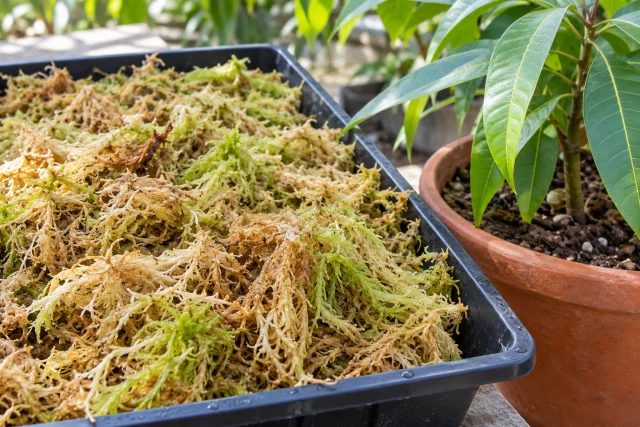
Sphagnum Moss (generated editorial illustration)

Sphagnum Moss

Sphagnum moss is the recognizable, long-fibered material harvested from sphagnum growth and often sold dried. It is different from the more decomposed, fine-textured material sold as peat moss, so check the actual material rather than relying only on a product name. Growers use sphagnum for moisture retention in some propagation setups, but wet moss packed too tightly can limit oxygen. It does not make mango cuttings easy to root or replace a complete, well-aerated potting medium for long-term tree growth.

Long fibers can hold water while maintaining a different structure from finely milled peat. Packing pressure changes that structure, so two propagation bundles made from the same material may have very different air spaces. Assess actual moisture and root development before separating a layered branch or moving a rooted plant into a different medium.
Read more about Sphagnum Moss
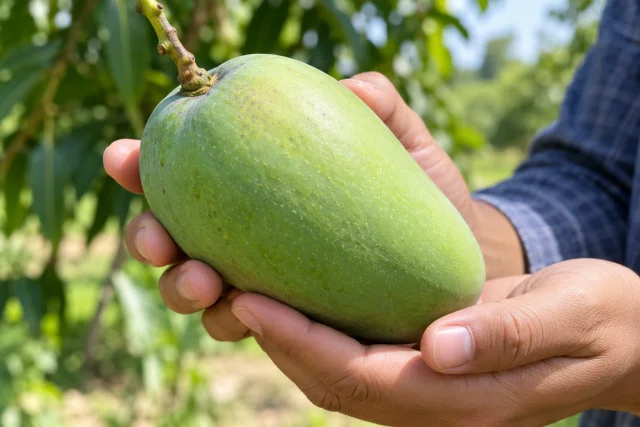
Shoulders (generated editorial illustration)

Shoulders

Shoulders are the upper curves of a mango near the stem attachment. Their fullness can be one useful sign of fruit development, particularly when compared with other fruit of the same cultivar. Raised shoulders alone do not prove that a mango is eating-ripe or ready to harvest, because natural shape varies between varieties. Combine shape with known development time, internal maturity observations where available, and the expected behavior of that tree rather than relying on a single photograph or universal rule.

Shoulder shape is best compared within a known cultivar and a sequence of developmental stages. A full shoulder on a naturally rounded fruit is not equivalent to the same outline on an elongated selection. Including the stalk attachment and an overall side view makes photographs more useful for interpreting this part of the fruit.

Read more about Shoulders

Soft Nose

Soft nose is a mango internal disorder characterized by excessive softening near the fruit's blossom end or tip, sometimes with discoloration or spongy tissue. It differs in location and appearance from ordinary uniform ripening and from decay starting at the stem end. Several factors can be involved in fruit breakdown, so an association with nutrition is not a diagnosis of one specific deficiency. Inspect cut fruit and handling history before deciding whether a crop or storage practice needs adjustment.

The blossom end is opposite the stem attachment, so orientation matters when documenting the defect. Photograph the whole cut fruit and the affected region rather than an isolated piece of soft flesh. Distinguish tissue breakdown from a localized bruise that happened to occur near the tip during picking or transport.

Read more about Soft Nose

Soil Sampling

Soil sampling collects material intended to represent a defined area and depth for laboratory testing. For mango, separate areas with different soil, irrigation, or management histories rather than mixing every location together. Follow the laboratory's instructions for depth, number of subsamples, preparation, and shipping. A sample from one unusually wet or recently fertilized spot can misrepresent the broader root zone, while a well-labeled representative sample provides a more useful basis for interpreting pH, salts, and nutrient measurements.

A representative sample combines suitable subsamples from a defined area, while a problem sample may deliberately target a contrasting patch. Label those purposes clearly. Mixing a damaged location with an otherwise uniform planting can dilute the evidence needed to diagnose the patch and make the broader sample harder to interpret.

Further reading: Penn State: Soil Sampling.

Read more about Soil Sampling

Sooty Mold

Sooty mold is a dark fungal coating that grows on sticky honeydew deposited by certain sap-feeding insects. On mangoes it can cover leaves, twigs, or peel without being the same disease as anthracnose. Heavy coverage can reduce light reaching leaves and make fruit unattractive. Inspect for scale insects, mealybugs, or other honeydew producers and consider ant activity. Managing the source of honeydew is generally more useful than repeatedly trying to remove the black coating without addressing the insects.

A black surface coating and an expanding lesion within leaf tissue are different observations. Check whether a dark deposit can be distinguished from damaged tissue and inspect nearby insects, sticky surfaces, and ants. Photographing both the coating and the organisms present often provides more diagnostic value than a close-up of darkness alone.

Read more about Sooty Mold

Sporulation

Sporulation is the production of spores by an organism. For a plant-pathogenic fungus, these structures can contribute to survival or spread, but their role varies with the species. Visible growth on a damaged mango is not automatically identifiable sporulation of the original pathogen. Good diagnostic photographs can document location and progression, while microscopy or laboratory assessment may be needed to identify the organism. Keep observations separate from conclusions when recording an unfamiliar disease problem.

Spore production and successful infection are different stages. Spores must encounter suitable conditions and a susceptible host, and some structures may serve survival as well as dispersal. A visible fungal colony therefore does not establish how an infection began or prove that every nearby mango is currently infected.

Further reading: Penn State: Plant Disease Basics and Diagnosis.

Read more about Sporulation

Stigma

The stigma is the receptive surface of a flower's female reproductive structure where pollen can land and begin the process leading to fertilization. In a mango's bisexual flower, its condition and receptivity are part of successful reproduction. Seeing pollen on a flower does not prove that a compatible pollen tube has reached an ovule. The term is useful when understanding pollination, but ordinary growers usually gain more from protecting flower health and insect visitors than from attempting to inspect every tiny stigma.

The stigma is part of the female reproductive structure, while the anther produces pollen as part of the male structure. Receptivity is a biological condition rather than simply the visibility of the stigma. A flower photograph can document anatomy, but it cannot by itself establish that successful pollen germination and fertilization occurred.

Read more about Stigma