
This site contains affiliate links for which we may be compensated.

Mango Database
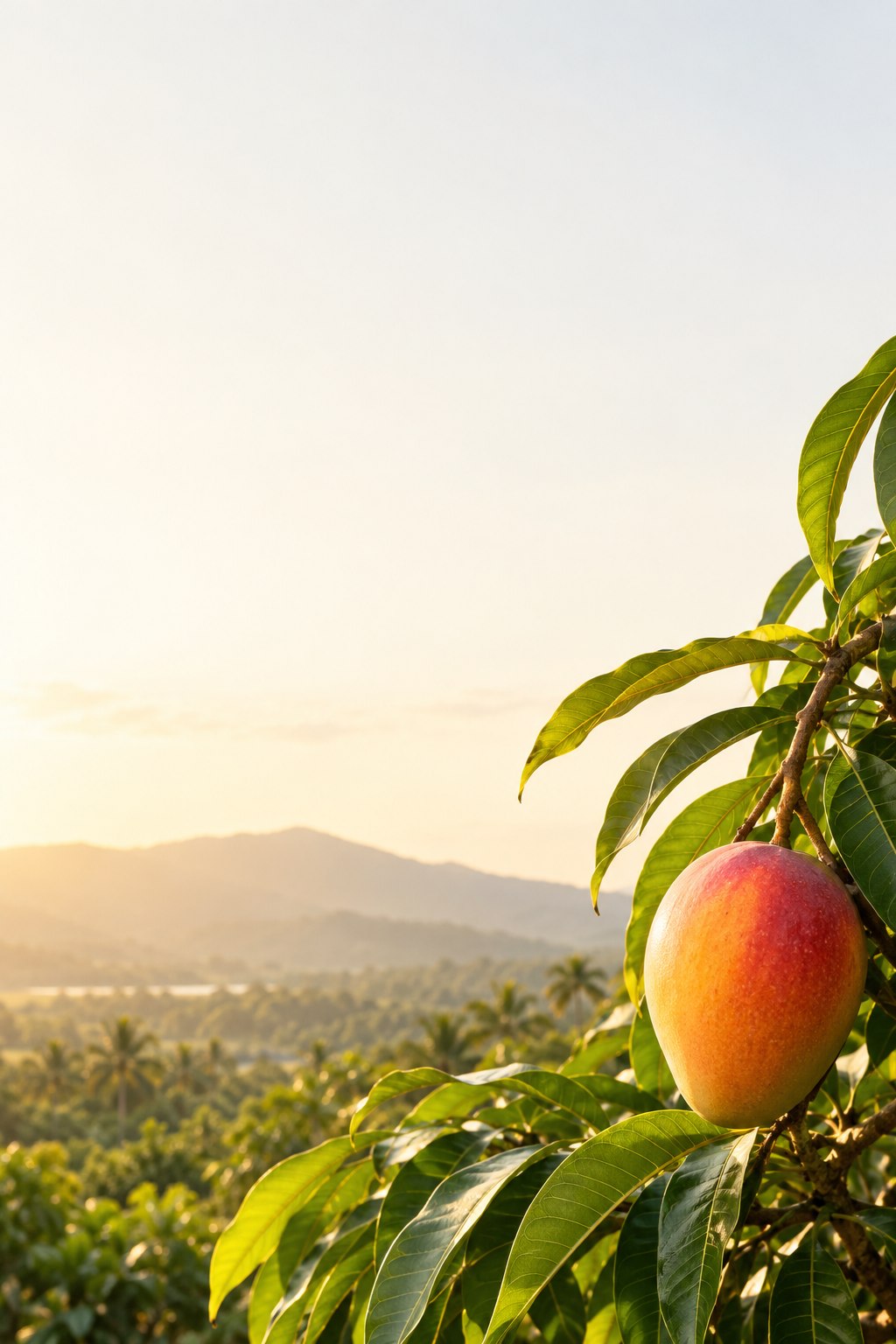
Mangoes in a sunlit tropical orchard

Mango Glossary

Understand the language of mango growing, one term at a time.

Explore Mango Terminology

Browse definitions and growing concepts to expand your mango knowledge.

Showing 1–3 of 3 terms

Water Potential

Water potential describes the energy state of water relative to a reference and helps explain the direction in which water moves. Pressure, dissolved substances, and interactions with surfaces can all contribute. For mango growers, it connects apparently different problems: a dry substrate and a salty root zone can both limit access to water. It is a scientific framework, not a direct substitute for measuring soil moisture, checking drainage, and observing the condition of the roots.

Water tends to move toward lower water potential, but the factors contributing to that potential differ between soil, cells, and the atmosphere. A soil-moisture value alone therefore cannot describe the whole pathway. Interpreting water stress benefits from considering roots, dissolved salts, transport tissues, and canopy demand together.

Further reading: Oregon State University: soil moisture monitoring.

Read more about Water Potential

Matric Potential

Matric potential is the component of soil-water potential arising from water's attraction to soil particles and pore surfaces. As soil dries, water is held more tightly, making extraction harder for roots. The same water content can correspond to different matric potentials in different soils. For mango irrigation, this explains why one moisture percentage or sensor reading cannot be interpreted without considering the substrate. Matric potential also does not capture every salt-related limitation on water uptake.

A tensiometer responds mainly to the tension associated with water held by the soil matrix. It does not fully describe the additional osmotic effect of dissolved salts. This distinction matters when a mango experiences water stress despite a moisture reading that seems adequate, especially where irrigation water or fertilizer accumulation raises root-zone salinity.

Further reading: Minnesota Pollution Control Agency: Soil Water Storage.

Read more about Matric Potential

Osmosis

Osmosis is the movement of water across a selectively permeable membrane in response to a difference in water potential. It is central to plant-cell hydration and helps explain why concentrated salts around roots can make water uptake difficult. A wet pot is not necessarily a favorable environment for a mango if its root-zone solution is excessively salty. Evaluate irrigation water, fertilizer concentration, drainage, and accumulated salts together instead of assuming that more water or fertilizer always restores growth.

Water movement depends on the combined energy conditions on each side of a membrane, not simply on whether the surrounding medium looks wet. Dissolved salts can lower external water potential and complicate uptake. This helps connect soil moisture, fertilizer concentration, and tissue hydration without assuming that visible wilting always calls for more irrigation.

Further reading: Oregon State University: soil moisture monitoring.

Read more about Osmosis