This site contains affiliate links for which we may be compensated.

Mango Database
Mangoes in a sunlit tropical orchard

Mango Glossary

Understand the language of mango growing, one term at a time.

Explore Mango Terminology

Browse definitions and growing concepts to expand your mango knowledge.

Showing 8–14 of 14 terms

Sooty Mold

Sooty mold is a dark fungal coating that grows on sticky honeydew deposited by certain sap-feeding insects. On mangoes it can cover leaves, twigs, or peel without being the same disease as anthracnose. Heavy coverage can reduce light reaching leaves and make fruit unattractive. Inspect for scale insects, mealybugs, or other honeydew producers and consider ant activity. Managing the source of honeydew is generally more useful than repeatedly trying to remove the black coating without addressing the insects.

A black surface coating and an expanding lesion within leaf tissue are different observations. Check whether a dark deposit can be distinguished from damaged tissue and inspect nearby insects, sticky surfaces, and ants. Photographing both the coating and the organisms present often provides more diagnostic value than a close-up of darkness alone.
Read more about Sooty Mold
Sphagnum Moss (generated editorial illustration)

Sphagnum Moss

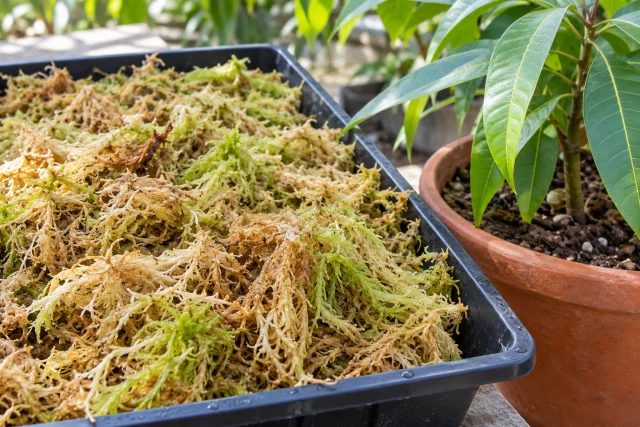
Sphagnum moss is the recognizable, long-fibered material harvested from sphagnum growth and often sold dried. It is different from the more decomposed, fine-textured material sold as peat moss, so check the actual material rather than relying only on a product name. Growers use sphagnum for moisture retention in some propagation setups, but wet moss packed too tightly can limit oxygen. It does not make mango cuttings easy to root or replace a complete, well-aerated potting medium for long-term tree growth.

Long fibers can hold water while maintaining a different structure from finely milled peat. Packing pressure changes that structure, so two propagation bundles made from the same material may have very different air spaces. Assess actual moisture and root development before separating a layered branch or moving a rooted plant into a different medium.

Read more about Sphagnum Moss

Spongy Tissue

Spongy tissue is an internal mango quality disorder in which part of the flesh develops an abnormal, often pale or corky texture instead of normal ripening. It may be hidden beneath a reasonably normal peel. The term describes the tissue condition and is not proof of a particular pathogen or a single cause in every cultivar. Assess maturity, temperature history, and the distribution of affected fruit, and avoid presenting extra fertilizer or an unverified spray as a guaranteed cure.

The affected region can differ from the surrounding flesh in firmness, color, and ripening behavior. A useful assessment records the location and extent of those differences in several fruit. Because the peel may appear relatively normal, external sorting alone does not establish how much internal tissue is affected within a batch.

Read more about Spongy Tissue

Stem-End Rot

Stem-end rot is decay that begins around the stalk attachment of harvested fruit and may extend into the flesh during ripening. Several fungi can be involved in mangoes, including species associated with latent infections and wounded tissue. Sound-looking fruit at harvest can therefore develop symptoms later. Gentle handling, appropriate sanitation, and suitable storage help reduce losses, but the name alone does not identify the exact organism. Do not confuse normal sap staining with progressive soft decay around the stem.

The stem attachment is a useful place to begin cutting representative affected fruit for assessment, but the visible starting point does not identify the species responsible. Record the interval since harvest and changes during ripening. This helps distinguish an injury noticed at packing from decay that developed after an inconspicuous earlier infection.

Read more about Stem-End Rot
Sunburn (generated editorial illustration)

Sunburn

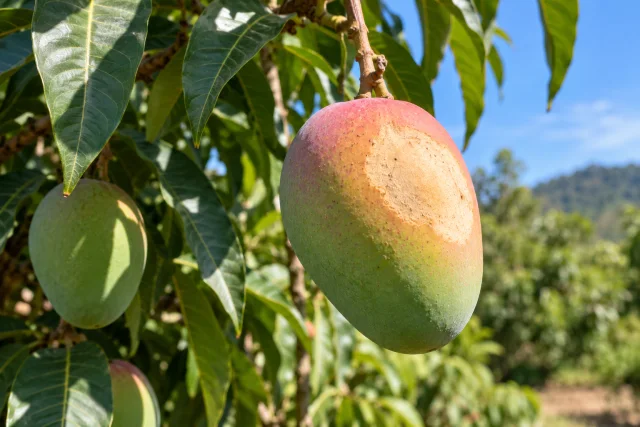
Sunburn is damage caused by excessive sunlight and associated heat on plant tissue. Mango fruit or bark previously shaded by foliage can be vulnerable after sudden heavy pruning, and newly moved nursery leaves can scorch after abrupt exposure. The damage can resemble other blemishes, so consider when exposure changed. Prevent unnecessary sudden canopy removal and acclimate sheltered plants gradually. A sunburned area does not turn back into healthy tissue simply because fertilizer is applied.

Previously shaded tissues may not be adapted to the exposure created by a sudden large opening in the canopy. Note pruning, relocation, and orientation when investigating damage. The position of affected fruit or bark relative to sunlight can help distinguish an exposure-related pattern from a problem spreading independently of canopy position.

Read more about Sunburn

SWD

SWD stands for spotted wing drosophila, Drosophila suzukii, a small vinegar fly best known as a pest of certain thin-skinned fruits. It should not be used as a catch-all name for every fly around ripe mangoes. Other drosophilid flies often gather at damaged or fermenting fruit, while different fruit-fly groups can be regulated mango pests. Identification and local host information matter before choosing traps, interpreting fruit damage, or making a quarantine or pesticide decision.

Larvae inside damaged fruit are not identifiable simply from the common name fruit fly. Document the host, locality, condition of the fruit, and any adult insects associated with it. Where a regulated pest is suspected, follow local diagnostic procedures rather than moving infested fruit elsewhere for informal identification.

Read more about SWD
SWP (generated editorial illustration)

SWP

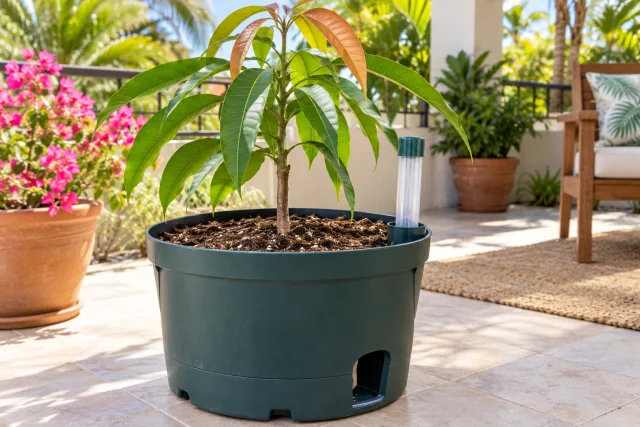
SWP means self-watering planter, a general name for a container with a water reservoir or another automatic water-delivery arrangement. Many designs are also sub-irrigated planters, but the label does not guarantee suitability for a mango. Root aeration, an effective overflow, adequate container volume, and monitoring remain important. Fertilizer salts can accumulate if water repeatedly moves upward without periodic appropriate leaching. Adjust operation to the tree's water use instead of keeping the reservoir full in all seasons.

The reservoir reduces the frequency of filling but does not remove seasonal management. A tree with little active foliage may use water slowly, while a larger canopy can empty the reservoir quickly. Inspect water movement and root-zone moisture together, particularly after repotting or moving the planter into a different light or temperature regime.

Read more about SWP