This site contains affiliate links for which we may be compensated.

Mango Database
Mangoes in a sunlit tropical orchard

Mango Glossary

Understand the language of mango growing, one term at a time.

Explore Mango Terminology

Browse definitions and growing concepts to expand your mango knowledge.

Showing 22–28 of 155 terms
Brix

Brix

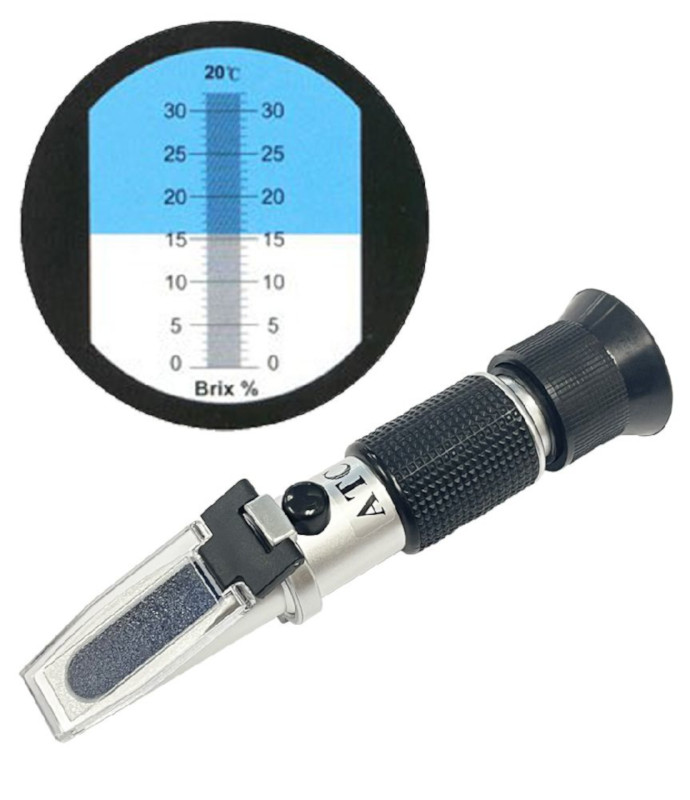
Brix is the scale on which a pure sucrose solution's concentration is expressed as grams of sucrose per 100 grams of solution. A refractometer reading on mango juice is an estimate of soluble solids rather than a direct measurement of each sugar. This existing entry complements Brix Level by explaining the scale itself. Calibrate the instrument and sample consistently when comparing fruit, and do not treat a single Brix value as proof of cultivar identity or universally better flavor.

Related products: brix tool

The reference scale describes sucrose solutions, whereas fruit juice is a mixture. Consequently, a reading should be reported as a soluble-solids estimate rather than used to calculate the exact sugar content of a serving. It is particularly informative when accompanied by acidity measurements and a description of the fruit's eating stage.
Read more about Brix
Brix Level

Brix Level

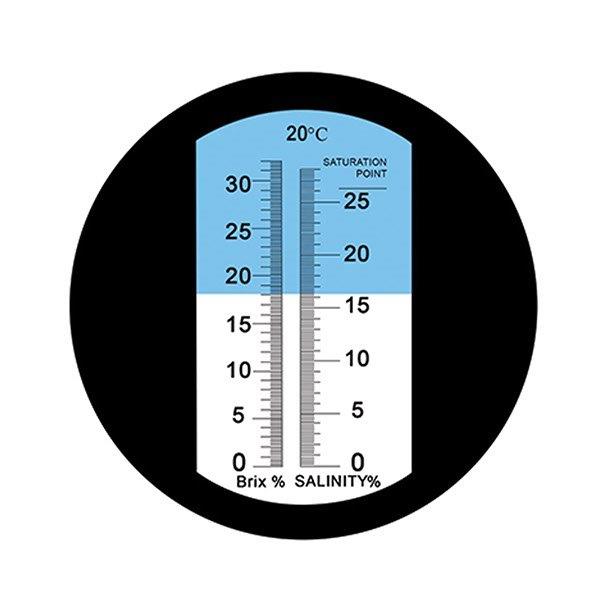
Brix level is a reading used to estimate soluble solids in juice, commonly measured with a refractometer. In mango juice, sugars account for much of the reading, but acids and other dissolved substances also contribute, so it is not an exact laboratory sugar percentage for every sample. Ripeness, sampling location, and instrument calibration affect comparisons. A high reading does not describe all of eating quality: aroma, acidity, fiber, and personal preference still matter when comparing mangoes.

Related products: brix tool

For a useful comparison, sample juice consistently from fruit at a defined ripeness stage. Record the cultivar, instrument, calibration check, and any temperature correction. Comparing one ripe cheek with juice pressed from the seed area of another fruit can introduce sampling differences larger than the distinction a grower is trying to measure.

Read more about Brix Level
Bud Break (generated editorial illustration)

Bud Break

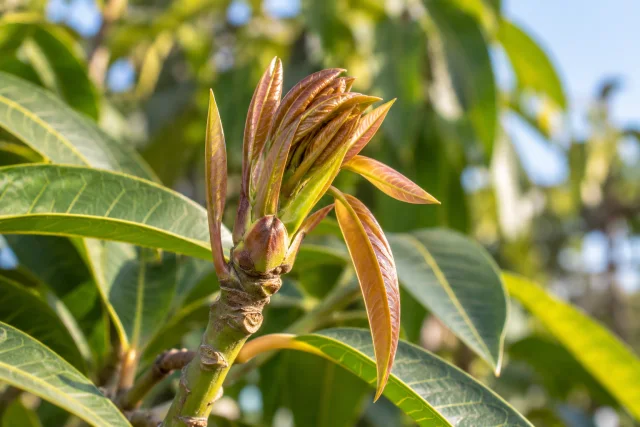
Bud break is the stage when a resting bud begins visible growth. On mangoes it may lead to a leafy shoot, a flower panicle, or mixed growth depending on the bud and conditions. Swelling and opening are useful observations, but they do not prove a new graft has fully healed because stored reserves can support early activity. Record subsequent growth and hardening, and avoid disturbing a tender graft simply because its buds have started to move.

Bud break identifies the beginning of visible growth, while full leaf expansion and hardening occur later. The first movement of a scion bud is encouraging but does not by itself demonstrate a fully established graft. Record continued shoot growth and leaf condition before classifying a propagation attempt as a durable success.

Read more about Bud Break

Budding

Budding is a form of grafting in which a bud with a small amount of attached tissue serves as the scion. It differs from methods that use a longer shoot carrying several buds. Success depends on the species, technique, tissue condition, and aftercare, and a method widely used on another fruit tree is not automatically the best choice for mango. Preserve the bud's identity and polarity, and evaluate sustained growth rather than assuming that a wrapped bud has established.

The transferred bud carries the selected plant's identity, while the stock supplies the established root system. Retain the distinction between the source bud and shoots emerging elsewhere on the stock. After the operation, subsequent training and stock-shoot management influence which growth becomes the intended new canopy.

Further reading: University of Missouri: Budding.

Read more about Budding
Budwood (generated editorial illustration)

Budwood

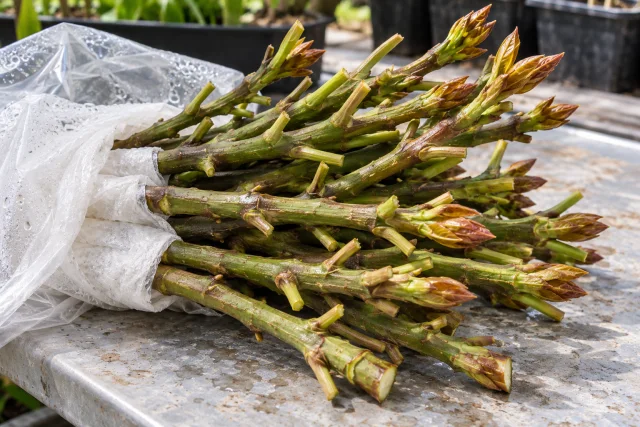
Budwood is plant material carrying buds intended for propagation, commonly selected shoots from an identified mother tree. In mango collecting the term is sometimes used loosely for scion wood even when an entire scion, rather than a single bud, will be grafted. The source tree, shoot maturity, health, and label all matter. Keep batches separate and protected from drying; recognizable leaves or a seller's name do not replace reliable provenance and clean propagation practices.

A label on a bundle should follow the material into each individual graft. Bud condition can change during storage, and a mixture of shoots from a multi-cultivar tree can create lasting identification errors. Keep collection and handling information with the name rather than relying on memory or the appearance of detached sticks.

Read more about Budwood
Callus (generated editorial illustration)

Callus

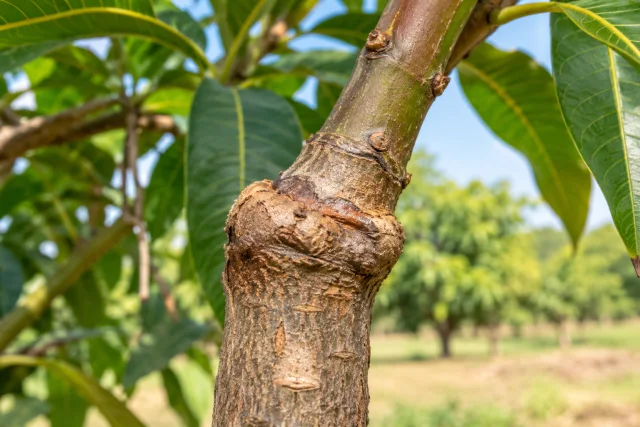
Callus is tissue formed as plant cells divide in response to injury or certain propagation conditions. At a mango graft it contributes to healing around the joined surfaces, but a visible swelling is not proof of a complete vascular connection. A scion can open buds briefly using stored reserves before failing. Judge graft success by sustained healthy growth and a sound union over time, while preventing wrapping material from becoming a constricting band.

Callus is a wound response, while a functioning graft also requires organized connections between the joined partners. A conspicuous swelling therefore should not be treated as proof of successful transport. Continue observing sustained growth and structural condition, and distinguish healthy wound development from decay or constriction hidden beneath a wrap.

Read more about Callus

Cambium

Cambium is a thin region of actively dividing cells between the inner bark and the wood of a woody stem. During mango grafting, close alignment of living cambial regions helps the scion and rootstock form a functioning connection. Matching outer bark alone may not provide that contact when stems differ in thickness. Clean cuts, secure wrapping, and protection from movement support healing; pushing two cut surfaces together does not guarantee that their living tissues are correctly aligned.

The cambium produces vascular tissues associated with increasing stem thickness. During union formation, alignment is a practical way to bring appropriate living regions into contact, not a requirement that bark surfaces line up perfectly everywhere. When diameters differ, suitable alignment on one side can matter more than centering the outer outlines.

Read more about Cambium