This site contains affiliate links for which we may be compensated.

Mango Database
Mangoes in a sunlit tropical orchard

Mango Glossary

Understand the language of mango growing, one term at a time.

Explore Mango Terminology

Browse definitions and growing concepts to expand your mango knowledge.

Showing 29–35 of 155 terms

Canker

A canker is a localized area of dead tissue on a stem, branch, or trunk, often involving bark and underlying tissues. It is a symptom description rather than the name of one pathogen. On mango, document its position, progression, associated cracking or exudate, and the condition of nearby growth. Physical injury and several disease processes can produce superficially similar damage, so identifying a canker does not by itself establish which treatment or pruning response is appropriate.

A canker may have a distinct margin between affected and apparently healthy tissue, but appearances change as the injury develops. Note whether a branch above it declines and whether similar areas occur elsewhere. Those observations help establish the extent of the problem without assuming that every bark depression shares one cause.

Further reading: Purdue: Symptoms and Signs for Plant Problem Diagnosis.
Read more about Canker
Canopy Management

Canopy Management

Canopy management is the deliberate control of a tree's size, branching, and distribution of foliage. In mangoes it supports light penetration, airflow, safe harvest, and access for monitoring rather than simply making the tree look neat. Training young trees and making modest, well-timed cuts can prevent the need for drastic height reduction later. Removing too much foliage or pruning shortly before flowering can reduce production, so management must balance useful canopy size with retained productive shoots.

Canopy management includes the arrangement of productive shoots, not merely the height of the tallest branch. An open access route, useful light distribution, and manageable picking positions may require different cuts. Evaluate regrowth after an operation, because removing volume once does not guarantee that the next canopy will have a better structure.

Read more about Canopy Management
Carbon Sequestration

Carbon Sequestration

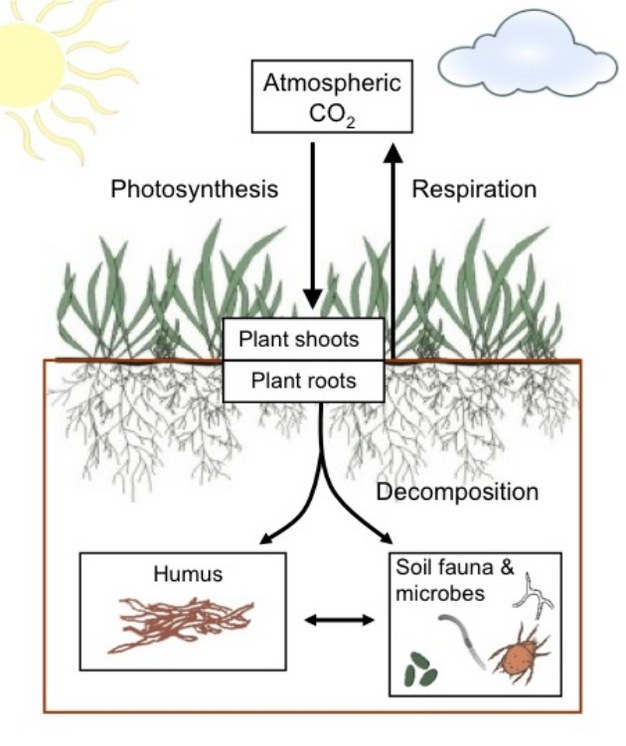
Carbon sequestration is capture and storage of carbon in a longer-lived pool such as woody biomass or soil organic matter. Mango trees incorporate atmospheric carbon into their tissues as they grow, and management influences whether stored carbon persists or returns to the atmosphere. Net climate effects also depend on land-use history, inputs, transport, and eventual tree removal. Planting a mango is therefore not a measured carbon offset by itself; credible comparisons require a defined baseline and accounting period.

Stored carbon and the rate of additional storage are different measurements. A mango tree contains carbon in its living tissues, while orchard soils and management practices also influence the wider balance. Quantifying a climate benefit requires defined boundaries and measurements over time rather than multiplying a tree count by an unsupported universal value.

Read more about Carbon Sequestration

Cell Turgor

Cell turgor is the pressure of a cell's contents against its wall as water enters and is retained. It helps keep nonwoody plant tissues firm. A mango leaf can lose firmness when water uptake does not keep pace with loss, but that imbalance may arise from dry soil, damaged roots, or other stresses. Inspect the root environment before responding to wilting with repeated watering, since saturated soil can impair roots while leaves still look thirsty.

The vacuole and other cell contents contribute to pressure within a living cell, while the wall limits expansion. Loss of that pressure can make soft tissues droop before they are permanently damaged. Recovery still depends on functioning roots and suitable conditions; persistent collapse can reflect more than a temporary midday imbalance.

Further reading: Oregon State University: soil moisture monitoring.

Read more about Cell Turgor
Cheek

Cheek

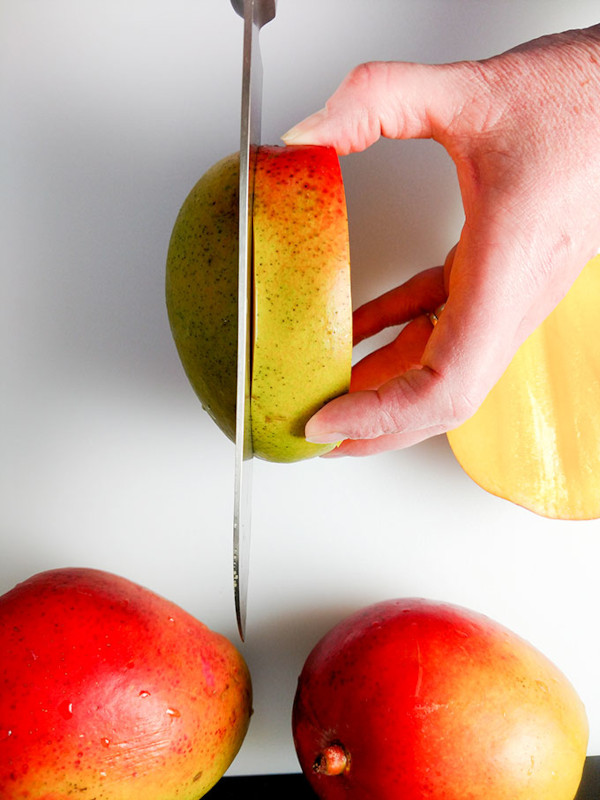
The cheek is either broad, fleshy side of a mango on opposite sides of the flattened seed. Cutting along each side of the seed produces the two pieces commonly called mango cheeks. The shape and fullness of these areas contribute to fruit appearance and practical slicing yield, but do not prove cultivar identity. When preparing fruit, wash the exterior first and use a stable cutting surface, because a slippery mango and an unexpectedly positioned seed can make careless cutting hazardous.

The flattened stone may not lie exactly where it appears from the outside. Begin by locating the stem-to-tip orientation, then adapt the cut to the actual fruit shape. When evaluating flesh yield, distinguish the mass of usable cheeks from peel and stone rather than comparing only the fruit's external size.

Read more about Cheek

Chip Budding

Chip budding transfers a bud attached to a small chip of bark and wood into a corresponding cut on the rootstock. It is distinct from inserting a bud under lifted bark in a T-shaped incision. The cut surfaces need suitable alignment, protection, and contact while healing proceeds. In mango propagation, use guidance specific to the available material and growing conditions; knowing this technique's name does not establish that every cultivar and rootstock combination will respond equally well.

The chip's orientation and contact with appropriate living regions influence the resulting union. Wrapping holds the fitted tissues in place but should not be mistaken for healing itself. Record later bud development and the stock's response, and keep the source identity with the individual plant as other shoots are removed or selected.

Further reading: West Virginia University: Budding Methods.

Read more about Chip Budding
Climacteric

Climacteric

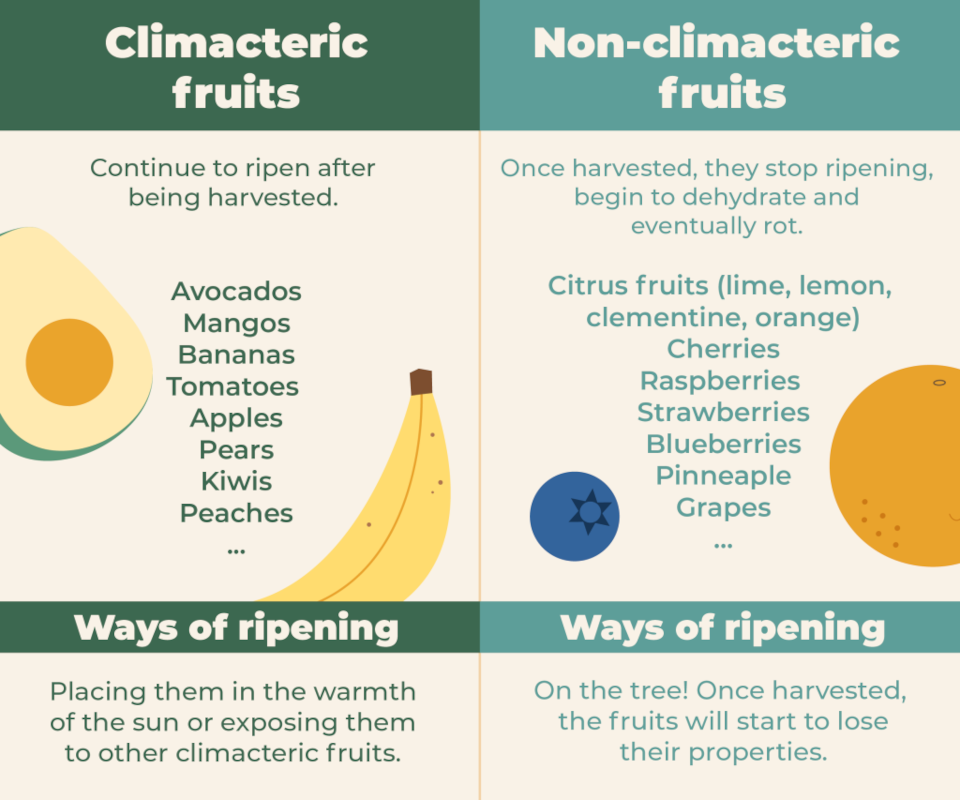
Climacteric describes fruit that shows a characteristic rise in respiration and ethylene production during ripening. Mango is climacteric, so a sufficiently mature fruit can continue ripening after harvest. That does not mean an undersized, immature fruit will develop normal flavor simply by waiting or adding ethylene. Harvest maturity, temperature, and damage influence the result. For home use, allow mature unripe mangoes to soften at room temperature, then refrigerate ripe fruit as appropriate to slow further deterioration.

A climacteric pattern does not imply that all fruit from a tree ripens at the same rate. Fruit condition and maturity at picking still differ within a harvest. Separate damaged specimens from sound ones when comparing ripening behavior, and record both the picking stage and the subsequent temperature history.

Read more about Climacteric