This site contains affiliate links for which we may be compensated.

Mango Database
Mangoes in a sunlit tropical orchard

Mango Glossary

Understand the language of mango growing, one term at a time.

Explore Mango Terminology

Browse definitions and growing concepts to expand your mango knowledge.

Showing 1–5 of 5 terms
De-Sapping

De-Sapping

De-sapping is managing the sap released from the cut stem of a harvested mango so it does not stain or burn the peel. Commercial systems control how fruit are held and drained and may use a validated washing procedure. The aim is to protect quality without adding contamination or injuring the fruit. At home, handle freshly cut stems carefully, avoid spreading sap across other mangoes, and protect sensitive skin. De-sapping does not cure decay or compensate for picking an immature fruit.

The operation concerns sap released from the cut stalk and the way it is kept away from peel. Orientation, collection surfaces, and the interval before packing can affect contact patterns. Treat de-sapping as a handling procedure with an intended outcome, not as a process that removes all allergens or guarantees freedom from decay.
Read more about De-Sapping
Diatomaceous Earth

Diatomaceous Earth

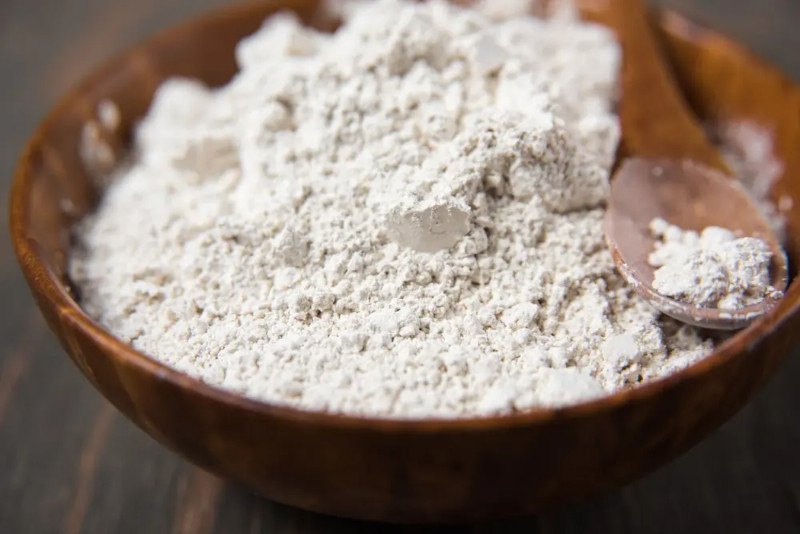
Diatomaceous earth is a powder made from the silica-rich remains of diatoms. In a labeled insect-control product it acts physically on an insect's protective outer layer, promoting water loss, and works best when dry and undisturbed. It is not selective for pests and can expose beneficial insects; dust can also irritate eyes and airways. Do not substitute pool-filter material or assume food-grade labeling authorizes garden pesticide use. For mango pests, identify the insect first and follow an applicable product label rather than dusting flowers routinely.

Related products: available on eBay

Its physical action depends on contact with susceptible insects and the condition of the deposit. Rain, irrigation, and very humid conditions can reduce the usefulness of a dry dust. Keep material away from eyes and breathing zones, and distinguish an approved product's intended use from claims made for an unrelated industrial or household powder.

Read more about Diatomaceous Earth
Dieback

Dieback

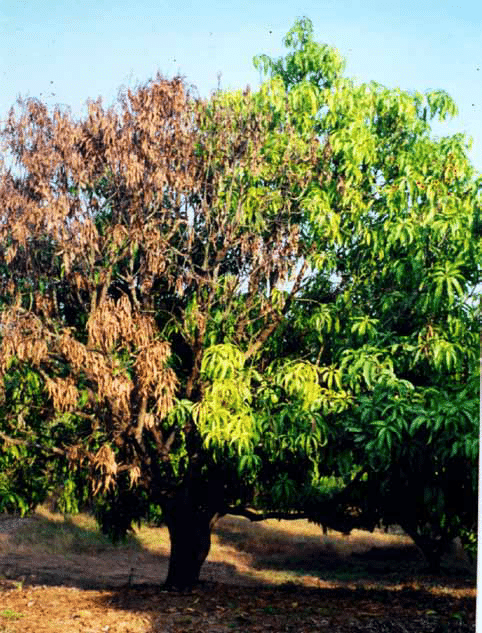
Dieback is progressive death of shoots or branches, often beginning near their tips and extending backward. On mango it can be associated with pathogens, injuries, root problems, or environmental stress, so it describes a pattern rather than one confirmed disease. Look for the boundary between living and dead wood, recent damage, and other symptoms before deciding how much to remove. Use suitable sanitation and timing when pruning, and investigate the underlying cause instead of assuming fertilizer or a generic spray will restore dead tissue.

Follow the pattern from the dead tip toward apparently healthy wood, noting whether one shoot or much of the canopy is affected. Root stress, weather injury, and several pathogens can produce declining branches. A sequence of dated observations and an examination of the root environment often helps distinguish a local wound problem from a broader tree decline.

Read more about Dieback
Drip Irrigation

Drip Irrigation

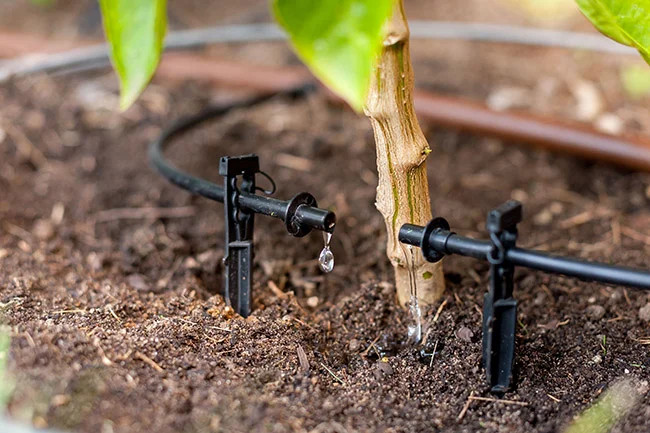
Drip irrigation delivers water slowly near the root zone through emitters or similar outlets. For mango trees it can reduce unnecessary wetting of foliage and flowers, but an efficient system still needs suitable emitter placement, working filters, and checks of soil moisture. One emitter beside the trunk may not wet enough of a larger tree's active roots. Adjust the wetted area as the tree grows and inspect for blockages or leaks rather than judging irrigation solely by how long the system runs.

Ask about mango watering

Emitter output and placement must match the area intended to be wetted. One outlet beside a trunk does not necessarily serve the expanding root system of an older tree. Check several outlets, inspect the wetted soil profile, and relocate or add delivery points where appropriate as the canopy and roots extend.

Read more about Drip Irrigation
Dry Matter (generated editorial illustration)

Dry Matter

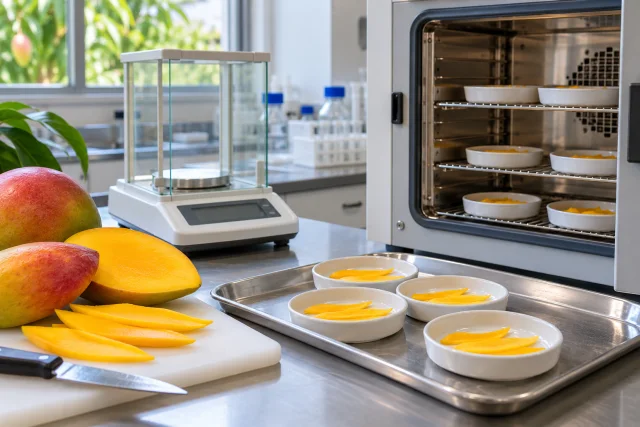
Dry matter is the portion of a sample remaining after its water has been removed by a defined drying method. In mango harvest assessment, dry-matter percentage can help evaluate fruit development and likely ripening quality when the method and cultivar interpretation are appropriate. It is not the same as juice Brix or a universal eating-ripeness score. Sample representatively and use a validated procedure rather than assuming that one threshold works for every variety, region, or measurement device.

Dry matter is normally expressed as dry mass divided by the original fresh mass, multiplied by 100. The drying procedure must remove water consistently without introducing other losses that invalidate the comparison. Keep sample preparation, equipment, and cultivar interpretation with the result rather than comparing values obtained through unrelated methods.

Read more about Dry Matter