This site contains affiliate links for which we may be compensated.

Mango Database
Mangoes in a sunlit tropical orchard

Mango Glossary

Understand the language of mango growing, one term at a time.

Explore Mango Terminology

Browse definitions and growing concepts to expand your mango knowledge.

Showing 1–6 of 6 terms

Lanceolate

Lanceolate describes a leaf or similar structure that is substantially longer than wide, broadest below the middle, and tapering toward the tip. Mango leaves are often described using this term, although individual leaves and cultivars vary. It identifies a general outline rather than a particular length or variety. When recording a leaf, combine the shape description with measurements, maturity, and clear photographs instead of using a single lance-shaped leaf to assign a cultivar name.

Shape vocabulary describes proportions and outline rather than assigning cultivar identity. Leaves on one tree can vary with age and growing conditions. Comparing several mature, undamaged leaves is more informative than selecting one unusually narrow specimen and treating its shape as representative of every shoot or fruit on the plant.

Further reading: Oregon State University: Vegetative Plant Parts.
Read more about Lanceolate

Landrace

A landrace is a locally developed crop population shaped by cultivation, selection, and adaptation over time, often retaining genetic variation. It should not automatically be treated as one uniform clone. In mango history and collecting, regional names may sometimes cover diverse seedling material rather than a single verified cultivar. Record the locality and source, and be cautious when assuming every tree sold under a traditional name will have identical fruit, growth habit, or disease response.

A landrace often reflects continued cultivation and selection in a locality rather than one uniform modern clone. Documentation may include farmers' names, local terminology, and variation among trees. Preserve that context when comparing material, because converting a broad traditional label into an assumption of genetic uniformity can obscure useful diversity.

Read more about Landrace

Latent Infection

A latent infection is an infection that remains present without immediately producing obvious disease symptoms. Mango anthracnose and some postharvest rots can involve infections that become conspicuous only as fruit ripens. A clean-looking harvest therefore does not prove that every fruit is free of pathogens. Careful orchard management, gentle handling, and suitable storage each have a role. Distinguish hidden infection from later contamination when investigating a batch, because the point of visible decay may not be the point where infection began.

The interval between infection and visible symptoms can make the first damaged fruit a misleading guide to timing. Compare orchard exposure, harvest maturity, and subsequent handling across affected and unaffected batches. A control applied after visible decay begins may not address infections established earlier, so investigation benefits from records that span both orchard and storage stages.

Read more about Latent Infection
Lawrence Zill

Lawrence Zill

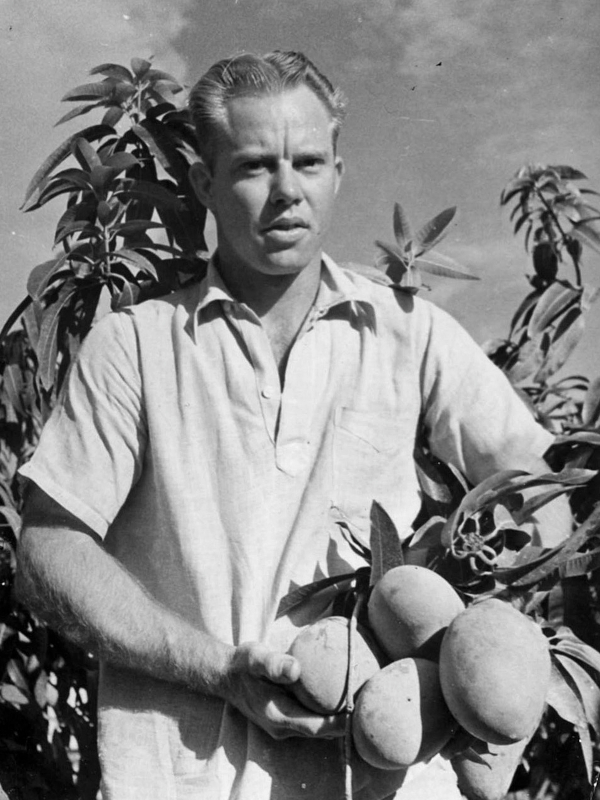
Lawrence Zill, also encountered as Laurence Zill in horticultural accounts, was a South Florida nurseryman associated with mango propagation and the Zill family's growing history. Keeping those name variants together helps readers follow older records. Cultivar histories need particular care: introducing or propagating a mango does not prove that the grower bred it or named it for a relative. Distinguish introductions, seedling selections, and later nursery distribution when researching Florida mango history, because those activities can involve different people and dates.

Read more about Lawrence Zill
Lenticels (generated editorial illustration)

Lenticels

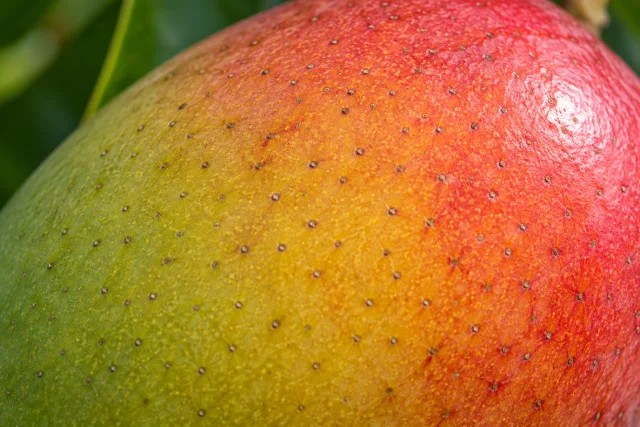
Lenticels are small structures in the mango peel that permit gas exchange through the fruit surface. They appear as dots whose size, color, and prominence vary with the fruit and its stage of development. Darkened lenticels can result from handling, sap exposure, storage conditions, or disease, so spotting alone does not identify a pathogen. When evaluating a mango, distinguish ordinary peel markings from expanding lesions, soft tissue, and decay rather than rejecting every visible dot.

Lenticels are not pores that a grower needs to open by polishing or scrubbing. Their pattern can be recorded with a close photograph and a wider view of the fruit. When investigating discoloration, note whether the dots changed after harvest, washing, or sap contact, and whether the underlying flesh remains sound.

Read more about Lenticels
Lignification (generated editorial illustration)

Lignification

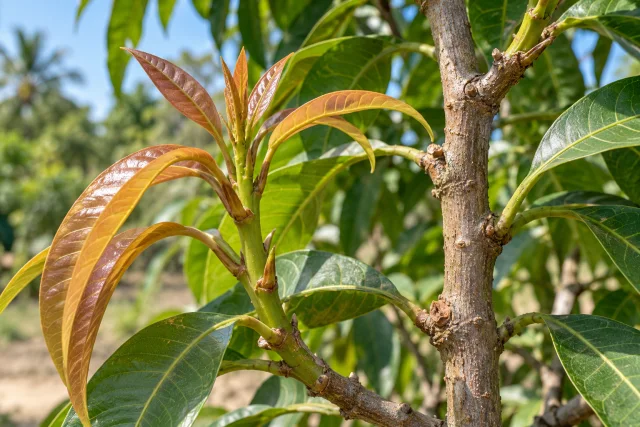
Lignification is the deposition of lignin as plant tissues become more woody and structurally firm. A new mango flush changes from soft, flexible growth to a harder shoot as it matures, although color alone does not measure every internal change. This matters when judging whether a shoot can tolerate handling or serve as suitable propagation material. A hardened stem is not necessarily ready to flower, and excessive toughness does not automatically make old wood a better scion.

Lignification changes the properties of developing cell walls and contributes to increasing stiffness. A shoot's color alone does not reveal the full extent of that process. In propagation and training, assess flexibility, firmness, and leaf maturity together, and keep the term separate from the broader nursery practice of acclimating a plant to outdoor conditions.

Read more about Lignification