


This site contains affiliate links for which we may be compensated.

Mango Database
Mangoes in a sunlit tropical orchard

Mango Glossary

Understand the language of mango growing, one term at a time.

Explore Mango Terminology

Browse definitions and growing concepts to expand your mango knowledge.

Showing 1–5 of 5 terms
Geographical Indication

Geographical Indication

A geographical indication identifies a product whose origin is linked to a defined place and whose qualities, reputation, or characteristics are associated with that origin under an applicable legal system. In mango commerce it can distinguish a protected regional product from a cultivar name used elsewhere. Protection, labeling rules, and production specifications depend on the registration and jurisdiction. A geographical indication does not mean every fruit is identical, and a tree grown outside the defined area does not acquire the designation merely by sharing a cultivar name.
Read more about Geographical Indication

Genotype

Genotype is the genetic constitution of an organism. A mango seedling formed through fertilization has its own genetic combination, whereas a grafted scion normally preserves the genotype of its source tree. Genotype is distinct from phenotype, the characteristics actually observed under particular conditions. Poor flavor from immature fruit or weak growth in a saturated pot does not by itself demonstrate that a correctly labeled graft has changed genetically. Identity questions need provenance and, where appropriate, more specialized evidence.

Different plant parts in a grafted tree can have different genotypes: the rootstock and scion are joined but remain distinct partners. A shoot arising below the union may therefore differ from the desired cultivar. Locate its origin before interpreting unusual foliage or fruit as a genetic change within the scion.

Read more about Genotype
GI

GI

GI is the abbreviation for geographical indication, a place-linked product designation used under particular legal frameworks. In mango discussions, it may refer to a protected regional product rather than to a botanical variety or a quality score. On commercial labels the abbreviation names the designation, not a separate horticultural attribute. Check the actual registered name and requirements before interpreting a GI claim; ordinary use of a famous region's name is not proof of certification.

Read more about GI
Grafting

Grafting

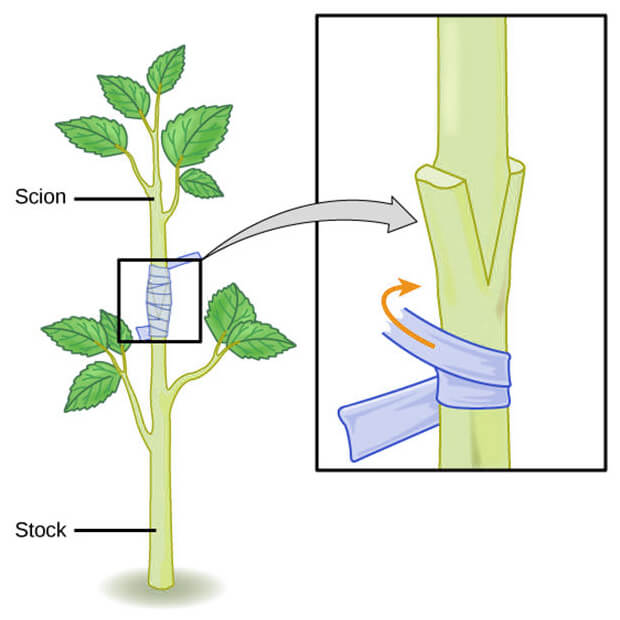
Grafting is the process of joining living plant parts so their tissues heal together. Mango growers use it to reproduce a selected cultivar on a rootstock instead of relying on genetically variable seedlings. Success depends on compatible material, close contact between cambial regions, suitable growing conditions, and protection from drying and movement. Methods include veneer, cleft, and approach grafting. The best choice depends on stem size and local practice; no method makes unhealthy or mislabeled scion wood reliable.

Read the mango grafting FAQ

Successful grafting has both a construction stage and an establishment stage. A carefully fitted cut can still fail if the joined pieces move or dry before connections develop. Record subsequent growth and union condition as well as the initial operation, so comparisons between methods include aftercare rather than only the shape of the cuts.

Read more about Grafting
Gummosis

Gummosis

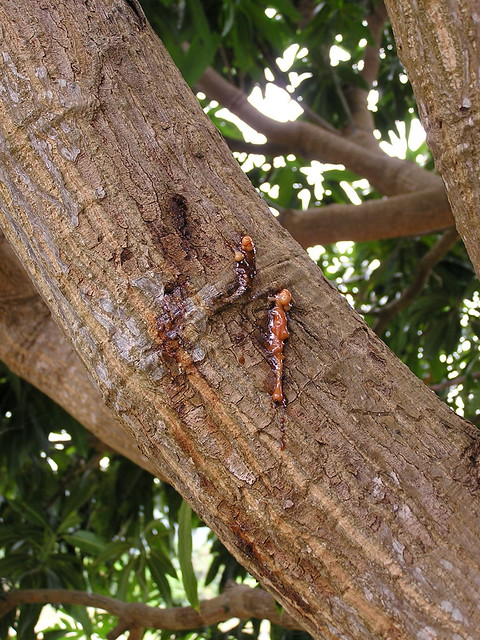
Gummosis is the exudation of gum-like material from damaged or stressed plant tissue, often visible on mango trunks or branches. It is a symptom rather than a single disease: injury, insects, infection, and environmental stress can produce similar appearances. Examine the site for wounds, boring holes, discoloration, and spreading dieback before deciding on management. Repeatedly cutting or coating the area without identifying the cause can worsen damage. A diagnostic assessment is more useful than assuming every gum deposit has the same treatment.

Exudate can conceal the margin of an injury, making a dated photograph of the surrounding bark useful. Note whether a wound followed pruning, abrasion, sun exposure, or insect activity. Repeatedly reopening the area can remove protective tissues and complicate diagnosis, so inspection should be proportionate to the tree's condition.

Read more about Gummosis