This site contains affiliate links for which we may be compensated.
Latest Mango Review
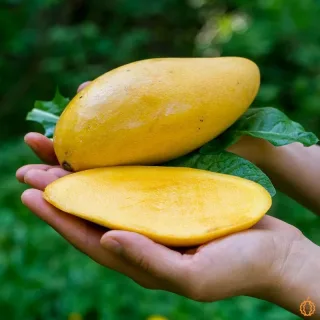
Nam Dok Mai #4
Very nice variety overall. If you like a floral taste on a mango, this is one to have in your collection. I can taste rose/flower and a...
by Rigo · Sep 16, 2025Newest Variety
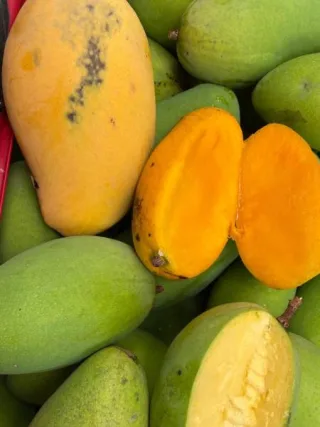
Lemon Zest
Lemon Zest is a modern Florida mango selected through the breeding program of Gary Zill of Zill High Performance Plants in Bo...
View Variety →From Our Blog
View All →
How to Build a Mango Tasting That Teaches More Than a Ranking
Freezing a Mango Harvest Without Losing Track of Quality
Useful Links
- Advertising Opportunities on Mango Database
Looking to get your brand in front of thousands of passionate gardeners, fruit collectors, and tropical plant enthusiasts? MangoDatabase.com offers a powerful platform to showcase your business, connecting you with a dedicated audience eager to discover high-quality products and services. With a growing community that actively engages with our content, advertising on Mango Database is an investment in visibility, credibility, and long-term customer relationships.
Why Advertise With Us?
✅ Targeted Exposure – Reach a niche audience of gardeners, mango collectors, and agricultural enthusiasts who are already interested in your industry.
✅ High-Traffic Platform – Our website receives thousands of visitors each month, providing your business with a steady stream of potential customers.
✅ Multiple Advertising Plans – Choose from flexible plans that fit your budget and goals, ranging from short-term promotions to long-term brand dominance.
✅ Direct Customer Engagement – Your banner ad will link directly to your website, driving traffic and increasing conversions.Available Advertising Plans
All advertising plans require a 970px wide x 250px high banner provided by you, along with a link to the website or landing page of your choice.
🔹 Essential Spotlight – 30 Days
A simple, affordable way to get your brand in front of mango lovers right away. Perfect for testing the platform, promoting seasonal offers, or building early awareness on the home page.🔹 Premium Visibility – 30 Days
More pages, more eyeballs, more impact. Appear across the home page, directory, and variety listings where engaged users are actively exploring and researching.🔹 Ultimate Dominance – 30 Days
Be everywhere that matters. This powerhouse plan puts your brand across the entire site—including user pages—for maximum exposure and authority.🔹 Extended Reach Plan – 3 Months 25% OFF
Three months of full-site visibility at a discounted rate. Great for product launches, seasonal campaigns, or building momentum fast.🔹 Power Presence Plan – 6 Months 25% OFF
Half a year of nonstop exposure at a lower monthly cost. Ideal for brands ready to grow recognition and stay top-of-mind.🔹 Elite Visibility Plan – 12 Months 25% OFF
A full year of premium placement at the best value available. Lock in long-term visibility and dominate attention across the Mango Database community.Right click on each image and select "Open in new page" to see a larger version of it.


Make an Impact – Advertise Today!
Whether you're looking for short-term exposure or a long-term advertising strategy, Mango Database offers the ideal platform to help you grow your business. Invest in one of our advertising plans and put your brand in front of thousands of potential customers.
Ready to advertise? Choose your plan to secure your spot!
- Agricultural Extension and other Publications
- USDA, Animal and Plant Health Inspection Service
- USDA Noxious Weeds Program Homepage
- USDA, APHIS Plants for Planting Manual
- USDA Federal Noxious Weeds List
- USDA State Noxious Weeds List (Great resource)
- www.nationalplantboard.org
- USDA Citrus Blog
- Combined Federal and State Regulated Noxious Aquatic Weeds
- State Noxious Weed Tree Species
- www.invasiveplantatlas.org
- National Invasive Species Information Center (NISIC)
- www.invasive.org
- Weed Science Society of America (WSSA)
- Plant Protection Act
- Natural Resources Conservation Service (NRCS)
- Executive Orders for Invasive Species
- Facebook Groups
Most Popular
California Rare Fruit Growers (the official CRFG Facebook group)
Citrus, Avocado, Mango and Tropical Fruit Growers
Florida Fruit Forest - Citrus Co
Florida Mangoes & Tropical Fruit Trees
Fruit, Fruit Trees, Cuttings, Seeds, Trader
South Florida Fruit Lovers Group
South Florida Tropical Fruit Growers
- Growing Supplies
- Beneficial Nematodes
- ARS Pruners on eBay
- ARS Pruners on Amazon
- Poly bags for fig-pops on Amazon
- Poly bags for fig-pops on eBay
- Felco pruning saw on eBay
- Felco pruning saw on Amazon
- 4' bamboo stakes on eBay
- 4' bamboo stakes on Amazon
- A.M. Leonard Items on eBay
- A.M. Leonard Items on Amazon
- Grafting Tape & Buddy Tape on eBay
- Grafting Tape & Buddy Tape on Amazon
- Grafting Tools on eBay
- Grafting Tools on Amazon
- Corona Products on eBay
- Corona Products on Amazon
- 32 oz Clear PET cups
- 32 oz Clear PETE cups
- Treepots Budding Grafting Large Seedling Pots on eBay
- Drip Irrigation Kits & Accessories on eBay
- Drip Irrigation Kits & Accessories on Amazon
- 4x16" Clear 2Mil Poly Bags Layflat Open Top Plastic Packaging Baggies
- Xtreme Gardening Products (MYKOS)
- Coco Coir on Amazon
- Sphagnum Moss on Amazon
- Coco Coir on eBay
- Sphagnum Moss on eBay
- Hardiness Zone Maps
- Harvesting
Q: How do I avoid sapburn?A: Sapburn occurs when the sap that first squirts from the fruit at destemming comes in contact with the fruit skin. It is worst in Kensington Pride. Use harvesting and handling techniques that minimise sap coming in contact with mango skin.
Q: Which sapburn protectant should I use?
A: The choice of protectant chemical depends on the harvest and desapping system being used.
Picking with stems and desapping in the packing shed
The fruit is covered with detergent before the stalk is removed to prevent sap directly contacting the skin. As the fruit are placed on the packing line water sprays remove the detergent and any sap residue. The best choice in this situation are detergents such as Cold Power® or LOC or wetting agents such as Agral®. The mixing rate is 1 mL or 1 g per litre of water. Staff who desap fruit must keep their hands clean of sap as a lot of sapburn has been attributed to ´sappy fingers´.
Harvest aids or desapping into a detergent solution.
These handling systems leave sap residues on the fruit and a neutralising additive such as Mango Wash® or hydrated lime is the most effective chemical for the wash solution. Mango Wash® is a neutraliser and detergent mixture and needs no additives. When hydrated lime is used, it is mixed with a detergent such as Agral®. The mixing rate is 10 g of hydrated lime with 1 mL of Agral® per litre of water.
Q: How should I harvest my mangoes?
A: There are two major harvesting and handling systems that minimise sapburn and skin browning. Both are effective when used correctly:
Pick mangoes with stems attached and desap (take the stems off) them in the packing shed
Use harvest aids and desap mangoes in the field. - Here are some common questions and answers that mango growers often ask:
1. What are the best conditions for growing mango trees?
Answer:
Mango trees thrive in tropical and subtropical climates with temperatures ranging from 24°C to 30°C (75°F to 86°F). They require well-drained soil with a pH between 5.5 and 7.5. Mango trees prefer full sun and should be planted in a location where they receive at least six hours of direct sunlight daily. They also need protection from strong winds and frost, as these conditions can damage the trees.
2. How often should I water my mango tree?
Answer:
Young mango trees should be watered regularly to keep the soil evenly moist, but not waterlogged. During the first year, water the tree every 2-3 days. Once established, mango trees are more drought-tolerant and should be watered deeply every 1-2 weeks. Overwatering can lead to root rot, so ensure the soil has good drainage. Reduce watering during the winter months when the tree is dormant.
3. When and how should I fertilize my mango tree?
Answer:
Fertilize young mango trees every 1-2 months during the growing season (spring and summer) with a balanced fertilizer that includes nitrogen, phosphorus, and potassium. Once the tree begins to bear fruit, typically after 3-5 years, apply a high-potassium fertilizer three times a year: after flowering, after fruit set, and after harvesting. Avoid over-fertilization, as this can lead to excessive vegetative growth at the expense of fruit production.
4. How can I protect my mango tree from pests and diseases?
Answer:
Common pests that affect mango trees include aphids, mealybugs, and scale insects. Diseases such as anthracnose and powdery mildew can also pose problems. To protect your mango tree:
- Regularly inspect the tree for signs of pests and diseases.
- Use neem oil or insecticidal soap to control pests.
- Prune the tree to improve air circulation and reduce the risk of fungal infections.
- Apply a copper-based fungicide during the flowering period to prevent anthracnose.
- Keep the area around the tree free of fallen leaves and debris, which can harbor pests and diseases.
5. When is the best time to harvest mangoes, and how can I tell if they are ripe?
Answer:
The best time to harvest mangoes is when they have reached full size and have begun to change color, depending on the variety. Signs of ripeness include a slight give when gently squeezed, a sweet aroma near the stem, and a change in color from green to yellow, red, or orange. It's important to pick the fruit before it becomes overripe and falls off the tree. Mangoes will continue to ripen after being harvested, so they can be picked when they are mature but still firm.
- Mango Database, An Overall Experience!
**Pioneering Excellence: Mango Database Unveiled**
Mango Database emerges as a trailblazing haven for mango enthusiasts, introducing a host of exclusive features that distinguish it from attempts to replicate its success. Explore the unique elements that make Mango Database an unparalleled platform for mango collectors:
1. **Contemporary and User-Friendly Design:**
Mango Database boasts a sleek and intuitive design, providing users with a modern and enjoyable experience. The platform's interface is not only visually appealing but also highly user-friendly.2. **Efficient Load Times and Responsive Design:**
Users benefit from faster load times, ensuring seamless navigation. The website's responsiveness allows mango aficionados to access it effortlessly across various devices, enhancing convenience. For 1 and 2, you can read more here.3. **Extensive Mango Variety Collection with Images:**
Mango Database takes pride in its extensive collection of mango varieties, accompanied by high-quality images. This feature enables users to explore and visually appreciate a diverse range of mangoes.4. **Comprehensive Search Criteria:**
Finding the perfect mango is made easy with Mango Database's broad set of search criteria. Users can swiftly locate their desired varieties, streamlining the search process. For 3 and 4, you can read more here.5. **Mapping and Member Proximity:**
The platform integrates mapping functionality, illustrating the geographical distribution of mango varieties. Additionally, member proximity details assist users in identifying varieties suitable for their specific climate or region. Read more here...6. **Custom Variety Lists and User Notes:**
Users enjoy complete control over their mango collections with the ability to create custom variety lists. The inclusion of user notes for the "Owned" list allows personal insights and annotations for each variety. Read more here...7. **Catalog for Owned Varieties:**
Mango collectors can maintain a comprehensive catalog for each owned variety, ensuring all crucial information is centralized. This catalog is shareable, printable, and editable at any time. Read more here...8. **Mango Database QR System:**
Mango Database introduces an innovative QR system, allowing users to print QR codes for any variety. These codes can be used to label plants, share information with friends, and quickly upload data with a simple scan. Read more here...9. **Member Reviews and Star Ratings:**
Mango enthusiasts can contribute to the community by sharing their experiences through original member reviews and star ratings, providing valuable insights to fellow collectors. Read more here...10. **Interactive Contribution Submission Forms:**
Users can actively participate by submitting variety details, descriptions, and photographs. The platform encourages collaborative information sharing and community engagement. Is there a mango variety we forgot to add or a new one we don't know about yet? Help us and the community out. Read more here...11. **Private Messaging and Following System:**
An updated private messaging system facilitates communication between members for trades and information exchange. The following system is in development, promising enhanced connectivity among mango collectors.12. **Accomplishments and Badge System:**
Mango Database introduces a point system called "Accomplishments," rewarding users for contributing information, descriptions, images, and feedback. The custom badge system recognizes and celebrates contributors based on earned points. Read more here...13. **Personalized Profile Features:**
Users can share more about themselves through a dedicated "About Yourself" section, fostering a sense of community and connection. Read More Here...14. **Dedicated Facebook Page:**
Stay abreast of the latest news and updates through Mango Database's dedicated Facebook page, ensuring a direct line of communication with the mango community.Mango Database is more than just a collection of mango facts—it’s a vibrant community where enthusiasts, collectors, and growers come together to explore the rich diversity of mango cultivation. Whether you're discovering rare varieties, tracking your collection, or engaging with fellow mango lovers, this platform offers an immersive experience like no other. Your journey into the world of mangoes starts here, and there’s so much more to look forward to—stay tuned for exciting updates!
- Planting and varieties
Q: What varieties should I plant?A: The varieties you choose will depend on the growing region and your target market. You may want to plant varieties from different harvesting times or an early, mid and late season variety. We have an extensive database of mango varieties that will help you in making a choice.
Q: Should I use grafted plants or seedlings?A: Kensington Pride can be grown from seed or grafted. Most other varieties (Kent, Palmer and Keitt) need to be grafted because they do not grow true-to-type from seed. Grafted plants produce earlier, are less vigorous and have a more uniform production than plants grown from seed.
Q: What tree spacings should I use?A: Tree spacings will depend on variety and how you will prune and manage your mature trees. Varieties such as Keitt and Palmer can be planted closer than more vigorous types such as Kensington Pride. If you plan to prune your trees as a hedgerow, they can be planted closer within the row. Row spacing should allow easy access for machinery when trees reach full maturity.
Q: How long before my trees bear fruit?A: Grafted trees will settle into a cropping pattern by the third year after planting and reach peak production in six to eight years. Seedling trees take a year+ longer to come into production.
- Post-harvest handling mangoes
Q: Should I artificially ripen mangoes?
A: Mangoes are generally harvested in a mature but still firm, green state. Ethylene gas can be used to trigger ripening of fruit, bringing on uniform colouring and ripening. The results from gassing depend on critical temperature management during and after ethylene treatment. Your decision on whether to gas fruit or not should be made in consultation with your agent/wholesaler because ripened fruit has a shorter storage life and will need to move quickly through the market chain.
Q: Do mangoes need refrigeration?A: Fruit should be cooled within 48 hours of harvest to prolong storage life, maximise fruit quality and improve colour development. Uncooled fruit tends to ripen irregularly and is more prone to post-harvest diseases.
Q: What temperature should mangoe be stored at?A: Mangoes ripen evenly between 18° and 22°C. Hard green mangoes can be stored at 13°C until they start to ripen, and ripe fruit can be cooled to 5°C for about four days.
Q: Do I need to dip mangoes?A: Fruit sold to areas free of fruit fly must be treated according to the fruit fly certification agreement in place for that destination. This will include dipping or a post-harvest spray with an insecticide in addition to your pre-harvest fruit fly control program. Treatment for post-harvest diseases is recommended, though it is not compulsory.
- Problems
Q: Why are the flowers on my mango tree turning black?A: The fungal disease anthracnose is the most common cause of flowers turning black. The symptoms are small black spots developing on the flowers, stalks and small fruit. Preventative sprays can reduce the risk of infection. Fruitspotting bugs and bacterial flower disease also cause black spots on the inflorescence.
Q: How do I control bacterial black spot?A: Bacterial black spot invades young leaves and fruit mainly through surface damage caused by wind. Windbreaks reduce wind damage to trees and thus help to control infection. A sustained regular spray program using a recommended fungicide will manage the disease.
Q: Why are the leaves on my mango tree going brown?A: Leaves turn brown for many reasons but the main cause is the disease anthracnose. Young leaves are particularly susceptible to infection and it is worse in wet conditions. If it is mainly the tips of the leaves turning brown, it is probably fertiliser burn or saline irrigation water. Leafminers tunnelling through leaves can also cause leaves to turn brown.
Q: Why is my new growth wilting?A: Two insects are the most likely cause of new growth wilting:
The fruitspotting bug sucks sap from new growth, which causes grooves along the length of the new stems, causing them to wilt.
The mango tipborer hollows out the inside of new stems, causing more severe wilting than the fruitspotting bug. If you cut the stem lengthwise, you will find that it is hollowed out, often with a small caterpillar inside.
Q: Why do some fruit never get bigger than an egg?
A: Egg-sized fruit are the result of poor pollination caused by cool night temperatures during flowering. Some of the fruit fall off and others will develop to egg-size. These fruit are commonly called nubbins. If you cut them open, you will find there is no seed.
Q: Why are my fruit splitting?A: The main reason for fruit splitting is infection by bacterial black spot.
Q: There is a hollow in the fruit. What is that?A: A hollow in the fruit is an occasional problem in Kensington Pride and some other varieties. The hollow develops at the top of the fruit where it is connected to the stem, and is known as stem-end cavity. It is related to a nutritional imbalance in the tree and to fruit hanging on the tree for too long.
Q: Why do my mangoes stay green?A: Incorrect ripening practices and high nitrogen levels in the tree are the most common causes of mangoes staying green when ripe. More information
Q: How do I avoid skin browning?A: Incorrect harvesting and postharvest handling practices cause skin browning. You need to manage your system to minimise skin damage from sap contamination, bumping, dirt, wetness and heat.
- Recommended Books
The Great Mango Book: A Guide with Recipes
Handbook of Mango Fruit: Production, Postharvest Science, Processing Technology and Nutrition
Tropical Mangos: How to Grow the World's Most Delicious Fruit
The Mango Tree: A Memoir of Fruit, Florida, and Felony
The Mangoes: Their Botany, Nomenclature, Horticulture and Utilization
- Repository Of Mango PDF Files
If you come across a PDF file that is not included in the Mango Database or the list below, please contact us to have it included.
2022-wptrc-mango-varieties-reduced
A New Generation of Mangos for Florida
Characterization of the Haitian Mango Industry
Cogshall, A Mango for the Home Garden
Common Mango Questions Revised
Conservation and Commercial Development of Mangifera Species (Wild Mangos) in Florida
Dot A Gourmet Mango Cultivar for the Home Garden
Economic Feasibility of Small-Scale Specialty Mango Production in South Florida
Fairchild_MangoTrees_How_to_Care_24
GOVERNMENT OF INDIA GEOGRAPHICAL INDICATIONS JOURNAL NO. 140 (Rataul Mango)
Ground Covers for Organic Mango Production in South Florida
Horticultural Lessons Within the William F. Whitman Tropical Fruit Pavilion
Improving Harvest and Postharvest Practices on ‘Mallika’ Mango for the Local Industry
Inspection Instructions Manual for Mangos
Mangifera indica (Mango): Gillman
Mangifera indica (mango): Traditional Tree
Mango Growing in the Florida Home Landscape
Mango Postharvest Best management Practices Manual
Mango Varieties perrycollins 284-290 (LEDIN)
Mango-Infosheet Rockledge Gardens
MR 109 Mexico Mango VC Analysis
PEDIGREE ANALYSIS OF FLORIDA MANGO CULTIVARS
Rosigold, an Early-maturing Cultivar for the Florida Estate Farm
Sensory Evaluation of 15 Mango Cultivars in South Florida
The Mango in Florida - 1887 to 1962
The Potential of New Mangifera Species in Florida
Training and Pruning a Mango Orchard to Improve Blooming and Yield in South Florida
Tropical Research and Education Center (TREC)
U.S. Grade Standards for Mangos
- Sponsorship Opportunities with Mango Database
Sponsoring a giveaway through MangoDatabase.com is a unique opportunity to put your business in front of thousands of passionate gardeners, collectors, and fruit enthusiasts. Our community is dedicated to exploring and expanding the world of mango varieties, connecting with trusted businesses, and engaging with high-quality products and services.
How Sponsorship Works
Unlike traditional sponsorships that require direct payment, becoming a Mango Database sponsor means contributing something of value to our community. As part of your sponsorship, we ask for a contribution from your business, which may include:
- A mango tree or fruit from your collection
- Edible products related to mangoes or tropical fruits
- A monetary donation to support Mango Database’s research and development
Sponsorships typically occur twice a year, offering businesses a meaningful way to gain exposure while supporting an innovative, growing platform for mango lovers.
Your Benefits as a Sponsor
When you become a sponsor, your business will receive:
✅ Prime Homepage Exposure – Your logo, linked to your website, will be featured on the Mango Database homepage, ensuring maximum visibility to our visitors.
✅ Community Shoutouts – As time permits, we will highlight your sponsorship in our newsletter, giving you direct exposure to our dedicated members.
✅ Event Recognition – Your business name will be prominently featured in the giveaway or prize announcement, reinforcing your brand's presence within the mango-growing community.By becoming a sponsor, you're not just promoting your business—you’re actively investing in a thriving, knowledge-driven network dedicated to advancing mango research and cultivation.
If you're interested in sponsoring a giveaway and gaining valuable exposure for your business, send us a message today!
Your brand could be featured just like these are...

- Spraying
Q: Do I have to spray my mangoes?A: Many pests and disorders attack mangoes. They include the diseases bacterial black spot and anthracnose and the pests fruit fly, mango scale and fruitspotting bug. Most growers control these with a regular spray program. Completely organic production is only possible if you grow your trees in an area that is not prone to wet weather during fruiting and is free of fruit fly.
- Starting an orchard
Q: Is my farm suitable for growing mangoes?A: Mangoes prefer a frost-free climate with a cool dry winter. They will grow on a wide range of soils but prefer light, well-drained soil of reasonably low fertility. Slopes should not be too steep to allow safe machinery access. You will need about 6 ML of water per hectare per year.