Callus is tissue formed as plant cells divide in response to injury or certain propagation conditions. At a mango graft it contributes to healing around the joined surfaces, but a visible swelling is not proof of a complete vascular connection. A scion can open buds briefly using stored reserves before failing. Judge graft success by sustained healthy growth and a sound union over time, while preventing wrapping material from becoming a constricting band.
Cambium is a thin region of actively dividing cells between the inner bark and the wood of a woody stem. During mango grafting, close alignment of living cambial regions helps the scion and rootstock form a functioning connection. Matching outer bark alone may not provide that contact when stems differ in thickness. Clean cuts, secure wrapping, and protection from movement support healing; pushing two cut surfaces together does not guarantee that their living tissues are correctly aligned.
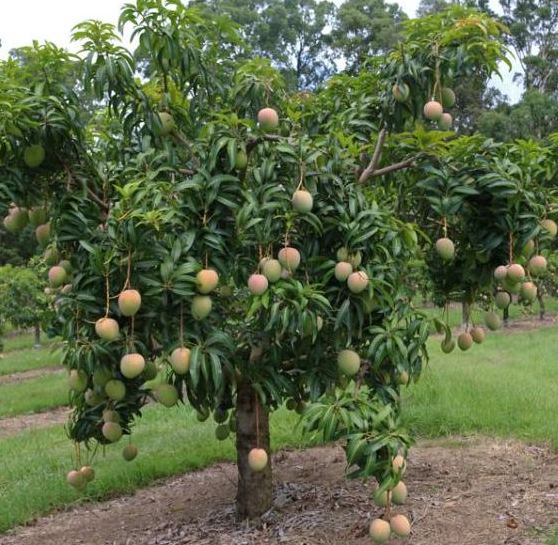
Canopy management is the deliberate control of a tree's size, branching, and distribution of foliage. In mangoes it supports light penetration, airflow, safe harvest, and access for monitoring rather than simply making the tree look neat. Training young trees and making modest, well-timed cuts can prevent the need for drastic height reduction later. Removing too much foliage or pruning shortly before flowering can reduce production, so management must balance useful canopy size with retained productive shoots.
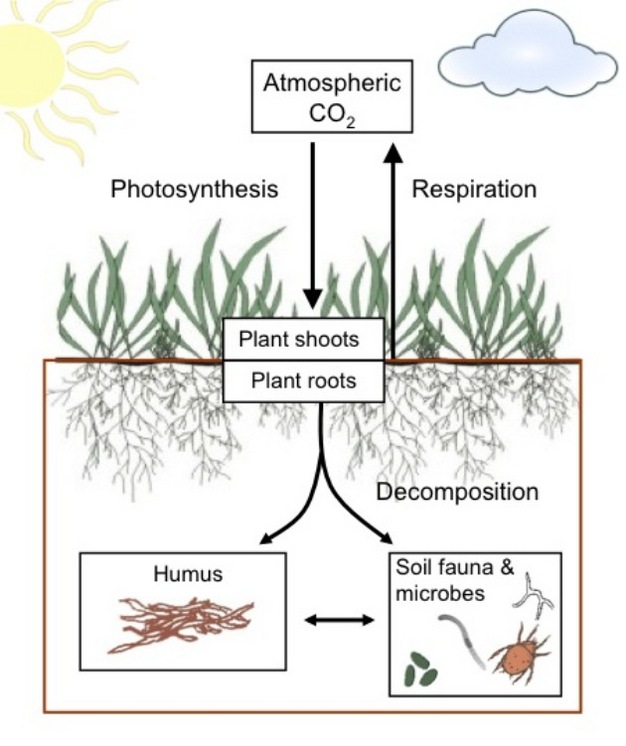
Carbon sequestration is capture and storage of carbon in a longer-lived pool such as woody biomass or soil organic matter. Mango trees incorporate atmospheric carbon into their tissues as they grow, and management influences whether stored carbon persists or returns to the atmosphere. Net climate effects also depend on land-use history, inputs, transport, and eventual tree removal. Planting a mango is therefore not a measured carbon offset by itself; credible comparisons require a defined baseline and accounting period.
Cation exchange capacity, or CEC, describes the capacity of soil materials to hold exchangeable positively charged ions. These include nutrient ions such as calcium, magnesium, potassium, and ammonium. For mango nutrition it helps explain why different soils retain and release nutrients differently, but it is not a complete fertility score or a fertilizer prescription. Interpret CEC with soil pH, test results, and the tree's condition rather than assuming a high number means every nutrient is available in the right amount.
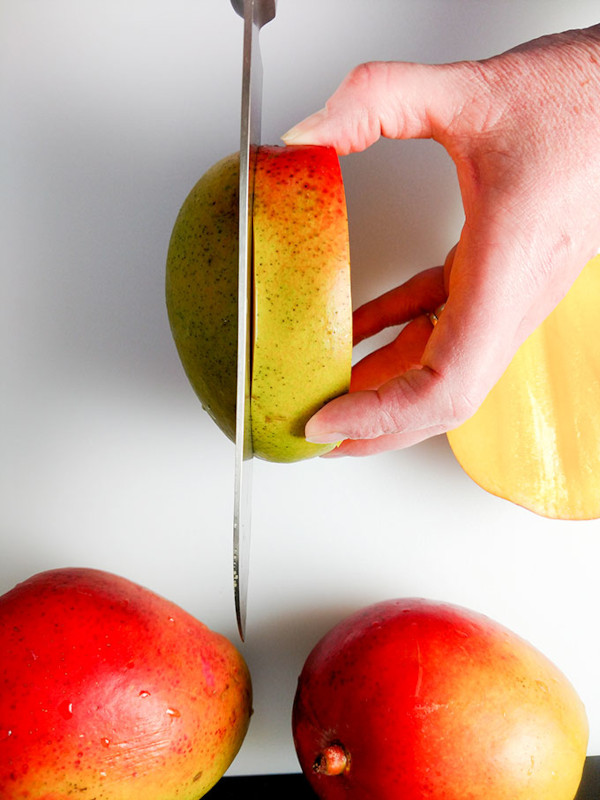
The cheek is either broad, fleshy side of a mango on opposite sides of the flattened seed. Cutting along each side of the seed produces the two pieces commonly called mango cheeks. The shape and fullness of these areas contribute to fruit appearance and practical slicing yield, but do not prove cultivar identity. When preparing fruit, wash the exterior first and use a stable cutting surface, because a slippery mango and an unexpectedly positioned seed can make careless cutting hazardous.
A chelate is a compound in which a metal ion is held by an organic molecule. Certain chelated nutrient products help keep elements such as iron available under conditions where they would otherwise become less soluble. The chelating agent and soil pH matter, so products are not interchangeable simply because their labels say chelated. For a mango with suspected nutrient deficiency, consider root health and test information first; a chelate does not correct flooding, damaged roots, or every cause of yellow foliage.
Chilling injury is damage caused by temperatures that are too low for a sensitive plant tissue even when the tissue does not freeze. In mango fruit it can lead to poor or uneven ripening, surface discoloration, pitting, and reduced flavor, depending on maturity and exposure. It is different from frost damage to a living tree. Commercial storage temperatures must suit the fruit's condition; at home, allow mature unripe fruit to ripen appropriately before using refrigeration to slow deterioration of ripe fruit.
Chlorosis is yellowing caused by reduced chlorophyll in plant tissue. On mango leaves it can result from nutrient problems, unsuitable root conditions, water stress, disease, or normal aging, depending on the pattern. Record which leaves are affected first and whether veins stay green before choosing a response. The term describes a visible symptom rather than a diagnosis. Applying a broad fertilizer mix to every yellow tree can overlook waterlogged roots or create unnecessary salt accumulation.
Cleft grafting inserts a wedge-shaped scion into a split at the cut end of a stock or branch. In mango work, matching the living cambial regions along at least one suitable edge is more important than placing a thin scion exactly in the middle of a thick stock. Secure the join and protect exposed surfaces from drying and water entry. A successful technique on one stem size or season should not be treated as a guarantee for every tree.
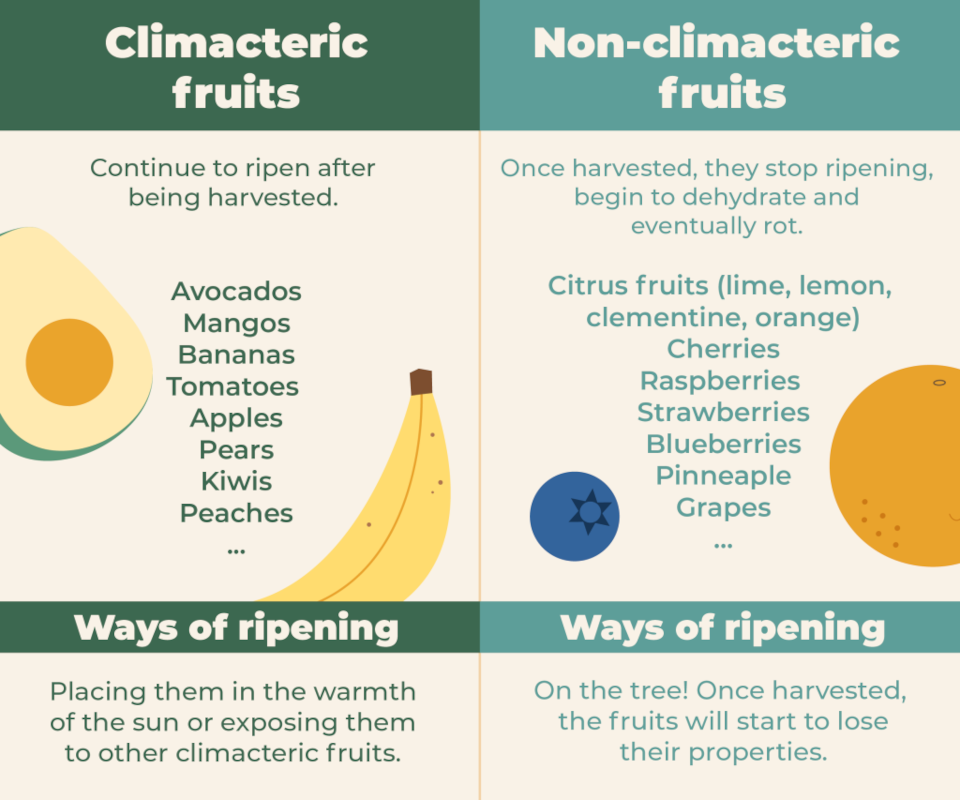
Climacteric describes fruit that shows a characteristic rise in respiration and ethylene production during ripening. Mango is climacteric, so a sufficiently mature fruit can continue ripening after harvest. That does not mean an undersized, immature fruit will develop normal flavor simply by waiting or adding ethylene. Harvest maturity, temperature, and damage influence the result. For home use, allow mature unripe mangoes to soften at room temperature, then refrigerate ripe fruit as appropriate to slow further deterioration.
A clone is a plant or group of plants produced from one source through asexual reproduction and generally sharing its genotype, apart from possible mutations. Mango grafting preserves the scion as a clone of the selected source rather than creating a new seedling genotype. Clonal identity does not make all trees perform identically: rootstock, soil, climate, health, and management still matter. A clone is also not automatically disease-free, so propagation hygiene and trustworthy source material remain important.
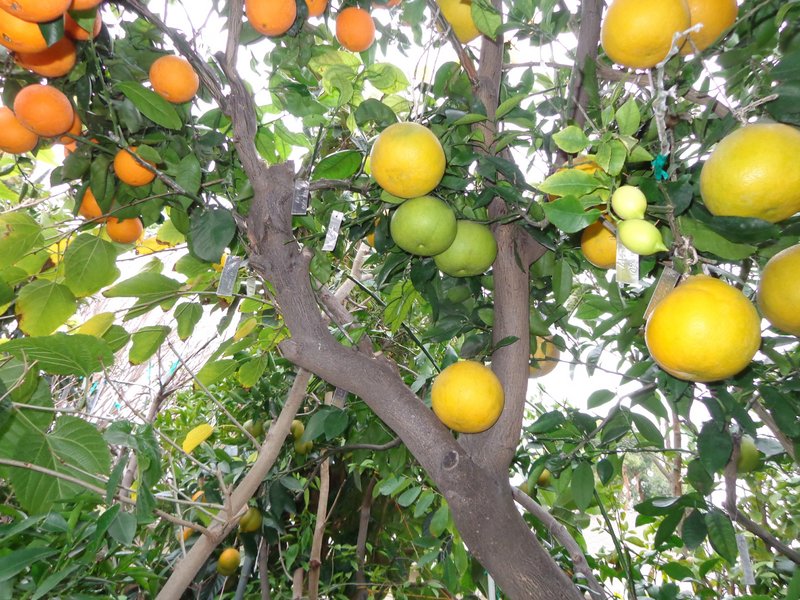
A cocktail tree is a fruit tree carrying more than one grafted cultivar. On a mango cocktail tree, each successfully grafted branch retains its own cultivar identity, offering variety within limited planting space. The arrangement does not guarantee balanced growth: a vigorous branch can shade or overtake weaker grafts, so labeling and selective pruning matter. Different harvest seasons may broaden the picking window where the cultivars perform appropriately, but combining branches does not make an unsuitable climate suitable for mango production.
The cold chain is the coordinated management of suitable temperatures during storage, transport, and distribution. For mangoes, suitable does not mean as cold as possible: immature or unripe fruit can suffer chilling injury. Breaks in temperature management can accelerate ripening, encourage condensation, or complicate arrival quality. Monitor actual product conditions where practical, not just a truck's thermostat setting, and match the handling program to maturity, cultivar, and the validated requirements of the supply chain.
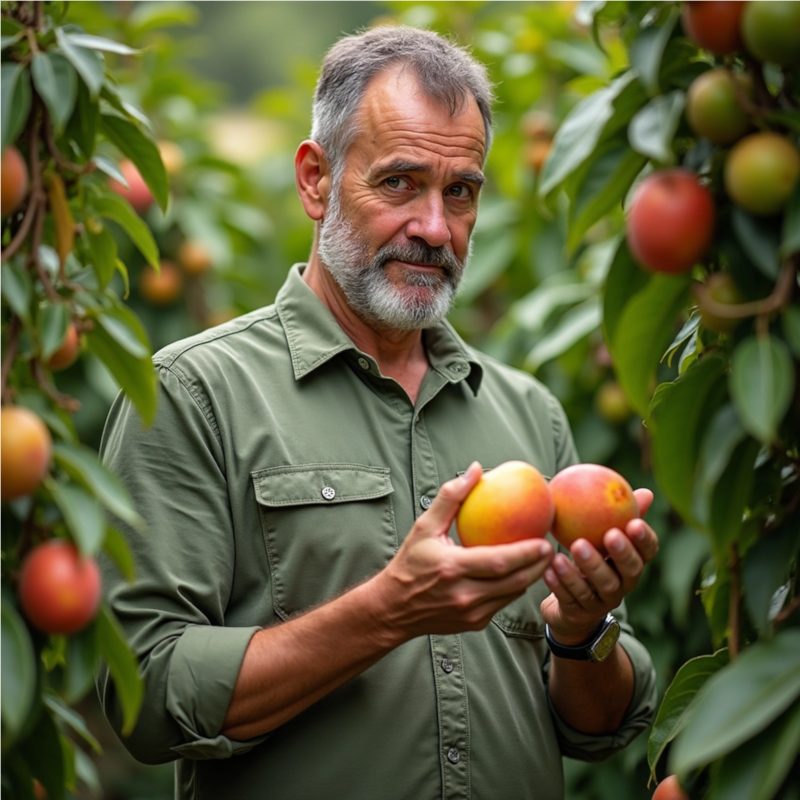
A connoisseur is a knowledgeable and discerning enthusiast. In mango tasting, that may mean comparing aroma, sweetness, acidity, texture, fiber, and aftertaste while paying attention to ripeness and the source of each sample. It is a description of experience and interest, not a formal horticultural credential or an objective ranking system. Good tasting notes explain what was observed and under what conditions, allowing others to compare preferences without claiming that one person's favorite mango must be best for everyone.
Controlled atmosphere storage uses managed oxygen and carbon dioxide levels, together with temperature and humidity control, to slow changes in harvested fruit. For mangoes, an appropriate system can delay ripening and help maintain market quality, but unsuitable gas levels can cause off-flavors, discoloration, or tissue injury. It is a specialized commercial practice, not the same as sealing fruit in an airtight home container. Effective use depends on cultivar, maturity, monitoring, and equipment rather than a single gas recipe for every batch.