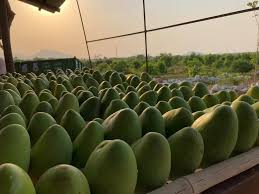
De-sapping is managing the sap released from the cut stem of a harvested mango so it does not stain or burn the peel. Commercial systems control how fruit are held and drained and may use a validated washing procedure. The aim is to protect quality without adding contamination or injuring the fruit. At home, handle freshly cut stems carefully, avoid spreading sap across other mangoes, and protect sensitive skin. De-sapping does not cure decay or compensate for picking an immature fruit.
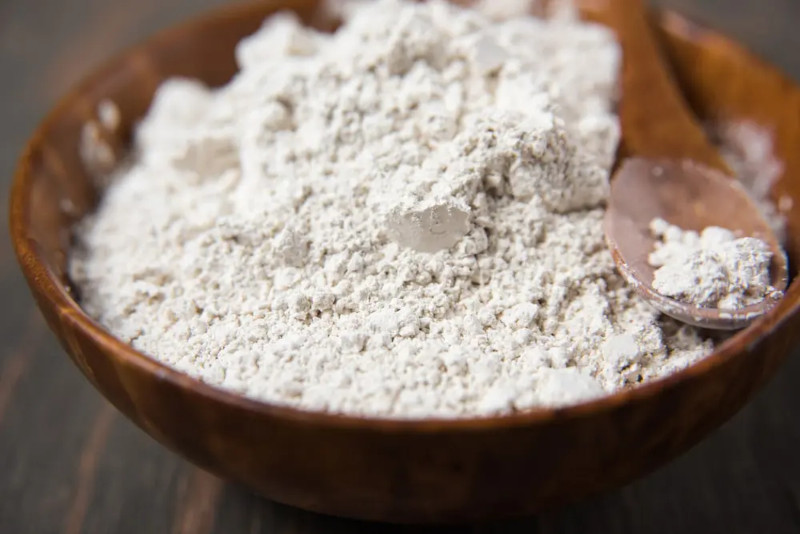
Diatomaceous earth is a powder made from the silica-rich remains of diatoms. In a labeled insect-control product it acts physically on an insect's protective outer layer, promoting water loss, and works best when dry and undisturbed. It is not selective for pests and can expose beneficial insects; dust can also irritate eyes and airways. Do not substitute pool-filter material or assume food-grade labeling authorizes garden pesticide use. For mango pests, identify the insect first and follow an applicable product label rather than dusting flowers routinely.
Related products: available on eBay
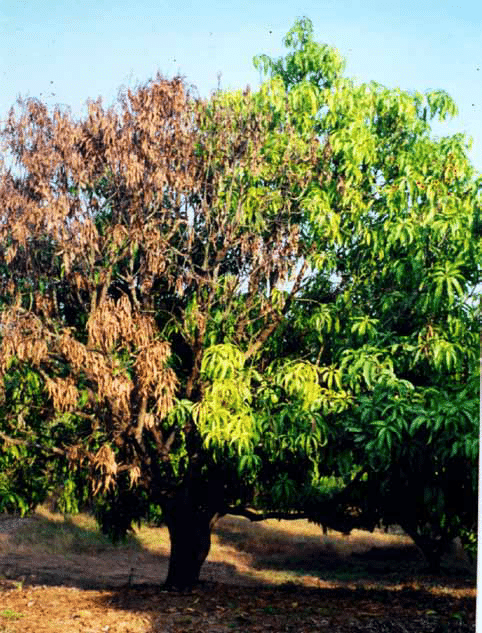
Dieback is progressive death of shoots or branches, often beginning near their tips and extending backward. On mango it can be associated with pathogens, injuries, root problems, or environmental stress, so it describes a pattern rather than one confirmed disease. Look for the boundary between living and dead wood, recent damage, and other symptoms before deciding how much to remove. Use suitable sanitation and timing when pruning, and investigate the underlying cause instead of assuming fertilizer or a generic spray will restore dead tissue.
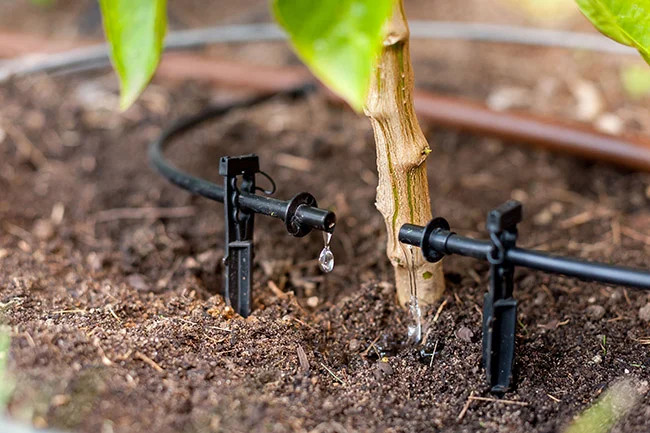
Drip irrigation delivers water slowly near the root zone through emitters or similar outlets. For mango trees it can reduce unnecessary wetting of foliage and flowers, but an efficient system still needs suitable emitter placement, working filters, and checks of soil moisture. One emitter beside the trunk may not wet enough of a larger tree's active roots. Adjust the wetted area as the tree grows and inspect for blockages or leaks rather than judging irrigation solely by how long the system runs.
Ask about mango watering
Drought tolerance is a plant's ability to withstand limited water better than a more sensitive plant under comparable conditions. An established mango may cope with dry periods more effectively than a newly planted tree, whose small root system has less access to stored soil moisture. Tolerance does not mean maximum growth or fruit production without water, nor does it make every cultivar or rootstock equally adapted. Judge irrigation needs from root-zone moisture, weather, tree age, and crop stage.
Dry matter is the portion of a sample remaining after its water has been removed by a defined drying method. In mango harvest assessment, dry-matter percentage can help evaluate fruit development and likely ripening quality when the method and cultivar interpretation are appropriate. It is not the same as juice Brix or a universal eating-ripeness score. Sample representatively and use a validated procedure rather than assuming that one threshold works for every variety, region, or measurement device.