
Bacterial black spot is a mango disease associated with Xanthomonas citri pv. mangiferaeindicae, which has also appeared under older scientific names. It can produce dark lesions on leaves, fruit, and young stems, sometimes with cracking or raised margins. Symptoms may overlap with fungal spots and physical damage, so diagnosis matters. Clean propagation material, reduced injury, sanitation, and locally appropriate management help limit spread. Do not infer that every black spot is bacterial or apply a treatment based only on color.
Beneficial insects provide services such as pollination, predation, or parasitism of pests. Mango flower visitors and insect natural enemies can support production, but a helpful insect may resemble a pest at a glance. Preserve useful habitat where appropriate and assess the need for treatment before spraying active flowers. Beneficial does not mean that one purchased insect will solve every problem; species, timing, food supply, and environmental conditions determine whether a natural enemy can contribute effectively.
A bisexual flower has both male and female reproductive structures. Mango panicles normally include bisexual flowers as well as male flowers, and the proportions can vary. The presence of female structures makes fruit development possible, but does not guarantee that a particular flower will be pollinated, fertilized, or retained. Many flowers naturally fail to become mature mangoes. Evaluate panicle health and subsequent fruitlet development rather than estimating a crop simply by counting every visible flower.
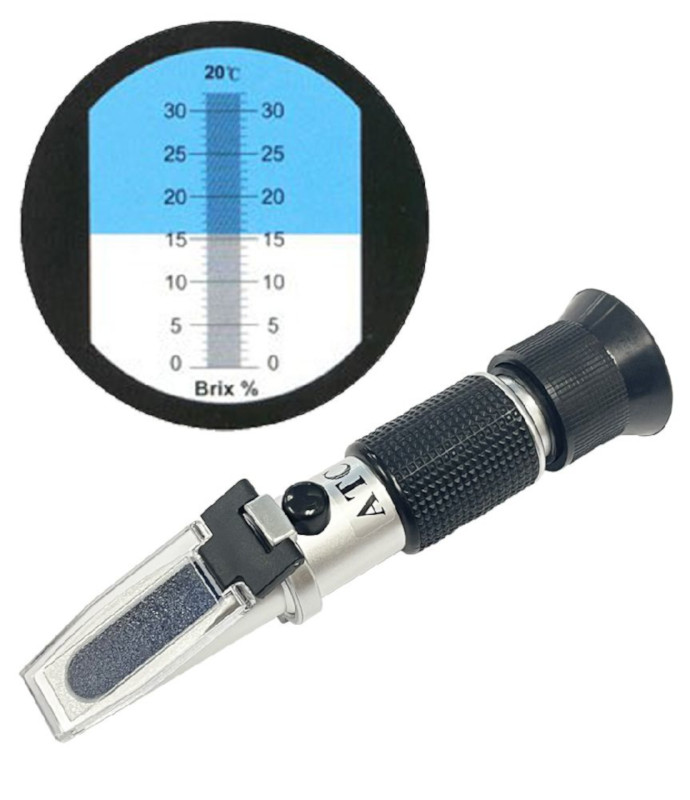
Brix is the scale on which a pure sucrose solution's concentration is expressed as grams of sucrose per 100 grams of solution. A refractometer reading on mango juice is an estimate of soluble solids rather than a direct measurement of each sugar. This existing entry complements Brix Level by explaining the scale itself. Calibrate the instrument and sample consistently when comparing fruit, and do not treat a single Brix value as proof of cultivar identity or universally better flavor.
Related products: brix tool
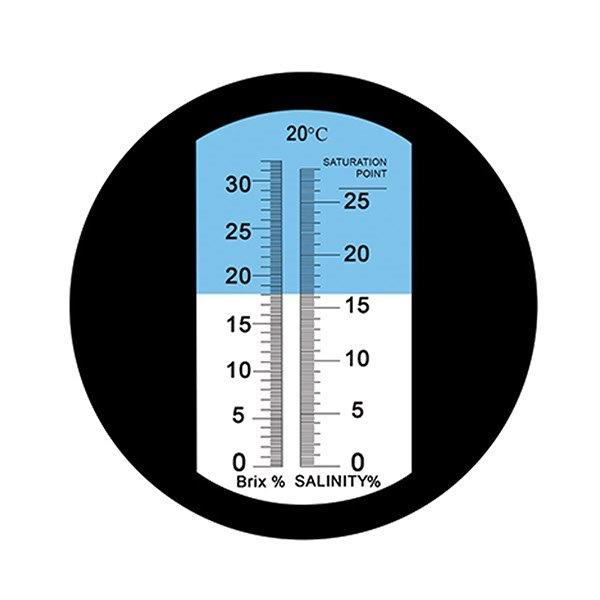
Brix level is a reading used to estimate soluble solids in juice, commonly measured with a refractometer. In mango juice, sugars account for much of the reading, but acids and other dissolved substances also contribute, so it is not an exact laboratory sugar percentage for every sample. Ripeness, sampling location, and instrument calibration affect comparisons. A high reading does not describe all of eating quality: aroma, acidity, fiber, and personal preference still matter when comparing mangoes.
Related products: brix tool
Bud break is the stage when a resting bud begins visible growth. On mangoes it may lead to a leafy shoot, a flower panicle, or mixed growth depending on the bud and conditions. Swelling and opening are useful observations, but they do not prove a new graft has fully healed because stored reserves can support early activity. Record subsequent growth and hardening, and avoid disturbing a tender graft simply because its buds have started to move.
Bud differentiation is the development of a bud's internal structures toward a particular growth form, such as vegetative or floral growth. It is distinct from the earlier physiological signals involved in induction and from the later visible opening of the bud. In mango management, this distinction explains why actions taken just before visible bloom may already affect developing flower structures. Observe shoot maturity and local seasonal patterns rather than assuming a closed bud is inactive or unaffected by pruning.
Budwood is plant material carrying buds intended for propagation, commonly selected shoots from an identified mother tree. In mango collecting the term is sometimes used loosely for scion wood even when an entire scion, rather than a single bud, will be grafted. The source tree, shoot maturity, health, and label all matter. Keep batches separate and protected from drying; recognizable leaves or a seller's name do not replace reliable provenance and clean propagation practices.