This site contains affiliate links for which we may be compensated.

Mango Database
Mangoes in a sunlit tropical orchard

Mango Glossary

Understand the language of mango growing, one term at a time.

Explore Mango Terminology

Browse definitions and growing concepts to expand your mango knowledge.

Showing 1–7 of 14 terms

Soft Nose

Soft nose is a mango internal disorder characterized by excessive softening near the fruit's blossom end or tip, sometimes with discoloration or spongy tissue. It differs in location and appearance from ordinary uniform ripening and from decay starting at the stem end. Several factors can be involved in fruit breakdown, so an association with nutrition is not a diagnosis of one specific deficiency. Inspect cut fruit and handling history before deciding whether a crop or storage practice needs adjustment.

The blossom end is opposite the stem attachment, so orientation matters when documenting the defect. Photograph the whole cut fruit and the affected region rather than an isolated piece of soft flesh. Distinguish tissue breakdown from a localized bruise that happened to occur near the tip during picking or transport.
Read more about Soft Nose

Scale Insects

Scale insects are sap-feeding insects, many of which become relatively immobile and develop a protective covering. Mango trees can host different kinds, and some honeydew-producing scales encourage sooty mold and ant activity. Other scales do not produce honeydew, so black coating is not a universal symptom. Examine living insects and their distribution before selecting management. Protect natural enemies where possible, and do not mistake every fixed bump on a branch for an active pest.

A protective covering can remain after a scale has died, so the number of visible covers is not necessarily the number of living pests. Monitoring should examine life stages and fresh injury. The distinction between armored and honeydew-producing scales also helps explain why some infestations are associated with sticky leaves and others are not.

Read more about Scale Insects
Scion (generated editorial illustration)

Scion

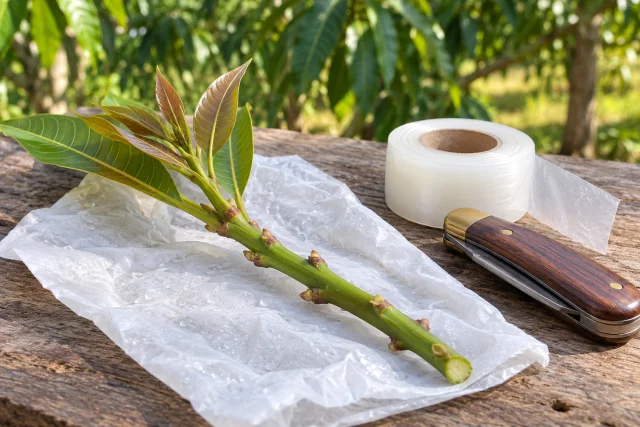
A scion is the shoot or other selected plant material joined to a rootstock during grafting. For mangoes, it carries the identity of the cultivar intended to form the upper tree and produce fruit. Scion health, maturity, freshness, and correct labeling matter as much as the cutting technique. Collect only from suitable, identified trees, protect material from drying, and do not assume that a vigorous-looking shoot is free of every transmissible problem.

A scion is selected for its identity and condition, not merely because it comes from a fruiting tree. Keep each collected shoot labeled through preparation and grafting, and document which branch supplied it if the source tree carries several cultivars. Detached material can lose moisture before visible shriveling makes the problem obvious.

Read more about Scion

Scion Desiccation

Scion desiccation is excessive drying of the detached shoot used for grafting. Until the graft establishes an effective water supply, the scion relies on its retained moisture and protection from drying conditions. Fresh-looking bark does not always reveal damage to internal tissues or buds. Minimize delays, protect collected material appropriately, and follow a suitable mango grafting method; wrapping can reduce water loss but cannot restore a scion already badly damaged by heat or drying.

Water loss can continue during collection, transport, preparation, and the interval before union formation. A successful cut shape cannot compensate for badly dehydrated living tissues. Keep source and handling records together, and distinguish a fresh-looking outer surface from evidence that buds and internal tissues remain capable of sustained development.

Further reading: University of Minnesota: Grafts and Wounds.

Read more about Scion Desiccation

Scionwood Maturity

Scionwood maturity describes the developmental condition of a shoot selected for grafting, including firmness, bud development, and whether a recent flush has hardened. It is different from the age of the parent mango tree or the calendar age of a detached stick. Extremely tender shoots and stressed, depleted material can be difficult to handle successfully. Describe the actual shoot condition when sharing propagation results, since a recommendation based only on shoot length leaves important differences unexplained.

Shoot maturity is a combination of developmental observations rather than a universal number of days. Two shoots collected on the same date can differ if one recently flushed and the other has hardened. Describing leaf condition, stem firmness, and bud state makes a propagation report more useful than calling both sticks mature without explanation.

Further reading: University of Minnesota: Grafts and Wounds.

Read more about Scionwood Maturity
Soil Compaction (generated editorial illustration)

Soil Compaction

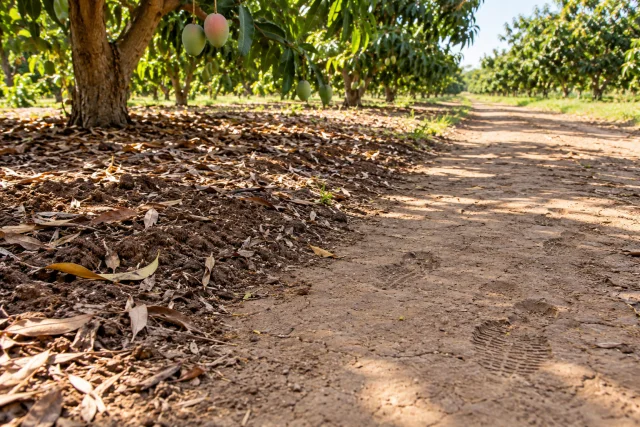
Soil compaction is the compression of soil into a denser condition with reduced pore space. Foot or vehicle traffic, construction, and working wet soil can contribute to it around mango trees. The result may be restricted root growth, slower infiltration, and poor aeration rather than a simple nutrient shortage. Preventing damage is often easier than correcting it beside an established tree. Avoid aggressive cultivation through major roots and assess the actual layer and extent of compaction before attempting remediation.

Compaction can occur in a layer below apparently loose topsoil. Surface amendments may improve the upper zone while leaving that restriction in place. Evaluate the depth and extent of the problem, especially after construction or repeated vehicle use, and consider established mango roots before attempting deep mechanical disturbance.

Read more about Soil Compaction
Soil Texture (generated editorial illustration)

Soil Texture

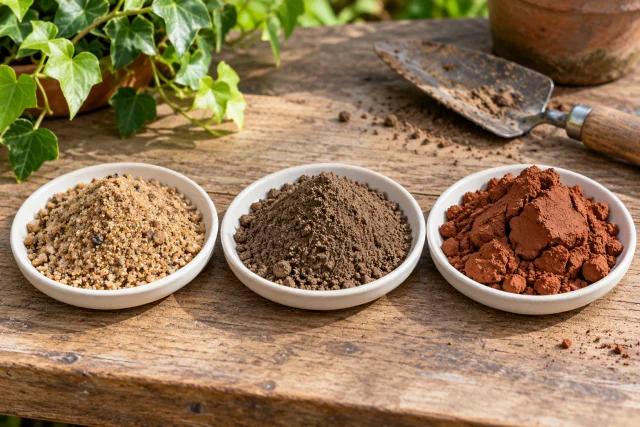
Soil texture describes the relative proportions of sand, silt, and clay in the mineral soil. It influences water storage, drainage, nutrient retention, and how a mango's root zone behaves after irrigation. Texture is different from structure and cannot be permanently changed by a small addition of compost. Use it to interpret moisture observations and test results, but inspect actual drainage too: a sandy surface can still overlie a compacted or poorly draining layer.

Texture describes mineral particle proportions, whereas organic matter, aggregation, and compaction affect how a particular sample behaves. Two soils with similar texture can therefore differ in infiltration and rooting conditions. Keep those properties separate when interpreting a test or describing why a mango planting site stays wet.

Read more about Soil Texture