This site contains affiliate links for which we may be compensated.

Mango Database
Mangoes in a sunlit tropical orchard

Mango Glossary

Understand the language of mango growing, one term at a time.

Explore Mango Terminology

Browse definitions and growing concepts to expand your mango knowledge.

Showing 183–189 of 197 terms

Topworking

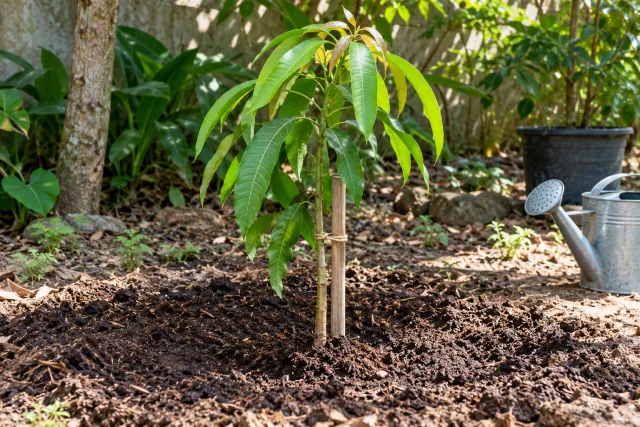
Topworking changes the cultivar carried by an established tree by grafting selected scions onto suitable branches or regrowth. On mangoes it can replace an unsatisfactory selection or create a multi-cultivar tree without starting with a new root system. The operation needs planning for branch structure, exposed bark, vigorous competing shoots, and the balance of new grafts. Large cuts and heavy canopy removal create risks, so an established tree should not be stripped indiscriminately in pursuit of a quicker crop.
Read more about Topworking
Traceability (generated editorial illustration)

Traceability

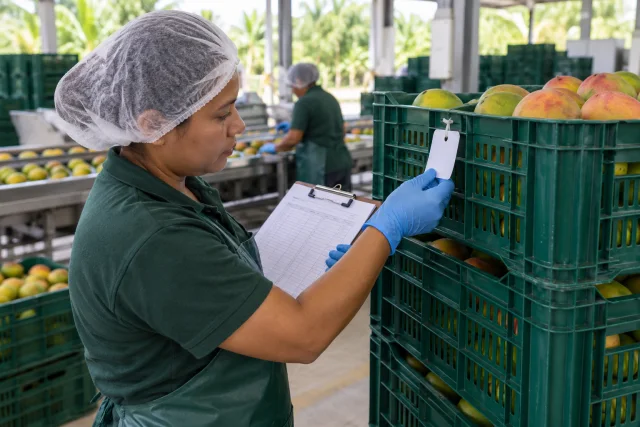
Traceability is the ability to follow a product or plant material through documented stages of its history. Mango fruit records may connect an orchard block, harvest date, packing batch, and customer, while nursery records can connect a graft to its scion source and rootstock batch. Useful traceability requires labels and records that remain linked as material moves. It supports investigation and quality control but does not independently prove a cultivar claim or replace inspection for pests and disease.

Read more about Traceability
Transplant Shock (generated editorial illustration)

Transplant Shock

Transplant shock is a temporary setback following movement or planting, often caused by disturbed roots, changed water supply, and a sudden change in exposure. A mango may wilt, drop leaves, or pause growth even when it has not acquired a new disease. Keep the original root ball appropriately moist while avoiding waterlogging and protect the tree from extreme conditions. Heavy fertilizer or drastic pruning is not an automatic cure; observe recovery and investigate persistent decline.

Read more about Transplant Shock
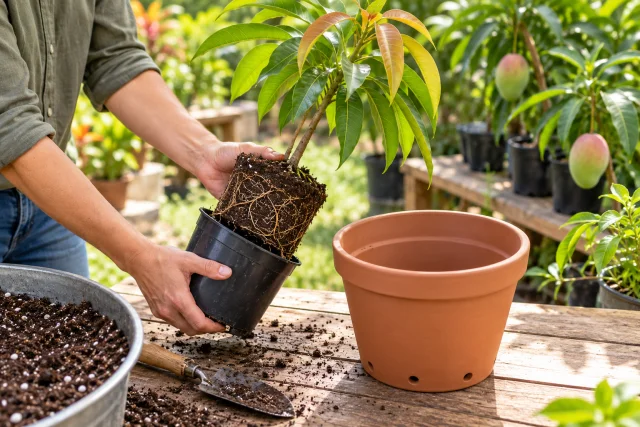
Up pot (generated editorial illustration)

Up pot

To up pot is to move a plant into a larger container so its roots have more room and fresh growing medium. For a mango, choose a container with effective drainage and avoid a very large jump that leaves unused medium wet for long periods. Preserve the original planting depth and handle the root ball carefully. Watering needs may change after the move, so check both the old root ball and the surrounding new mix rather than judging only the surface.

Read more about Up pot
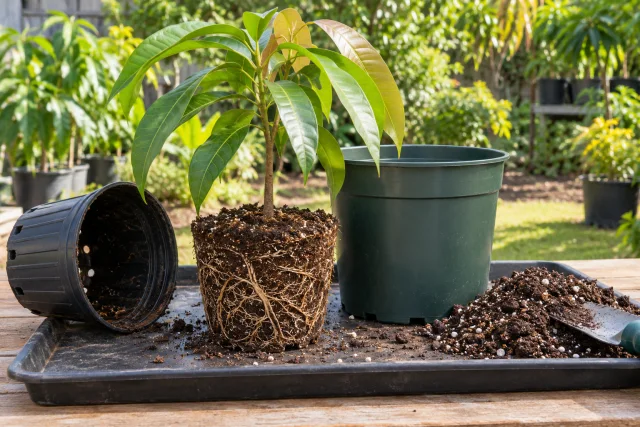
up-pot (generated editorial illustration)

up-pot

Up-pot is the hyphenated form of up pot, meaning to transplant a container-grown plant into a larger pot. Both spellings describe the same container-growing operation rather than a separate propagation technique. Mangoes need a stable container, drainage holes, and a growing medium that holds useful moisture without staying saturated. Repot in suitable growing weather where possible, protect disturbed roots from drying, and reassess irrigation while the tree establishes in the new volume.

Read more about up-pot

USDA

USDA stands for United States Department of Agriculture, the federal department responsible for a broad range of agricultural programs. Mango growers may encounter USDA information through plant research, genetic-resource collections, agricultural statistics, organic certification programs, and plant-health services. Those responsibilities are carried out by different agencies and programs, so a reference to USDA is not automatically a recommendation or approval for a product. Check which program is involved when interpreting a cultivar record, import requirement, or certification claim.

Read more about USDA

Veneer Grafting

Veneer grafting joins a prepared scion to a shallow cut along the side of a rootstock stem. It is used in mango propagation because it can provide a useful area of tissue contact without immediately removing the entire rootstock top. Accurate cuts, suitable stem maturity, and prevention of drying are important. The remaining stock growth is managed as the graft establishes. Success rates depend on material, weather, and skill rather than a method name alone.

Read more about Veneer Grafting