This site contains affiliate links for which we may be compensated.

Mango Database
Mangoes in a sunlit tropical orchard

Mango Glossary

Understand the language of mango growing, one term at a time.

Explore Mango Terminology

Browse definitions and growing concepts to expand your mango knowledge.

Showing 92–98 of 197 terms
Lawrence Zill

Lawrence Zill

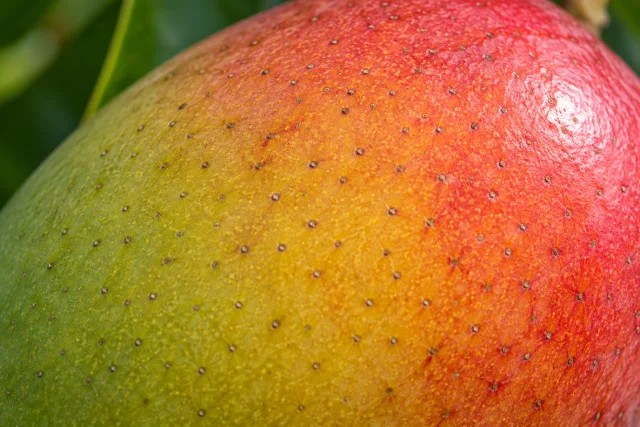
Lawrence Zill, also encountered as Laurence Zill in horticultural accounts, was a South Florida nurseryman associated with mango propagation and the Zill family's growing history. Keeping those name variants together helps readers follow older records. Cultivar histories need particular care: introducing or propagating a mango does not prove that the grower bred it or named it for a relative. Distinguish introductions, seedling selections, and later nursery distribution when researching Florida mango history, because those activities can involve different people and dates.
Read more about Lawrence Zill

Leaching

Leaching is movement of dissolved substances downward with water through soil or growing medium. It can carry unwanted salts out of a mango root zone, but can also waste nutrients and contaminate drainage water. Effective salt management requires suitable-quality water and a place for excess water to drain; repeatedly flooding a poorly drained pot is not successful leaching. Interpret the need from water quality, fertilizer history, and testing rather than using extra irrigation as a universal response to weak growth.

Read more about Leaching

Leaf Hopper

Leaf hopper is a common name for small jumping sap-feeding insects; mango hoppers are particular members of this broader group that can feed on tender growth and flower panicles. Heavy feeding and honeydew can interfere with flowering and fruit set, but species and importance vary by region. Examine insects and fresh damage rather than assuming every small winged visitor is a pest. Pollinating flies and other useful visitors also occur on mango flowers and should not be targeted indiscriminately.

Read more about Leaf Hopper
Lenticels (generated editorial illustration)

Lenticels

Lenticels are small structures in the mango peel that permit gas exchange through the fruit surface. They appear as dots whose size, color, and prominence vary with the fruit and its stage of development. Darkened lenticels can result from handling, sap exposure, storage conditions, or disease, so spotting alone does not identify a pathogen. When evaluating a mango, distinguish ordinary peel markings from expanding lesions, soft tissue, and decay rather than rejecting every visible dot.

Read more about Lenticels
Lignification (generated editorial illustration)

Lignification

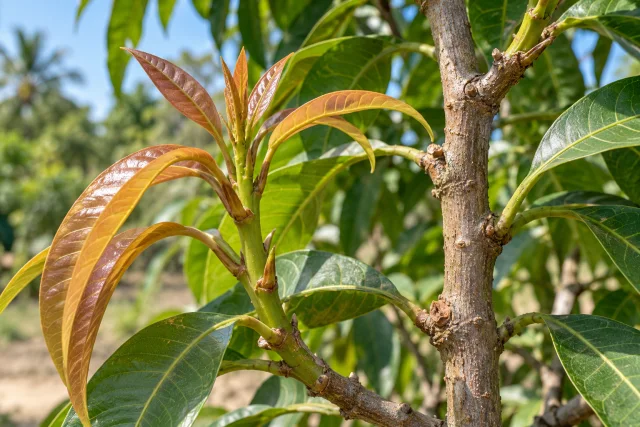
Lignification is the deposition of lignin as plant tissues become more woody and structurally firm. A new mango flush changes from soft, flexible growth to a harder shoot as it matures, although color alone does not measure every internal change. This matters when judging whether a shoot can tolerate handling or serve as suitable propagation material. A hardened stem is not necessarily ready to flower, and excessive toughness does not automatically make old wood a better scion.

Read more about Lignification

Macronutrient

A macronutrient is an essential plant nutrient required in relatively large quantities. In practical mango fertilization, the term commonly includes nitrogen, phosphorus, potassium, calcium, magnesium, and sulfur. Large requirement does not mean unlimited benefit: excess supply can create imbalance, salt injury, or growth that is poorly timed for flowering. Match a program to tree age, soil, crop stage, and local guidance, and remember that a fertilizer's three main label numbers do not describe every essential nutrient.

Read more about Macronutrient
Mangifera Indica (generated editorial illustration)

Mangifera Indica

Mangifera indica is the scientific name of the cultivated mango, a species in the Anacardiaceae family. The genus contains other species, so not every plant called a wild mango is necessarily the same species as ordinary cultivated mangoes. Scientific naming helps separate species identity from cultivar names such as a named selection within the crop. For a collector, recording both the botanical name and the cultivar or accession source makes a plant record more informative than using a common name alone.

Read more about Mangifera Indica