This site contains affiliate links for which we may be compensated.

Mango Database
Mangoes in a sunlit tropical orchard

Mango Glossary

Understand the language of mango growing, one term at a time.

Explore Mango Terminology

Browse definitions and growing concepts to expand your mango knowledge.

Showing 120–126 of 197 terms

Packhouse

A packhouse is a facility where harvested produce is received and prepared for distribution. Mango operations may sort, clean, grade, treat where required, pack, and cool fruit there. The exact sequence depends on the market and approved procedures. Clean equipment, gentle handling, traceable batches, and suitable temperature management matter because a poorly managed packhouse can spread damage or decay between otherwise good fruit. It is a handling stage, not a guarantee that every packed mango has equal maturity or quality.
Read more about Packhouse
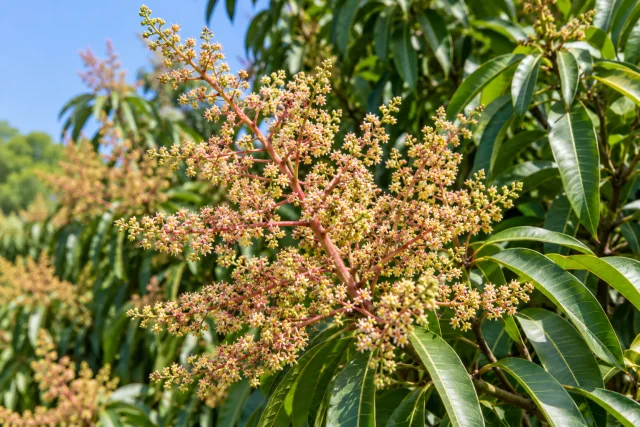
Panicle (generated editorial illustration)

Panicle

A panicle is a branched flower cluster. Mango panicles usually develop at shoot tips and carry many small flowers, including male flowers and flowers with both male and female structures. Only a small fraction normally become mature fruit, so numerous fallen flowers are not by themselves evidence of crop failure. Inspect the condition of the whole cluster, pollinator activity, weather, and developing fruitlets when judging flowering success rather than expecting every flower to produce a mango.

Read more about Panicle

Parthenocarpy

Parthenocarpy is fruit development without fertilization. It is a botanical process rather than a general name for all small or poorly developed fruit. Some mango fruit abnormalities involve absent or failed seed development, but outward appearance alone cannot establish exactly how they arose. Distinguish parthenocarpy from embryo abortion after fertilization and from simple growth limitation. The distinction is useful in breeding and diagnosis, while growers should avoid claiming that every seedless-looking fruit proves a tree is naturally seedless.

Read more about Parthenocarpy
Peat Moss (generated editorial illustration)

Peat Moss

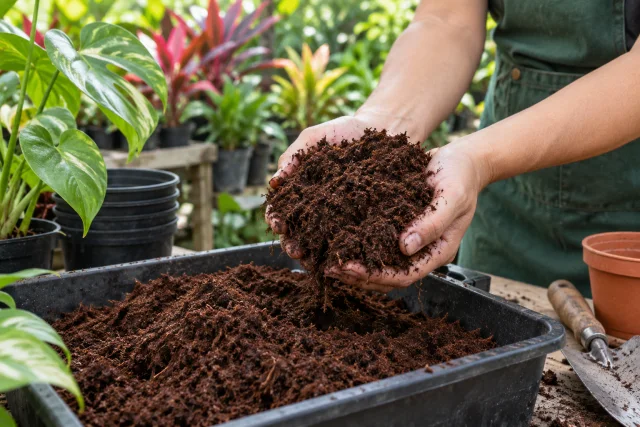
Peat moss is partly decomposed plant material accumulated in wetland peat deposits, commonly used as a moisture-retaining component of potting media. Sphagnum peat differs from the recognizable long strands sold as sphagnum moss. In a mango container it needs to be balanced with components that maintain air space; keeping a fine-textured peat mix constantly wet can stress roots. Very dry peat can be difficult to rewet, and it supplies little complete nutrition by itself.

Read more about Peat Moss

Pedigree

A pedigree records the ancestry of a plant or breeding selection. For mango cultivars, the seed parent may be known while the pollen parent remains uncertain, especially when seed was collected from an open-pollinated tree. Historical accounts, labels, and genetic analyses provide different kinds of evidence and can disagree. State uncertainty clearly instead of turning a reported association into a proven cross. A cultivar's flavor or fruit shape alone is not a reliable pedigree test.

Read more about Pedigree
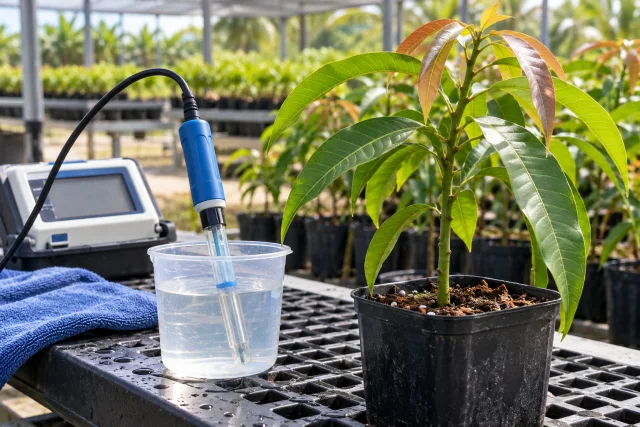
PH (generated editorial illustration)

PH

pH is a logarithmic measure of how acidic or alkaline a solution is, with 7 neutral under ordinary reference conditions. In mango growing, soil or potting-medium pH influences nutrient availability and helps explain problems such as iron deficiency in alkaline conditions. It does not measure how much fertilizer is present. Use an appropriate soil test and consider irrigation-water chemistry before adding acidifying or liming materials; changing pH blindly can create a different nutrient imbalance.

Read more about PH

Phenology

Phenology is the study and recording of recurring biological stages in relation to environmental conditions. For a mango grower, useful stages include flushing, shoot rest, panicle emergence, bloom, fruit set, and harvest. A local record can show why an apparently sensible pruning or irrigation schedule produced a different result in another season. Dates alone are less informative than dates paired with weather, tree condition, and observations of the actual developmental stage.

Read more about Phenology