
This site contains affiliate links for which we may be compensated.

Mango Database
Mangoes in a sunlit tropical orchard

Mango Glossary

Understand the language of mango growing, one term at a time.

Explore Mango Terminology

Browse definitions and growing concepts to expand your mango knowledge.

Showing 134–140 of 197 terms
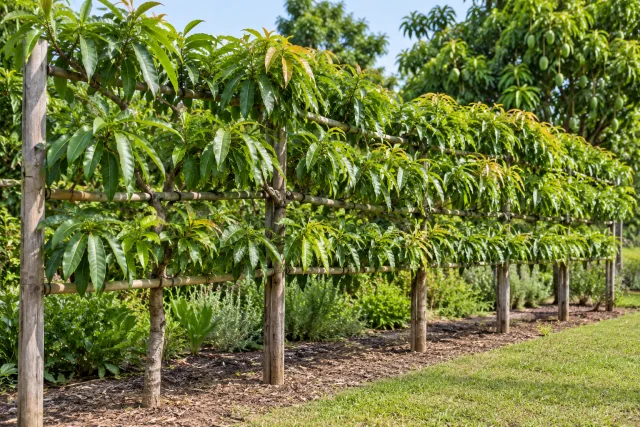
Pleaching (generated editorial illustration)

Pleaching

Pleaching is training and interweaving branches to form a screen or other living structure. Adjacent branches may eventually join where tissues make suitable contact, but simple interweaving does not guarantee a functional graft. Mangoes are generally trained for light, access, airflow, and safe branch structure rather than as dense pleached barriers. Treat references to this technique as a landscape-training concept, not a recommended way to combine cultivars or a substitute for a properly made graft.
Read more about Pleaching

Pollen Tube

A pollen tube is the structure that grows from a germinating pollen grain toward the ovule, carrying the male reproductive cells. It is part of the process between pollination and fertilization in mango flowers. Suitable pollen placement is therefore only an early step, not proof that a seed and fruit will develop. Temperature, compatibility, and flower condition can influence success. This concept helps explain why a tree can have abundant insect visits yet retain only a small share of its flowers as fruit.

Read more about Pollen Tube

Pollination

Pollination is the transfer of pollen to a flower's receptive stigma. Mango panicles bear male flowers and bisexual flowers, and insects such as flies and bees can help move pollen between them. A mango can often set fruit without a second cultivar, but pollination is only one step: fertilization, weather, disease, and the tree's resources also influence retention. Protect useful flower visitors and avoid interpreting every fallen flower as evidence that the tree needs a pollination partner.

Read more about Pollination
Polyembryonic

Polyembryonic

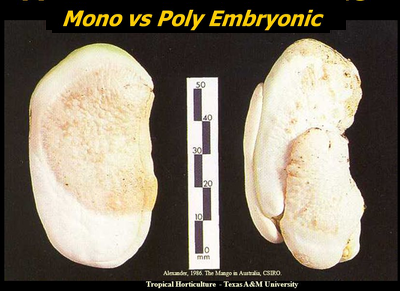
Polyembryonic describes a seed with multiple embryos. Mango seeds of this type can contain nucellar embryos derived from the mother tree's tissue as well as a sexually produced embryo; not every embryo necessarily survives or emerges. Nucellar seedlings can preserve the maternal genotype, but a sprout cannot be identified reliably as clonal merely because it is first, tallest, or strongest. This distinction matters when selecting rootstocks or attempting true-to-type seed propagation. A verified graft remains the clearest way to obtain a named cultivar.

Read the mango seed FAQ

Read more about Polyembryonic
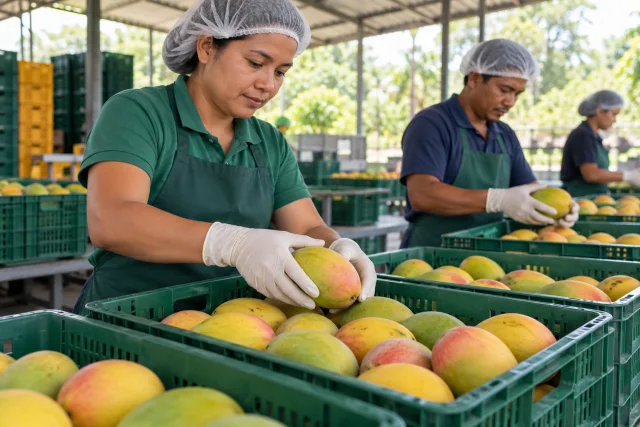
Post-Harvest Handling (generated editorial illustration)

Post-Harvest Handling

Post-harvest handling covers the steps between picking fruit and its final use, including moving, sorting, cleaning, packing, ripening, and storage. Mangoes can suffer sap burn, bruising, temperature injury, and decay during this period even when they looked sound on the tree. Gentle handling, clean equipment, and conditions suited to maturity help preserve quality. Trace the whole sequence when investigating losses rather than assuming every defect began in the orchard or can be corrected by a later treatment.

Read more about Post-Harvest Handling

Powdery Mildew

Powdery mildew is a fungal disease that can produce whitish growth on susceptible mango flowers, young fruit, and other tissues. Flower infection can reduce fruit set even if the rest of the tree looks vigorous. It is different from sooty mold, which grows on insect honeydew, and should not be diagnosed solely from a distant photograph. Monitor emerging panicles, compare symptoms carefully, and seek locally appropriate guidance before using a product, especially where pollinators are visiting flowers.

Read more about Powdery Mildew

Pre-rooting

Pre-rooting means encouraging roots to begin developing before a cutting is moved to its intended growing container or site. The term occurs in hobby propagation discussions, but mango cuttings are generally less dependable than seedling rootstocks followed by grafting. A swollen bud or fresh leaves do not prove that a cutting has rooted; stored reserves can support temporary growth. Maintain suitable moisture and aeration, avoid claiming guaranteed success, and distinguish this method from germinating a mango seed.

Read more about Pre-rooting