This site contains affiliate links for which we may be compensated.

Mango Database
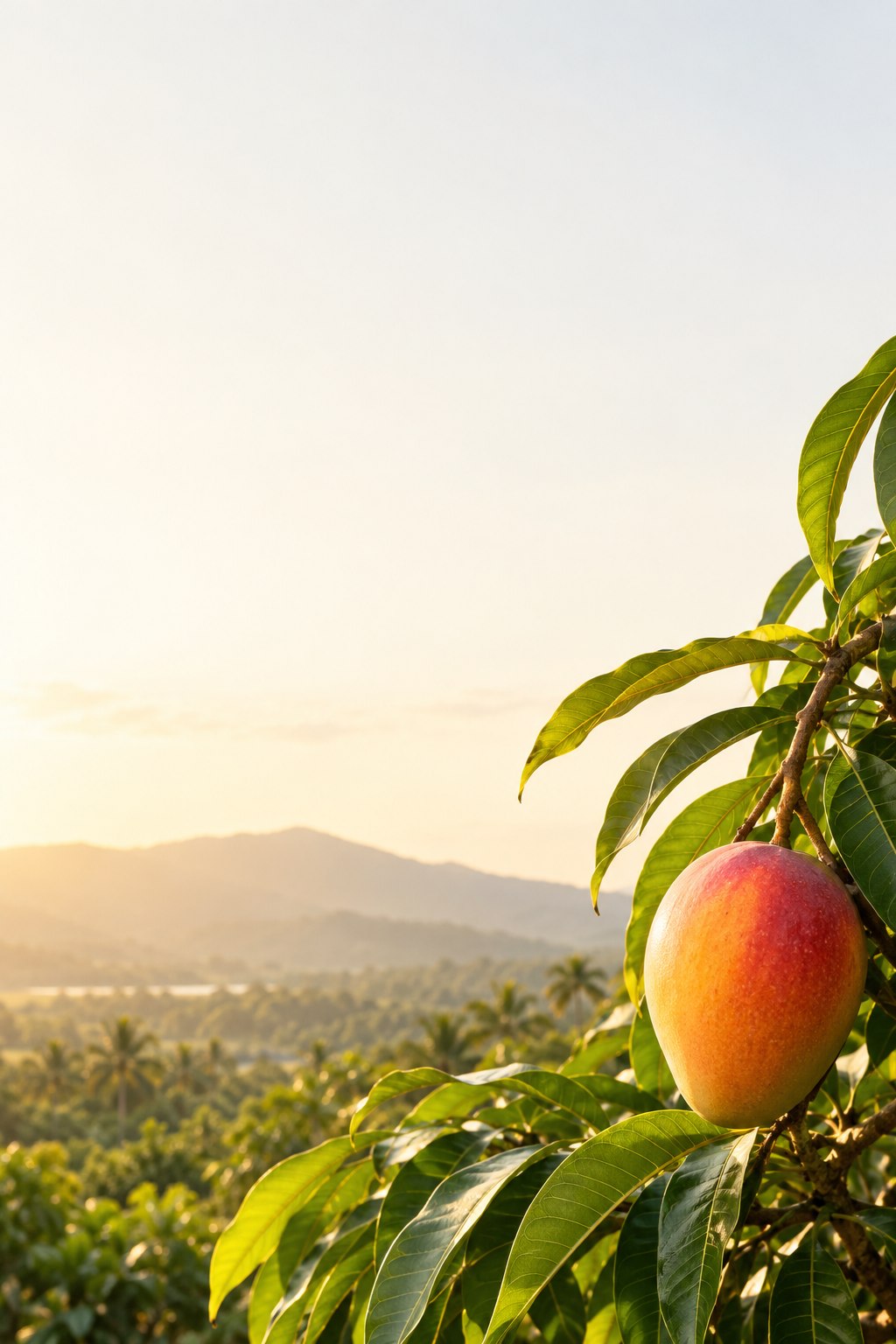
Mangoes in a sunlit tropical orchard

Mango Glossary

Understand the language of mango growing, one term at a time.

Explore Mango Terminology

Browse definitions and growing concepts to expand your mango knowledge.

Showing 155–161 of 197 terms
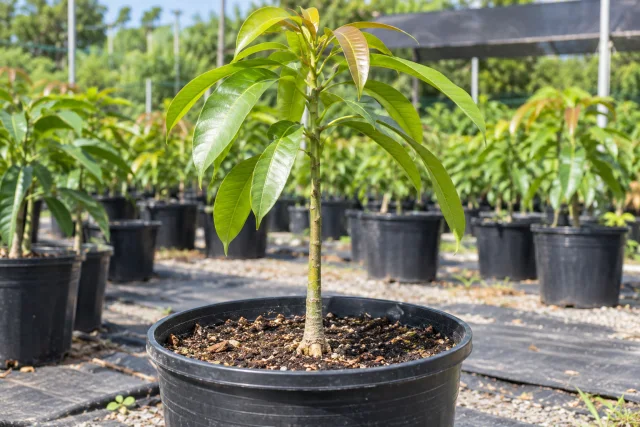
Rootstock (generated editorial illustration)

Rootstock

A rootstock is the rooted plant onto which a scion is grafted. In mango production it is commonly a seedling selected for suitability as a nursery and orchard foundation. It can influence vigor and responses to growing conditions, but it does not turn the scion into a different cultivar or make a mango frost-proof. Record the rootstock where known, keep the union above the soil, and remove unwanted rootstock shoots that could outgrow the intended canopy.
Read more about Rootstock

Salinity

Salinity is the presence or accumulation of soluble salts in water or soil. Excess salts can make water uptake more difficult and cause leaf-edge damage or reduced growth in mangoes. Sources can include irrigation water, fertilizer buildup, and coastal conditions, but those situations are not identical. Test where appropriate and check drainage before planning corrective leaching. A brown leaf margin alone cannot prove salinity, and adding amendments without knowing the water and soil chemistry can fail to solve the problem.

Read more about Salinity
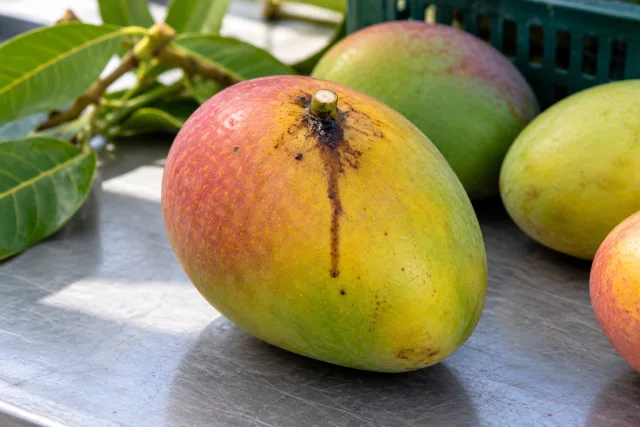
Sap Burn (generated editorial illustration)

Sap Burn

Sap burn is peel injury caused when sap from a cut mango stem contacts the fruit surface. It can leave dark marks that reduce appearance even when the underlying fruit is not initially rotten. Sap may also irritate sensitive skin, so handling methods should protect both fruit and workers. Careful picking, avoiding uncontrolled sap drips, and a suitable de-sapping procedure help reduce injury. Do not confuse a sap stain with a confirmed fungal lesion without examining how the mark developed.

Read more about Sap Burn

Scale Insects

Scale insects are sap-feeding insects, many of which become relatively immobile and develop a protective covering. Mango trees can host different kinds, and some honeydew-producing scales encourage sooty mold and ant activity. Other scales do not produce honeydew, so black coating is not a universal symptom. Examine living insects and their distribution before selecting management. Protect natural enemies where possible, and do not mistake every fixed bump on a branch for an active pest.

Read more about Scale Insects
Scion (generated editorial illustration)

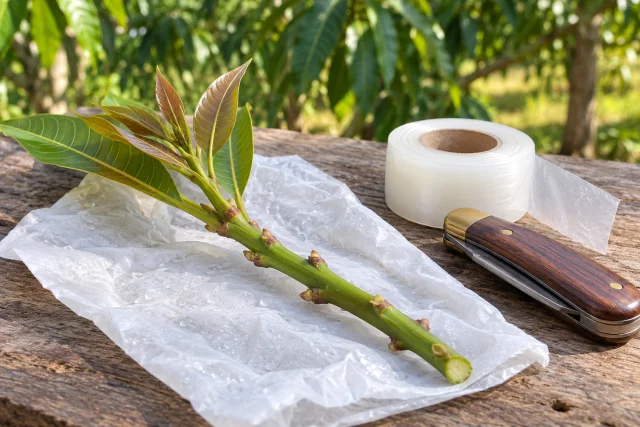
Scion

A scion is the shoot or other selected plant material joined to a rootstock during grafting. For mangoes, it carries the identity of the cultivar intended to form the upper tree and produce fruit. Scion health, maturity, freshness, and correct labeling matter as much as the cutting technique. Collect only from suitable, identified trees, protect material from drying, and do not assume that a vigorous-looking shoot is free of every transmissible problem.

Read more about Scion

Seed Viability

Seed viability is the capacity of a seed to remain alive and potentially germinate under suitable conditions. A mango stone may look intact even when the embryo inside has been injured, dried excessively, or decayed. Freshness, handling, and storage history therefore matter when selecting seed. Viability is not the same as guaranteed emergence: an alive seed can still fail under poor planting conditions. It also says nothing about whether the resulting tree will reproduce the parent cultivar's fruit.

Read more about Seed Viability

Self-Compatibility

Self-compatibility is the ability of a plant's own pollen, or pollen from the same genotype, to contribute to successful fertilization. Many mango cultivars can set fruit without a different cultivar nearby, but actual cropping also depends on flower health, weather, pollinators, and tree condition. It is not a guarantee that every solitary tree will crop heavily. A second tree cannot correct poor drainage, damaged flowers, or an unsuitable climate merely by being present in the same yard.

Read more about Self-Compatibility