This site contains affiliate links for which we may be compensated.

Mango Database
Mangoes in a sunlit tropical orchard

Mango Glossary

Understand the language of mango growing, one term at a time.

Explore Mango Terminology

Browse definitions and growing concepts to expand your mango knowledge.

Showing 162–168 of 197 terms
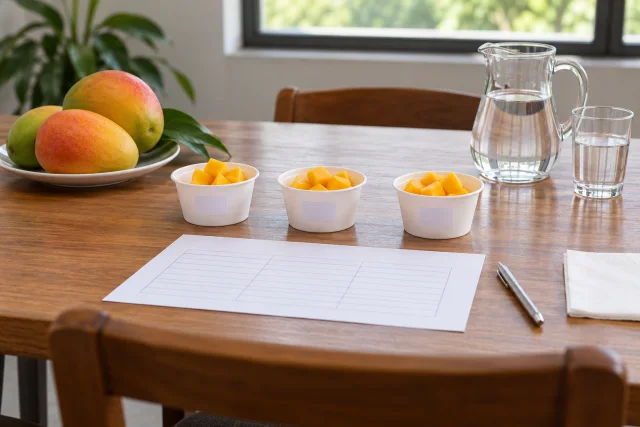
Sensory Evaluation (generated editorial illustration)

Sensory Evaluation

Sensory evaluation is systematic assessment using human senses, including aroma, taste, texture, and appearance. For mango comparisons, sample identity, ripeness, serving conditions, and the order of tasting can affect the result. Clear notes distinguish a preference from a measurable claim about every fruit of a cultivar. Comparing several sound samples is more informative than judging an entire variety from one bruised or underripe mango, and a panel's favorite need not be the best tree for every grower's climate.
Read more about Sensory Evaluation
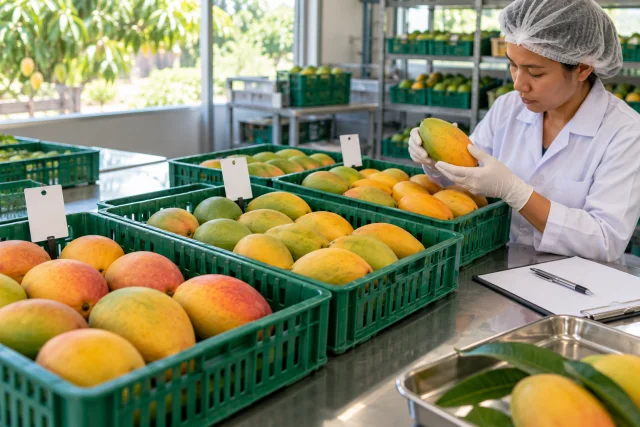
Shelf Life (generated editorial illustration)

Shelf Life

Shelf life is the useful period during which a harvested mango retains acceptable quality under stated conditions. It depends on harvest maturity, cultivar, temperature, humidity, injuries, and decay, rather than being one fixed number of days. A fruit can still look attractive while its flavor or texture has deteriorated. Store and handle batches consistently, inspect them regularly, and use the most advanced fruit first. A shelf-life estimate is not a guarantee that visibly moldy or fermented fruit is safe to eat.

Read more about Shelf Life
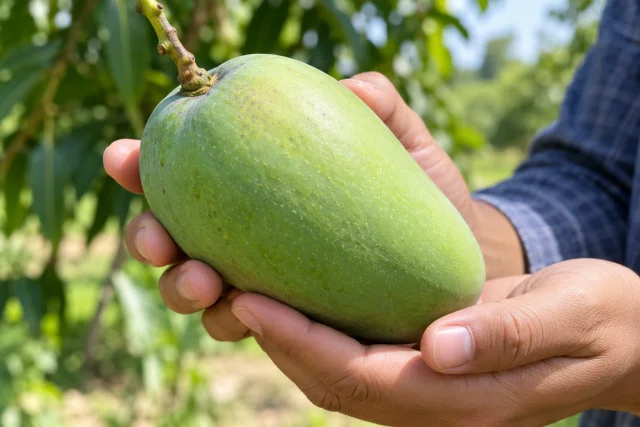
Shoulders (generated editorial illustration)

Shoulders

Shoulders are the upper curves of a mango near the stem attachment. Their fullness can be one useful sign of fruit development, particularly when compared with other fruit of the same cultivar. Raised shoulders alone do not prove that a mango is eating-ripe or ready to harvest, because natural shape varies between varieties. Combine shape with known development time, internal maturity observations where available, and the expected behavior of that tree rather than relying on a single photograph or universal rule.

Read more about Shoulders
SIP (generated editorial illustration)

SIP

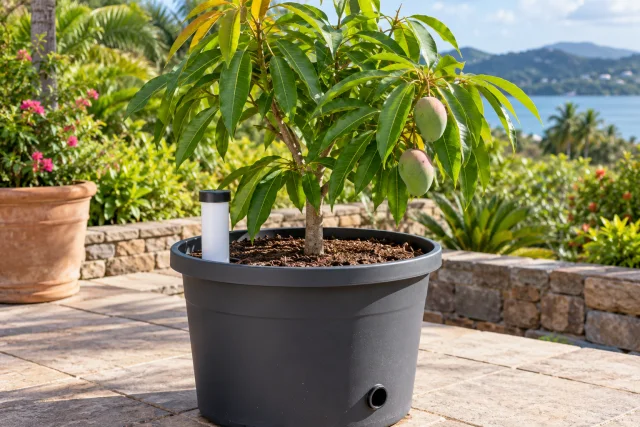
SIP means sub-irrigated planter, a container that supplies water from a reservoir below the growing medium. Capillary movement carries moisture upward, but the arrangement must still provide oxygen and an overflow outlet. A mango can suffer if its root zone remains saturated, particularly during cool weather or when a small tree uses little water. Check the medium, reservoir level, drainage design, and salt accumulation rather than assuming a self-watering container prevents every watering mistake.

Read more about SIP

Soft Nose

Soft nose is a mango internal disorder characterized by excessive softening near the fruit's blossom end or tip, sometimes with discoloration or spongy tissue. It differs in location and appearance from ordinary uniform ripening and from decay starting at the stem end. Several factors can be involved in fruit breakdown, so an association with nutrition is not a diagnosis of one specific deficiency. Inspect cut fruit and handling history before deciding whether a crop or storage practice needs adjustment.

Read more about Soft Nose
Soil Compaction (generated editorial illustration)

Soil Compaction

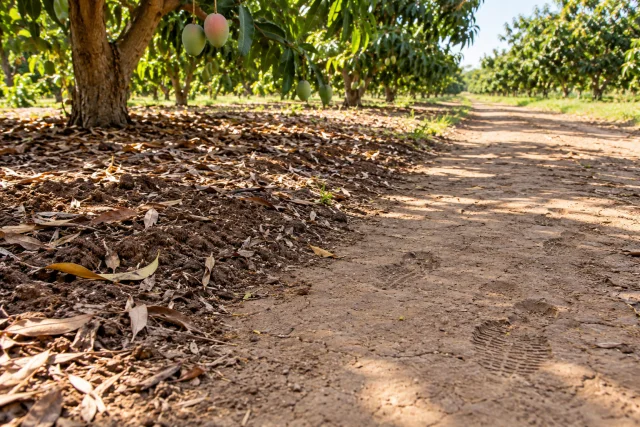
Soil compaction is the compression of soil into a denser condition with reduced pore space. Foot or vehicle traffic, construction, and working wet soil can contribute to it around mango trees. The result may be restricted root growth, slower infiltration, and poor aeration rather than a simple nutrient shortage. Preventing damage is often easier than correcting it beside an established tree. Avoid aggressive cultivation through major roots and assess the actual layer and extent of compaction before attempting remediation.

Read more about Soil Compaction
Soil Structure (generated editorial illustration)

Soil Structure

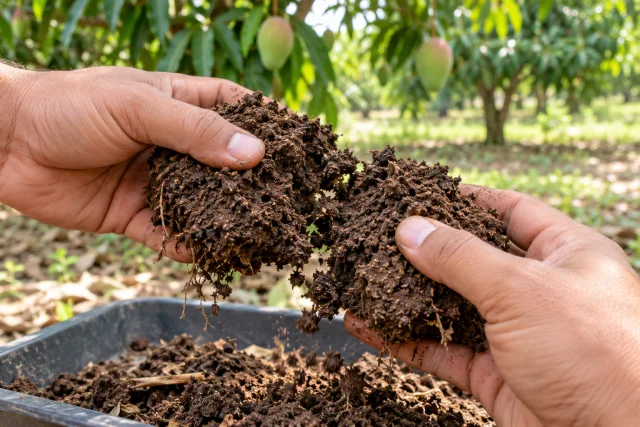
Soil structure is the arrangement of soil particles into aggregates and the pore spaces between them. It influences how water enters and drains, how air reaches roots, and how easily roots penetrate the ground. Mango roots can struggle in compacted soil even when the mineral texture is otherwise suitable. Protect useful structure by avoiding unnecessary traffic or digging in wet soil and managing the surface carefully. Fertilizer cannot compensate for a root zone with severely restricted air and water movement.

Read more about Soil Structure