A refractometer measures how light bends through a sample and can estimate soluble solids in mango juice on a Brix scale. Clean optics, calibration, temperature compensation, and consistent sampling improve comparisons. The reading is influenced by dissolved substances other than sugars, so it is not a complete flavor analysis. A useful tasting record combines the instrument reading with ripeness, acidity, aroma, and texture rather than using one number to rank every mango or identify a cultivar.
Respiration is the process by which living tissues use stored compounds and oxygen to release energy, producing carbon dioxide and water. Harvested mangoes remain alive and continue respiring as they ripen. Temperature and fruit condition influence the rate, which helps explain changes in storage life and the need for suitable handling. Slowing respiration is not the same as stopping deterioration, and enclosing fruit without adequate gas exchange can create off-flavors or injury instead of preserving quality.
RH means relative humidity: the amount of water vapor in air expressed as a percentage of the amount the air could hold at that temperature. It affects water loss from mango leaves, drying of flower clusters, and moisture loss from harvested fruit. High RH does not necessarily mean surfaces are wet, but condensation or prolonged leaf wetness can favor disease. Consider temperature, ventilation, and actual surface moisture together rather than using one humidity reading as a disease diagnosis.
Ripening stage describes how far a fruit has progressed toward its characteristic eating quality. In mangoes, firmness, aroma, flesh texture, and internal color change during ripening, while peel color can be a poor guide for some cultivars. Harvest maturity and eating ripeness are different: a mature but firm fruit may ripen successfully after picking. Describe the actual condition of the fruit when comparing flavors or storage results, because a cultivar sampled too early can give a misleading impression.
RKN stands for root-knot nematode, a group of microscopic plant-parasitic roundworms in the genus Meloidogyne. They feed in roots and can cause swellings or galls, reducing effective root function in susceptible plants. Above-ground symptoms such as weak growth are not diagnostic because many root problems look similar. For a mango with suspect roots, use a plant-diagnostic or nematode test and obtain clean nursery material; not every soil nematode is harmful or requires treatment.
A root is a plant organ that anchors the tree, absorbs water and dissolved nutrients, and stores reserves. Mango roots include larger structural roots and finer absorbing roots, whose distribution changes with soil depth, drainage, irrigation, and obstacles. Roots need oxygen as well as moisture, so saturated soil can leave a tree wilted even when water is abundant. Protect the root zone from compaction, trenching, and fertilizer buildup rather than assuming all growth problems begin in the leaves.
Root bound describes a container plant whose roots have become crowded, often circling the pot or forming a dense outer mass. A tall mango in a small container may have this problem even when its leaves look healthy. Root arrangement can affect later establishment and stability, so inspect nursery stock before buying. Repotting is not just placing the intact dense mass in more wet medium; handling decisions should account for root condition without causing unnecessary damage to a sensitive young tree.
The root flare is the transition near the base of a tree where the trunk broadens into major roots. Recognizing it helps avoid planting a mango too deeply or piling mulch against the trunk. Nursery media can hide the original position, so inspect the tree rather than assuming the top of the pot always marks the correct ground level. A visible graft union is a different feature, usually higher on the stem, and should not be mistaken for the root flare.
Root pruning is the deliberate cutting of roots to alter a plant's root system or fit it into a managed container. For mango, it can also create significant stress, reduce water uptake, and compromise stability if structural roots are damaged. It should not be presented as a routine or universally safe method of forcing flowering. Container work requires particular care with timing and aftercare; cutting roots of a large landscape tree warrants specialist advice rather than experimentation near the trunk.
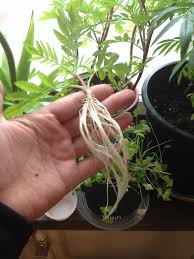
Rooting is the formation and development of roots. The word can describe a germinating mango seed, new roots after transplanting, or attempts to propagate a cutting, but those are different processes with different success rates. Mango is commonly multiplied by grafting onto seedling rootstocks because ordinary cuttings are not reliably easy to root. New leaf growth alone is not proof that a detached cutting has a working root system. Evaluate roots and sustained growth before treating it as established.
A rootstock is the rooted plant onto which a scion is grafted. In mango production it is commonly a seedling selected for suitability as a nursery and orchard foundation. It can influence vigor and responses to growing conditions, but it does not turn the scion into a different cultivar or make a mango frost-proof. Record the rootstock where known, keep the union above the soil, and remove unwanted rootstock shoots that could outgrow the intended canopy.
Salinity is the presence or accumulation of soluble salts in water or soil. Excess salts can make water uptake more difficult and cause leaf-edge damage or reduced growth in mangoes. Sources can include irrigation water, fertilizer buildup, and coastal conditions, but those situations are not identical. Test where appropriate and check drainage before planning corrective leaching. A brown leaf margin alone cannot prove salinity, and adding amendments without knowing the water and soil chemistry can fail to solve the problem.
Sap burn is peel injury caused when sap from a cut mango stem contacts the fruit surface. It can leave dark marks that reduce appearance even when the underlying fruit is not initially rotten. Sap may also irritate sensitive skin, so handling methods should protect both fruit and workers. Careful picking, avoiding uncontrolled sap drips, and a suitable de-sapping procedure help reduce injury. Do not confuse a sap stain with a confirmed fungal lesion without examining how the mark developed.
Scale insects are sap-feeding insects, many of which become relatively immobile and develop a protective covering. Mango trees can host different kinds, and some honeydew-producing scales encourage sooty mold and ant activity. Other scales do not produce honeydew, so black coating is not a universal symptom. Examine living insects and their distribution before selecting management. Protect natural enemies where possible, and do not mistake every fixed bump on a branch for an active pest.
A scion is the shoot or other selected plant material joined to a rootstock during grafting. For mangoes, it carries the identity of the cultivar intended to form the upper tree and produce fruit. Scion health, maturity, freshness, and correct labeling matter as much as the cutting technique. Collect only from suitable, identified trees, protect material from drying, and do not assume that a vigorous-looking shoot is free of every transmissible problem.
Seed viability is the capacity of a seed to remain alive and potentially germinate under suitable conditions. A mango stone may look intact even when the embryo inside has been injured, dried excessively, or decayed. Freshness, handling, and storage history therefore matter when selecting seed. Viability is not the same as guaranteed emergence: an alive seed can still fail under poor planting conditions. It also says nothing about whether the resulting tree will reproduce the parent cultivar's fruit.