Hydro-cooling is removing field heat from produce with suitably controlled cool water. With mangoes, water sanitation, fruit condition, exposure time, and temperature are important because contaminated water can spread decay and excessively cold treatment can injure sensitive fruit. It is not the same as a hot-water quarantine treatment and does not replace one. A commercial cooling process needs validation for the crop and handling system; plunging every freshly picked mango into ice water is not a generally safe quality recommendation.
Infiltration is the entry of water through the soil surface. It differs from drainage, which includes movement through and out of the root zone after water enters. For a mango, slow infiltration can cause runoff while fast infiltration may still lead to saturation above an underground barrier. Check both surface behavior and moisture at root depth when planning irrigation. A puddle's disappearance alone does not prove that the whole planting site is adequately drained.
Integrated pest management, or IPM, combines identification, monitoring, prevention, and appropriately selected controls rather than relying on a routine spray schedule. For mangoes it means considering crop stage, actual damage, natural enemies, sanitation, and growing conditions before intervening. Chemical tools may have a role when justified and legally appropriate, but they are not the definition of the system. Record what was observed and the result of each action so future decisions are based on evidence rather than habit.
An internode is the length of stem between two neighboring nodes. Mango shoots may have different internode lengths depending on growth conditions, developmental stage, and cultivar. Very stretched growth can signal inadequate light, but internode length alone is not a diagnosis or a reliable variety identifier. When selecting propagation material or describing a tree, examine bud position, shoot maturity, overall vigor, and the conditions in which the shoot developed rather than measuring one segment in isolation.
Interveinal chlorosis is yellowing between leaf veins while the veins remain greener. In mangoes it can suggest particular nutrient-availability problems, but leaf age, root health, and soil conditions determine how the pattern should be interpreted. Iron-related symptoms commonly appear on younger growth, while other deficiencies can affect older leaves. Use the pattern to guide investigation rather than treating it as proof from a photograph alone. A soil or leaf analysis can be more useful than repeated untargeted applications.
ISO means In Search Of in grower groups and collector listings. A mango grower using it is requesting a plant, scion, seed, or information rather than offering an item for sale. A useful request specifies the cultivar or trait sought, location, acceptable propagation method, and whether shipping or local pickup is possible. Verify the source of any offered material and applicable plant-health restrictions; responding to an ISO post does not establish that a cultivar label is accurate.
Jelly seed is an internal mango disorder in which flesh near the seed becomes unusually soft or jelly-like. The outer fruit may not reveal the full extent until it is cut. It is distinct from normal even softening at eating ripeness and should not automatically be diagnosed as insect damage. Cultivar susceptibility, maturity, and growing conditions can influence internal breakdown, but one affected fruit does not prove a single nutrient deficiency or justify a universal fertilizer remedy.
Juvenility is the early developmental phase during which a plant has not yet acquired the normal ability to flower. Mango seedlings can spend years in this phase, and their timing is not reliably predicted from height alone. A graft using mature cultivar material generally avoids starting the scion's development from a new seedling embryo, but the resulting tree still needs establishment. Adequate growth and suitable climate matter; applying extra fertilizer cannot guarantee that a juvenile seedling will bear immediately.
King of Fruits is a cultural and promotional title often applied to mangoes to express their popularity, valued flavor, and importance in food traditions. It is not a scientific classification, legal grade, or proof that one cultivar is objectively best. The phrase may appear in festival displays, marketing, and everyday conversation. For useful growing or buying decisions, move beyond the nickname and consider maturity, flavor preference, reliable identity, and the tree's suitability for the local climate.
A landrace is a locally developed crop population shaped by cultivation, selection, and adaptation over time, often retaining genetic variation. It should not automatically be treated as one uniform clone. In mango history and collecting, regional names may sometimes cover diverse seedling material rather than a single verified cultivar. Record the locality and source, and be cautious when assuming every tree sold under a traditional name will have identical fruit, growth habit, or disease response.
A latent infection is an infection that remains present without immediately producing obvious disease symptoms. Mango anthracnose and some postharvest rots can involve infections that become conspicuous only as fruit ripens. A clean-looking harvest therefore does not prove that every fruit is free of pathogens. Careful orchard management, gentle handling, and suitable storage each have a role. Distinguish hidden infection from later contamination when investigating a batch, because the point of visible decay may not be the point where infection began.
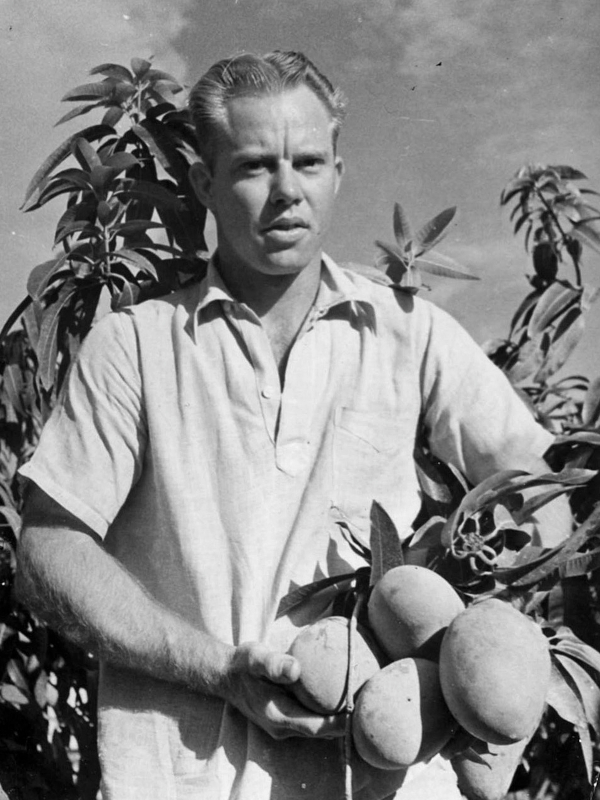
Lawrence Zill, also encountered as Laurence Zill in horticultural accounts, was a South Florida nurseryman associated with mango propagation and the Zill family's growing history. Keeping those name variants together helps readers follow older records. Cultivar histories need particular care: introducing or propagating a mango does not prove that the grower bred it or named it for a relative. Distinguish introductions, seedling selections, and later nursery distribution when researching Florida mango history, because those activities can involve different people and dates.
Leaching is movement of dissolved substances downward with water through soil or growing medium. It can carry unwanted salts out of a mango root zone, but can also waste nutrients and contaminate drainage water. Effective salt management requires suitable-quality water and a place for excess water to drain; repeatedly flooding a poorly drained pot is not successful leaching. Interpret the need from water quality, fertilizer history, and testing rather than using extra irrigation as a universal response to weak growth.
Leaf hopper is a common name for small jumping sap-feeding insects; mango hoppers are particular members of this broader group that can feed on tender growth and flower panicles. Heavy feeding and honeydew can interfere with flowering and fruit set, but species and importance vary by region. Examine insects and fresh damage rather than assuming every small winged visitor is a pest. Pollinating flies and other useful visitors also occur on mango flowers and should not be targeted indiscriminately.
Lenticels are small structures in the mango peel that permit gas exchange through the fruit surface. They appear as dots whose size, color, and prominence vary with the fruit and its stage of development. Darkened lenticels can result from handling, sap exposure, storage conditions, or disease, so spotting alone does not identify a pathogen. When evaluating a mango, distinguish ordinary peel markings from expanding lesions, soft tissue, and decay rather than rejecting every visible dot.
Lignification is the deposition of lignin as plant tissues become more woody and structurally firm. A new mango flush changes from soft, flexible growth to a harder shoot as it matures, although color alone does not measure every internal change. This matters when judging whether a shoot can tolerate handling or serve as suitable propagation material. A hardened stem is not necessarily ready to flower, and excessive toughness does not automatically make old wood a better scion.