A phytosanitary certificate is an official plant-health document issued by an authorized national plant-protection organization for specified consignments and requirements. In mango trade it may relate to fruit, nursery plants, or propagation material, depending on the destination and commodity. It is not the same as an organic certificate, a nursery label, or a guarantee of flavor. Check current destination rules before shipping, because a private seller's assurance cannot replace an official document or an approved treatment requirement.
To pinch is to remove the soft growing tip of a shoot, usually with fingers or a small clean tool. On a young mango, this can reduce apical dominance and encourage side branches, helping form a manageable framework. Timing matters: repeated tip removal delays shoot maturity and can remove future flowering sites. Pinching is a small training cut, not a substitute for structural pruning, and should be avoided when a weak or newly stressed tree needs foliage to recover.
Piney flavor describes a resinous, pine-like, or sometimes turpentine-like note perceived in mango aroma and taste. It is a sensory description, not automatically evidence of contamination, immaturity, or an inferior cultivar. The strength and balance of aromatic notes vary with the fruit and its ripeness, and people differ in their preferences. Compare sound fruit at a suitable eating stage, and distinguish a normal resinous note from sour fermentation, mold, or another sign that a fruit should not be eaten.

PITA is informal slang meaning Pain In The Ass or Pain In The Arse. Growers use it to express frustration with a difficult pest, maintenance job, or growing problem; it is not a diagnosis or a recognized mango disorder. When reading advice, separate that expression from evidence about the actual problem. Useful descriptions identify the symptom, affected plant part, timing, and growing conditions, because a colorful label alone cannot tell a grower what action is appropriate.
Plashing is an older term associated with interlacing or laying branches in hedge work and is sometimes used alongside pleaching. It does not describe a separate mango propagation method. Interwoven mango branches can rub, shade one another, or create difficult picking conditions, so the technique should not be confused with deliberate grafting. A grower wanting several cultivars on one tree needs compatible grafts and balanced branch management rather than merely weaving different trees together.
Pleaching is training and interweaving branches to form a screen or other living structure. Adjacent branches may eventually join where tissues make suitable contact, but simple interweaving does not guarantee a functional graft. Mangoes are generally trained for light, access, airflow, and safe branch structure rather than as dense pleached barriers. Treat references to this technique as a landscape-training concept, not a recommended way to combine cultivars or a substitute for a properly made graft.
A pollen tube is the structure that grows from a germinating pollen grain toward the ovule, carrying the male reproductive cells. It is part of the process between pollination and fertilization in mango flowers. Suitable pollen placement is therefore only an early step, not proof that a seed and fruit will develop. Temperature, compatibility, and flower condition can influence success. This concept helps explain why a tree can have abundant insect visits yet retain only a small share of its flowers as fruit.
Pollination is the transfer of pollen to a flower's receptive stigma. Mango panicles bear male flowers and bisexual flowers, and insects such as flies and bees can help move pollen between them. A mango can often set fruit without a second cultivar, but pollination is only one step: fertilization, weather, disease, and the tree's resources also influence retention. Protect useful flower visitors and avoid interpreting every fallen flower as evidence that the tree needs a pollination partner.
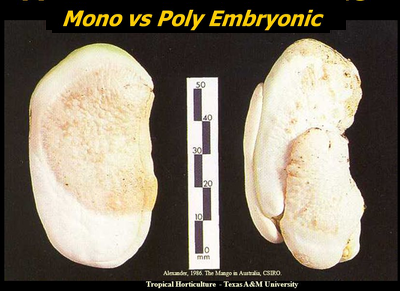
Polyembryonic describes a seed with multiple embryos. Mango seeds of this type can contain nucellar embryos derived from the mother tree's tissue as well as a sexually produced embryo; not every embryo necessarily survives or emerges. Nucellar seedlings can preserve the maternal genotype, but a sprout cannot be identified reliably as clonal merely because it is first, tallest, or strongest. This distinction matters when selecting rootstocks or attempting true-to-type seed propagation. A verified graft remains the clearest way to obtain a named cultivar.
Read the mango seed FAQ
Post-harvest handling covers the steps between picking fruit and its final use, including moving, sorting, cleaning, packing, ripening, and storage. Mangoes can suffer sap burn, bruising, temperature injury, and decay during this period even when they looked sound on the tree. Gentle handling, clean equipment, and conditions suited to maturity help preserve quality. Trace the whole sequence when investigating losses rather than assuming every defect began in the orchard or can be corrected by a later treatment.
Powdery mildew is a fungal disease that can produce whitish growth on susceptible mango flowers, young fruit, and other tissues. Flower infection can reduce fruit set even if the rest of the tree looks vigorous. It is different from sooty mold, which grows on insect honeydew, and should not be diagnosed solely from a distant photograph. Monitor emerging panicles, compare symptoms carefully, and seek locally appropriate guidance before using a product, especially where pollinators are visiting flowers.
Pre-rooting means encouraging roots to begin developing before a cutting is moved to its intended growing container or site. The term occurs in hobby propagation discussions, but mango cuttings are generally less dependable than seedling rootstocks followed by grafting. A swollen bud or fresh leaves do not prove that a cutting has rooted; stored reserves can support temporary growth. Maintain suitable moisture and aeration, avoid claiming guaranteed success, and distinguish this method from germinating a mango seed.
Precocity is a tendency to reach reproductive activity relatively early. In mango descriptions it may refer to a cultivar or a grafted tree that flowers and fruits at a young age under suitable conditions. It is a comparative trait, not a promise of a crop in a fixed year after purchase. A very young tree carrying fruit can also sacrifice establishment and branch development, so early flowering should be evaluated alongside tree strength rather than treated as the only sign of quality.
To prune is to remove selected shoots, branches, or other plant parts to improve structure, access, health, or canopy size. Mango pruning often follows harvest so new shoots can develop and mature before the next flowering period, although climate, cultivar timing, and damaged wood can change the decision. Unlike a deciduous tree, mango should not automatically be pruned according to a winter-dormancy rule. Use deliberate cuts and avoid severe, repeated topping that removes productive canopy.
Plant quarantine comprises measures intended to prevent introduction or spread of regulated pests. Mango fruit, seed, scions, or trees may face different movement conditions depending on origin, destination, and pest status. A small personal parcel or a trade between friends is not automatically exempt. Consult the relevant plant-health authority before moving material and keep required records. This glossary definition explains the concept rather than providing current legal permission to transport mangoes across a particular border.
A recalcitrant seed is sensitive to substantial drying and does not tolerate ordinary dry, frozen seed-bank storage. Mango seed belongs to this general category, which helps explain why freshly handled seed is normally preferable to old, dried seed for propagation. This is different from a hard seed coat that merely delays germination. Protect the living embryo from drying and damage, but do not confuse moisture protection with keeping it in stagnant conditions that encourage decay.